Notice of the People’s Government of Guangdong Province on Printing and Distributing the Action Plan for Air Pollution Prevention and Control in Guangdong Province (2014-2017)

Yuefu [2014] No.6

Guangdong Provincial People’s Government on Printing and Distributing Air Pollution in Guangdong Province

Notice of Prevention and Control Action Plan (2014-2017)

People’s governments at the local level and listed, people’s governments of counties (cities, districts), departments and institutions directly under the provincial government:

  The Action Plan for the Prevention and Control of Air Pollution in Guangdong Province (2014-2017) is hereby printed and distributed to you, please earnestly organize its implementation.

people’s government of guangdong province

February 7, 2014

Action Plan for Air Pollution Prevention and Control in Guangdong Province

(2014-2017)

  This action plan is formulated to implement the Notice of the State Council on Printing and Distributing the Action Plan for Air Pollution Prevention and Control (Guo Fa [2013] No.37) and the Letter of Responsibility for Air Pollution Prevention and Control Targets in Guangdong Province signed by the provincial government and the Ministry of Environmental Protection, and to continuously improve the ambient air quality in the whole province.

  I. Work objectives

  By 2017, strive to fine particulate matter (PM) in the Pearl River Delta region2.5) The average annual concentration is the first to reach the standard in the national key control areas. The air quality in the province has obviously improved, the heavily polluted weather has been greatly reduced, and the number of excellent days has increased year by year. The inhalable particulate matter (PM) in the province10The average annual concentration is 10% lower than that in 2012, and the sulfur dioxide (SO) in cities in the Pearl River Delta region2), nitrogen dioxide (NO2) and the average annual concentration of inhalable particles reach the standard; The average annual concentration of fine particles in the Pearl River Delta region is about 15% lower than that in 2012, and ozone (Othree) the pollution situation has improved; Compared with the average annual concentration of fine particles in 2012, Guangzhou, Foshan (including Shunde District) and Dongguan decreased by 20%, while Shenzhen, Zhongshan, Jiangmen and Zhaoqing decreased by 15%. The average annual concentration of fine particles in Zhuhai and Huizhou does not exceed 35 μ g/m3; The ambient air quality of cities outside the Pearl River Delta region meets the requirements of national standards, with the average annual concentration of inhalable particulate matter not exceeding 60 μ g/m3 and fine particulate matter not exceeding 35 μ g/m3.

  Second, the key tasks

  (1) Deepen the treatment of industrial sources and promote desulfurization and denitrification.

  1. Further promote pollution reduction of power plants. Strengthen the emission reduction of sulfur dioxide in power plants, and no desulfurization bypass shall be set for new thermal power units. Before the end of 2014, all desulfurization facilities of coal-fired units in the province will cancel the flue gas bypass; We will promote the transformation of coal-fired units in the furnace desulfurization process, and upgrade the desulfurization facilities that cannot meet the emission standards stably. By 2015, the comprehensive desulfurization rate of all coal-fired thermal power units with a capacity of more than 125,000 kilowatts in the province will reach over 95%. Promote the project of nitrogen reduction and denitrification in power plants, and popularize the dry low-nitrogen combustion technology of gas-fired units. By the end of 2014, all the coal-fired thermal power units (excluding circulating fluidized bed boiler generating units) in service in the province with more than 125,000 kilowatts have completed the transformation of low-nitrogen combustion and flue gas denitrification, and the circulating fluidized bed boiler generating units that cannot stably meet the emission standards should increase the flue gas denitrification facilities, and the comprehensive denitrification efficiency will reach over 85%. From July 1, 2014, all coal-fired units in the Pearl River Delta region will implement the special emission limit of smoke and dust in the Emission Standard of Air Pollutants for Thermal Power Plants (GB13223—2011), and other regions will implement the emission limit of smoke and dust.

  2. Comprehensively promote boiler pollution control. In strict accordance with the requirements of the Notice of the General Office of the People’s Government of Guangdong Province on Printing and Distributing the Action Plan for Total Emission Reduction of Major Pollutants in the Second Half of the Twelfth Five-Year Plan of Guangdong Province (Guangdong Government Office [2013] No.47), we will promote the pollution control of industrial boilers and complete the control task. Actively promote the central heating in industrial (industrial) parks, complete the central heating planning of industrial parks and industrial clusters in the whole province before the end of April 2014, cancel the highly polluting fuel boilers used in the central heating range, and accelerate the planning and construction of central heating projects in Dongguan, Zhaoqing, Zhongshan and other cities. Before the end of 2015, the industrial (industrial) parks with useful heat demand in the Pearl River Delta region will basically realize central heating, and the central heating volume in the province will account for about 30% of the total heating scale; Before the end of 2017, all the industrial (industrial) parks with useful heat demand in the province and the industrial clusters with useful heat demand in the Pearl River Delta region will realize central heating, and the central heating volume in the province accounts for about 80% of the total heating scale.

  3. Strengthen comprehensive pollution control in other industries. We will promote the construction of nitrogen reduction and denitrification projects and high-efficiency dust removal facilities in the cement industry. The new dry-process cement clinker production line with a scale of more than 2,000 tons/day will complete the transformation of low-nitrogen combustion and flue gas denitrification as required, and the new dry-process cement clinker production line with a scale of less than 2,000 tons/day (excluding this number) will gradually implement the transformation of low-nitrogen combustion. Before the end of 2015, building ceramic kilns and flat glass manufacturers with a scale of more than 700,000 square meters/year and a fuel sulfur content of more than 0.5% must switch to clean energy or install flue gas desulfurization and efficient dust removal facilities. Flue gas desulfurization of iron and steel sintering machine, pelletizing equipment and petrochemical catalytic cracking unit was carried out, and the comprehensive desulfurization efficiency reached over 85%; Before the end of 2014, all petroleum catalytic cracking units in the province will be desulfurized, before the end of 2015, all steel sintering machines in the province will be desulfurized, and before the end of 2017, all steel sintering machines in the province will be denitrated.

  (2) Reduce volatile organic compounds and focus on controlling ozone pollution.

  1. Promote the emission control of volatile organic compounds from industrial sources. Focus on strengthening the comprehensive control of volatile organic compounds (VOCs) in petroleum refining and chemical industry, and fully popularize LDAR technology. Before the end of 2015, all petroleum refining enterprises in the Pearl River Delta region will apply LDAR technology, and before the end of 2017, all key enterprises in the province, such as petroleum refining enterprises, organic chemicals and pharmaceutical chemicals, will fully apply LDAR technology. Strengthen the comprehensive treatment of organic waste gas from petroleum refining, and install waste gas recovery or terminal treatment devices in production process units such as process exhaust, storage tanks, waste gas combustion towers (torches) and waste water treatment. By the end of 2015, the oil refining and chemical enterprises in the Pearl River Delta region will complete the comprehensive treatment of organic waste gas, and by the end of 2017, the oil refining and chemical enterprises in other regions will complete the comprehensive treatment of organic waste gas.

  2. Implement emission control of volatile organic compounds in typical industries. Manufacturers of paints, inks, adhesives, pesticides, etc. should adopt closed integrated production technology, uniformly collect volatile organic waste gas and purify it, and the purification efficiency should be greater than 90%. Encourage the production and use of water-based, non-organic solvent-based and low-organic solvent-based products that meet environmental requirements, and increase the proportion of environmentally-friendly paints. Deepen the treatment of volatile organic compounds emission standards in printing, furniture, surface painting (automobile manufacturing), shoe making, container manufacturing, electronic equipment manufacturing and other industries. By the end of 2015, the Pearl River Delta region will complete key corporate governance tasks, and other regions will complete key corporate governance tasks by the end of 2017. Strengthen the emission control of volatile organic compounds during the storage, transportation and sales of oil (fuel oil and solvent), and install closed collection systems for storage tanks and vehicles. Before the end of 2014, the gas stations, oil storage tanks, tanker trucks and storage tanks of chemical enterprises in the province will complete the construction of oil and gas recovery control and online monitoring system for oil and gas recovery.

  3. Carry out emission control of volatile organic compounds from domestic sources. Promote the use of water-based or low-volatile architectural coatings, wood paints and adhesives that meet the requirements of environmental protection in the building decoration industry, and gradually reduce the use of organic solvent-based coatings. All localities should establish a government green procurement system for coating products, and give priority to water-based or low-volatile products in government-invested projects. Eliminate open dry cleaning machines in clothing dry cleaning industry, and promote the use of closed dry cleaning machines equipped with refrigeration solvent recovery system. Strengthen the pollution control of cooking fume. Before the end of 2015, all catering enterprises and unit canteens that emit cooking fume in the urban built-up areas in the Pearl River Delta region will be equipped with efficient cooking fume purification facilities, and the normal utilization rate of the facilities will not be less than 95%; Before the end of 2017, all catering enterprises and unit canteens that emit fumes in urban built-up areas in other regions will install efficient fume purification facilities. Promote the use of high-efficiency and clean household range hoods. No open-air barbecue or open-air catering processing with oil fume is allowed in the main urban area of each city. At least one typical region is selected for listing at all levels to carry out online monitoring pilot of large-scale catering enterprises and establish a long-term supervision mechanism.

  (3) Develop green transportation and reduce the pollution discharge of mobile machinery and equipment.

  1. Strengthen urban traffic management. Implement the public transport priority development strategy, optimize the layout of public transport network, strengthen the construction of pedestrian and bicycle transportation systems, increase the proportion of public transport, pedestrian and bicycle trips, and reasonably control the number of motor vehicles. Vigorously implement the demonstration project for the promotion and application of new energy vehicles, and strive to reach more than 60% of the new buses in Guangzhou and Shenzhen every year. Accelerate the renewal of old vehicles in various industries and promote the use of new energy and clean energy vehicles. Vigorously develop green freight transportation, and promote drop-and-drop transportation. From January 1, 2015, logistics parks and cargo distribution centers in the Pearl River Delta region will use vehicles that meet the national emission standards above III to transport goods.

  2. Improve the environmental protection entry threshold for new cars. Strengthen the management of new car registration and transfer of foreign vehicles, and carry out new car registration and transfer registration in strict accordance with the national catalogue of environmentally-friendly vehicles. Gradually improve the emission standards for new vehicles, and implement the national V light gasoline vehicle emission standards in the Pearl River Delta region and the national V diesel vehicle emission standards in the whole province ahead of schedule after approval by the state. Fully implement the fuel consumption limit standard and access system for road transport vehicles, and newly purchased vehicles that do not meet the limit standard shall not enter the road transport market.

  3. Strengthen the prevention and control of vehicle pollution in use. Strengthen the capacity building of motor vehicle environmental protection supervision, fully implement the system of regular inspection and maintenance of motor vehicle environmental protection, establish and improve the information system of motor vehicle environmental protection inspection and supervision, and the data of motor vehicle environmental protection management in various places must be networked with the Provincial Environmental Protection Department. Before the end of 2014, the regular detection rate of environmental protection of motor vehicles in all localities should reach more than 80%. Increase the sampling inspection of motor vehicle parking places and roads. Accelerate the issuance of environmental protection inspection marks for motor vehicles. Before the end of 2014, the issuance rate of environmental protection inspection marks in the province should reach more than 90%. Vehicles that have not obtained environmental protection inspection marks and vehicles with excessive exhaust gas are not allowed to drive on the road. Before the end of 2015, we will complete the special action of the province’s overdue annual inspection of vehicles. If we fail to obtain the motor vehicle inspection mark within three consecutive motor vehicle inspection cycles after the expiration of the inspection validity period, we will be forced to scrap it according to law. Study on shortening the mandatory retirement period of taxis and encourage the replacement of efficient exhaust gas purification devices every year.

  4. Accelerate the elimination of "yellow label vehicles". For vehicles that have reached the mandatory retirement age and have not gone through the retirement procedures, they shall be forcibly cancelled according to law and the license plate shall be declared invalid. We will fully implement the "yellow-label vehicle" restriction measures. By the end of 2015, the area of "yellow-label vehicle" restriction areas in cities in the Pearl River Delta region will account for no less than 40% of the urban built-up area, and the area of other cities will not be less than 30%. Promote the establishment of an electronic law enforcement system in the restricted area, and capture the "yellow label car" entering the restricted area in real time and punish it according to law. All localities should increase subsidies for the early elimination of "yellow-label vehicles", ensure that by 2015, the province will eliminate all "yellow-label vehicles" registered before the end of 2005, and basically eliminate all "yellow-label vehicles" in the Pearl River Delta region, and basically eliminate "yellow-label vehicles" in the whole province by 2017.

  5. Accelerate the upgrading of oil quality. Since 2014, the province has fully supplied Guangdong IV vehicle gasoline and national IV vehicle diesel; Pay close attention to the release of Guangdong V oil product standards, and fully supply Guangdong V motor gasoline in the Pearl River Delta region before the end of 2014; Before the end of June 2015, Guangdong V motor gasoline and China V motor diesel were fully supplied in the province. Strengthen the supervision and inspection of oil quality, and gas stations shall not sell and supply substandard automobile gasoline and diesel oil.

  6. Promote emission reduction of ships, ports and other mechanical equipment. Promote cooperation between Guangdong, Hong Kong and Macao to control pollution emissions from ocean-going ships. The newly-built cruise terminal in the Pearl River Delta region must be equipped with shore power facilities, and the newly-built container terminal with a tonnage of over 100,000 tons must be equipped with shore power facilities or reserve space and capacity for the construction of shore power facilities. Before the end of 2017, the province’s crude oil and refined oil terminals will complete the comprehensive management of oil and gas. Improve the energy consumption structure of ports, speed up the process of "changing oil into electricity" and "changing oil into gas" for mobile machinery, transport vehicles and trailers in ports, and encourage the pilot reform of liquefied natural gas (LNG) fuel power for ships. By the end of 2017, the "oil-to-electricity" work of RTG in major coastal and inland ports will be basically completed. From January 1, 2014, the national I marine engine emission standard will be implemented, and by the end of 2017, working ships and port management ships will basically use shore power when berthing. Strengthen the emission management of off-road mobile machinery, carry out environmental protection management of construction machinery, and promote the installation of air pollutant aftertreatment devices.

  (four) to strengthen non-point source remediation, control dust and toxic gas emissions.

  1. Strengthen construction and road dust pollution control. Popularize the prevention and control technology of construction dust pollution, and establish a dynamic information base of dust sources and an online monitoring system of particulate matter. Actively promote green construction, urge the construction unit to implement dust prevention and control measures such as closing the enclosure on the construction site, setting washing facilities, and hardening the road. Open operation is strictly prohibited. The construction site muck and powdery materials in the main urban area of each city should be gradually transported in a closed way and equipped with satellite positioning devices. Construction sites with a total construction area of more than 100,000 square meters must standardize the installation of dust video monitoring equipment. Actively promote low-dust operation methods such as mechanized cleaning of urban roads, popularize the new cleaning technology of "sucking, sweeping, flushing and harvesting", increase the frequency of road washing and cleaning, and effectively reduce the dust load on roads. Increase the intensity of road cleaning under unfavorable meteorological conditions and increase the number of sprinklers.

  2. Remediation of dust pollution in the storage yard. Bulk material storage yard should be closed for storage or wind and dust suppression facilities should be built. For docks below 1000 tons (excluding this number), technologies such as dry fog and spray dust removal should be used to reduce the dust drift rate, and for docks above 1000 tons, the construction of wind and dust suppression nets and the transformation of closed transportation systems should be completed. For the wastes piled up for a long time, measures should be taken, such as covering green, paving, hardening and spraying dust suppressant or stabilizer regularly. Actively promote the comprehensive utilization of fly ash, slag and slag, and reduce the amount of stacking. By the end of 2015, the key port areas in the Pearl River Delta region will complete the task of comprehensive control of dust pollution, and by the end of 2017, all port areas in the Pearl River Delta region and other key port areas will complete the task of comprehensive control of dust pollution.

  3. Strictly control the emission of toxic gases. According to the requirements, the demonstration project of dioxin emission reduction will be implemented in key industries such as renewable non-ferrous metal production, steelmaking production, waste incineration and cremation of remains in stages, and the supervision and monitoring of dioxins will be carried out regularly every year for waste incineration power plants. It is forbidden to burn substances that may produce toxic and harmful smoke and odor in the open air or use them as fuel. Take the emission control of toxic air pollutants as an important part of the EIA approval of construction projects. To study and formulate control standards for the emission of toxic and harmful substances such as mercury and lead from coal burning.

  (five) strict environmental access, control the increase of atmospheric pollutants.

  1. Strictly implement the EIA system. Improve the linkage mechanism between planning EIA and project EIA, strictly manage the EIA of major projects, and incorporate the fine particles and ozone standards into the planning EIA and related project EIA. Projects that have not passed the EIA review are strictly prohibited from starting construction and operation.

  2. Strengthen total pollutant control. Improve the measures for the management of the total discharge of major pollutants in construction projects, and take whether the discharge of sulfur dioxide, nitrogen oxides, smoke dust and volatile organic compounds meets the requirements of total control as a prerequisite for the approval of environmental impact assessment. Accelerate the formulation of supporting policies for the total emission management of inhalable particulate matter and volatile organic compounds. Regional restrictions will be implemented in areas that have not completed the task of reducing the emission of major atmospheric pollutants. Except for livelihood projects, the approval of projects that discharge corresponding atmospheric pollutants will be suspended.

  3. Implement pollutant reduction and substitution. For construction projects that emit sulfur dioxide and nitrogen oxides, the Pearl River Delta region will implement the substitution of 2 times the reduction of active sources, and other regions will implement the substitution of 1.5 times the reduction of active sources. For construction projects that emit inhalable particulate matter and volatile organic compounds, the Pearl River Delta region will gradually implement reduction substitution, and other regions will implement equivalent or reduction substitution.

  4. Improve the air emission standards of key industries. According to the Announcement of the Ministry of Environmental Protection on Implementing Special Emission Limits of Air Pollutants (No.14, 2013), the construction projects of thermal power, steel, petrochemical, cement, nonferrous metal smelting, chemical industry and coal-fired boilers in the Pearl River Delta region will implement the national special emission limits of air pollutants, and the construction projects of steel, petrochemical and other industries in eastern Guangdong and western Guangdong will implement the national special emission limits of air pollutants.

  (six) optimize the industrial layout and guide the development of industrial agglomeration.

  1. Adjust the pattern of industrial development. Formulate the industrial development guidance catalogue of the main functional areas, establish and improve the access mechanism of key industries that adapt to the main functional areas, implement differentiated industrial policies, and scientifically guide the rational development and layout of the province’s industries. Focus on strengthening the scientific demonstration of the planning and site selection of heavily polluting enterprises such as steel, petrochemical and thermal power, and basically complete the environmental relocation, upgrading and transformation of heavily polluting enterprises such as steel, petrochemical, chemical, cement, flat glass and non-ferrous metal smelting and other enterprises whose pollution discharge cannot reach the standard stably in environmentally sensitive areas and urban built-up areas.

  2. Promote the development of industrial agglomeration. Adhere to agglomeration development and regional overall coordination, give priority to the development of modern service industry in the Pearl River Delta region, accelerate the development of advanced manufacturing industry, and vigorously develop high-tech industries; Eastern Guangdong will speed up the transformation and upgrading of traditional industries and moderately develop heavy chemical industries; Western Guangdong focuses on the development of port-based heavy chemical industry and modern service industry; Northern Guangdong gives priority to the development of eco-tourism and moderately develops resource-based industries and low-pollution industries. Strict implementation of industrial park project access and investment intensity requirements, and actively promote the concentration of industries in the park. Newly-built projects in areas outside the Pearl River Delta, such as steel, petrochemical, cement, flat glass, non-ferrous metal smelting, chemicals and ceramics, should, in principle, enter industrial parks established in accordance with laws and regulations and with complete environmental protection facilities.

  (seven) the development of green economy, eliminate compressed pollution production capacity.

  1. Vigorously develop circular economy. Efforts will be made to promote the recycling transformation of characteristic industrial parks, promote the cascade utilization of energy, the exchange and utilization of waste, and the economical and intensive use of land, promote the recycling production of enterprises, the recycling development of parks, and the recycling combination of industries, and build a recycling industrial system. Promote the coordinated disposal of wastes in industrial furnaces and blast furnaces such as steel and cement, and promote the development of renewable resource utilization industries. By 2017, the energy consumption per unit of industrial added value will be reduced by more than 20% compared with that in 2012. More than 50% of all kinds of national parks and more than 30% of all kinds of provincial parks will be recycled, and the proportion of major non-ferrous metal varieties and steel recycling will reach more than 40%.

  2. Fully implement cleaner production. Review cleaner production in key industries such as steel, cement, petrochemical, chemical and non-ferrous metal smelting, and implement advanced technological transformation of cleaner production in key areas and weak links of energy conservation and emission reduction. By 2017, the emission intensity of key industries will be reduced by more than 30% compared with 2012. Promote the innovation of products such as non-organic solvent-based coatings and pesticides, and reduce the emission of volatile organic compounds during production and use. Actively develop new varieties of slow-release fertilizers to reduce ammonia emissions during the application of chemical fertilizers.

  3. Cultivate green environmental protection industries. Formulate and implement the development plan of environmental protection industry in the whole province, and establish and improve the policy system conducive to the development of environmental protection industry. Strengthen international exchanges and cooperation in energy conservation, environmental protection and green low-carbon technologies, vigorously promote the development of environmental protection technologies and industries, and actively develop environmental protection equipment manufacturing industry focusing on energy conservation and consumption reduction, pollution control and environmental monitoring. Promote the specialization, socialization and marketization of the construction and operation of air pollution control facilities, promote the socialization of environmental monitoring, promote the third-party control of air pollution, and actively cultivate environmental protection listed companies and key enterprises.

  4. Strictly control the new production capacity of highly polluting industries. Formulate a list of highly polluting industrial projects that are stricter than national requirements, and clarify indicators such as resource and energy conservation and pollutant discharge. Establish a database of production capacity of high-pollution industries, strictly limit the new production capacity of "two high" (high energy consumption and high emission) industries, and replace the new, modified and expanded projects with equal or reduced production capacity. In the Pearl River Delta region, it is forbidden to build or expand heavy pollution projects such as steel, petrochemicals, cement (except for the purpose of treating municipal wastes), flat glass (except for special varieties of high-quality float glass projects) and non-ferrous metal smelting, and it is forbidden to build or expand coal-fired thermal power units and power stations owned by enterprises. Strict energy-saving evaluation and review system shall be implemented, and the energy consumption per unit product (output value) of new high-energy-consuming projects shall reach the domestic advanced level, and the energy-using equipment shall reach the first-class energy efficiency standard, and the energy consumption per unit product (output value) of new projects in the Pearl River Delta region shall reach the international advanced level.

  5. Accelerate the elimination of backward production capacity. Complete the task of eliminating backward production capacity in key industries in the Twelfth Five-Year Plan one year ahead of schedule, and formulate policies and supporting measures for eliminating backward production capacity in 2015-2017 with wider scope and higher standards in combination with the actual industrial development and air quality in Guangdong Province, so as to further accelerate the elimination of backward production capacity. Enterprises that cannot be eliminated on schedule shall be forced to shut down according to law. For areas that fail to complete the elimination task on schedule, the procedures of approval, examination and approval, filing and other procedures for thermal power, steel, cement, petrochemical and other projects in this area will be suspended.

  6. Reduce excess capacity. Promote the withdrawal of excess capacity in the "two high" industries with energy-saving and environmental protection standards, formulate support policies to promote the transformation and development of enterprises with excess capacity in the "two high" industries, encourage cross-regional and cross-ownership mergers and acquisitions of enterprises with outstanding industries, and further reduce excess capacity. Pay close attention to cleaning up illegal projects under construction in overcapacity industries, publish the list of illegal enterprises, and formulate rectification plans within a time limit. Illegal projects that have not yet started shall not be started; Those under construction should be ordered to stop construction immediately.

  (8) Adjusting the energy structure and increasing the supply of clean energy.

  1. Implement total coal consumption control. We will implement long-term target responsibility management for controlling the total coal consumption. By 2017, the proportion of coal in the province’s energy consumption will fall below 36%, and the Pearl River Delta region will achieve negative growth in total coal consumption. We will implement a linkage mechanism between new projects and total coal consumption control, and implement coal reduction substitution for coal-consuming construction projects. By burning clean coal, switching to clean energy and improving the combustion efficiency of coal, the total coal consumption in key industries will be reduced. Strengthen the capacity building of external power receiving channels, improve the spatial layout of power grids, and gradually increase the proportion of external power transmission.

  2. Expand the scope of natural gas supply. According to the goal of full coverage of high-pollution fuel no-burn zone and basic gasification of key industrial parks, we will accelerate the construction of gas source projects. We will improve the planning of the province’s main natural gas pipeline network and the city’s natural gas pipeline network, and speed up the construction of natural gas pipeline projects. By the end of 2015, the natural gas pipeline network will reach the industrial parks with useful gas demand in the Pearl River Delta region, and by the end of 2017, it will reach the industrial parks with useful gas demand in the province and the industrial clusters in the Pearl River Delta region. Strive to reach 50 billion cubic meters of natural gas supply capacity by the end of 2017, forming a multi-source and multi-directional gas supply and distribution system. By the end of 2017, the Pearl River Delta region will basically complete the clean energy transformation tasks such as coal-fired boilers, industrial kilns, and natural gas from self-owned coal-fired power stations with a single unit of less than 100,000 kilowatts. New natural gas will give priority to the protection of residents’ lives or be used to replace coal-fired boilers and kilns, encourage the development of distributed energy efficient utilization projects of natural gas, and restrict the development of natural gas chemical projects.

  3. Promote the use of other clean energy sources. Actively and orderly develop hydropower, develop nuclear power safely and efficiently, and accelerate the development of new and renewable energy sources such as geothermal energy, wind energy, solar energy, biomass energy and tidal energy. By 2017, the installed capacity of operating nuclear power units will reach more than 9.6 million kilowatts, and the proportion of non-fossil energy consumption will increase to more than 20%. Rationally arrange a number of biomass power generation projects, build waste incineration power generation facilities with high environmental protection standards, and build biogas utilization projects in combination with landfill sites, livestock and poultry farms and wastewater treatment facilities.

  4. Improve the quality of industrial fuels. Strictly control the sulfur ash content of coal, control the sulfur content of coal in thermal power plants below 0.7%, control the sulfur content of coal in industrial boilers and kilns below 0.6%, and control the sulfur content of fuel below 0.8%. Improve the proportion of coal preparation in coal consumption. It is forbidden to import inferior coal with high ash content and high sulfur content, and the import of high sulfur petroleum coke is restricted. Apply and popularize clean coal utilization technology.

  5. Strengthen the management of high-pollution fuel no-burn zone. From 2014, the built-up areas of national environmental protection model cities and the urban built-up areas in the Pearl River Delta region should be designated as high-pollution fuel no-burn areas, and the areas of other cities should reach more than 60% of the urban built-up areas; Before the end of 2017, all urban built-up areas in the province should be designated as high-pollution fuel no-burn zones, and the scope of no-burn zones should be gradually extended to the suburbs. It is forbidden to burn raw (loose) coal, washed coal, coal water slurry, honeycomb coal, coke, charcoal, coal gangue, slime, coal tar, heavy oil, residual oil and combustible waste in the no-burn zone. It is forbidden to directly burn highly polluting fuels such as biomass, diesel, kerosene, artificial gas and other fuels with excessive pollutant content, and it is forbidden to build, modify or expand combustion facilities such as boilers, kilns and heat conduction oil furnace that burn highly polluting fuels.

  (9) Strengthen environmental law enforcement and improve the efficiency of environmental supervision.

  1. Strengthen regulatory capacity building. Improve the provincial, city, county, township (street) four-level environmental supervision system, strengthen the construction of environmental monitoring team, and enhance the ability of environmental supervision. By the end of 2014, we will complete the task of building a vehicle emission supervision platform at the provincial and municipal levels. Strengthen the supervisory monitoring of pollution sources, include boilers with more than 20 tons of steam and volatile organic compounds emitting enterprises in typical industries into the scope of supervisory monitoring, and implement online monitoring of volatile organic compounds in key enterprises on a pilot basis.

  2. Strengthen supervision and inspection. The environmental air quality indicators of all localities are incorporated into the evaluation index system of environmental protection. According to the assessment requirements of the state for air pollution prevention and control, the progress of work in all localities is regularly supervised and made public. Interview accountability for areas where work responsibilities are not implemented, project progress is lagging behind, and ambient air quality is unqualified.

  3. Strictly punish environmental violations. Improve on-site inspections, cross-enforcement, joint enforcement, spot checks and other environmental law enforcement methods, strengthen law enforcement linkage and information sharing between environmental protection departments and relevant departments, and improve the cooperation mechanism for investigating and handling environmental violations. Highlight the key points of supervision, supervise and supervise key environmental issues in various places, and vigorously rectify air pollution. Resolutely ban unlicensed enterprises such as small refineries and small boilers, and focus on cracking down on behaviors such as excessive emissions of heavily polluting enterprises, irregular management of construction dust, and production and sales of unqualified oil products. Explore the evaluation of enterprise environmental credit and improve the construction of environmental credit system.

  4. Improve the convergence mechanism of law enforcement. Strictly implement the Interpretation of the Supreme People’s Court and the Supreme People’s Procuratorate on Several Issues Concerning the Application of Laws in Handling Criminal Cases of Environmental Pollution (Fa Shi [2013] No.15), establish a law enforcement linkage mechanism between environmental protection departments and public security departments, improve the transfer, acceptance and filing of criminal cases of environmental pollution, and the consultation and supervision system for major cases, increase the comprehensive punishment for major environmental crimes according to law, severely punish illegal and criminal acts of environmental pollution, and further enhance the deterrent force of environmental law enforcement.

  Third, safeguard measures

  (ten) improve the coordination and early warning emergency mechanism.

  1. Improve the coordination mechanism for prevention and control. Further improve the work mechanism of joint prevention and control of air pollution in the province and the regional cooperation mechanism of Guangdong, Hong Kong and Macao, hold regular meetings on air pollution prevention and control in the province, coordinate and solve major environmental problems and cross-city air pollution disputes, and guide all localities and relevant departments to establish unified air pollution prevention and control policies. All localities should establish a consultation and cooperation mechanism for joint prevention and control of air pollution with unified planning, unified monitoring, unified supervision, unified evaluation and unified coordination. Cities in the Pearl River Delta region should strengthen coordination and linkage to solve outstanding problems such as fine particles and ozone. All relevant departments should work together to fully support the prevention and control of air pollution according to their respective responsibilities.

  2. Improve the monitoring and early warning system. Improve the province’s atmospheric environmental monitoring network, and all state-controlled atmospheric monitoring stations in cities above prefecture level will carry out monitoring as required. Environmental protection and meteorological departments should strengthen cooperation, establish and improve the monitoring and early warning system of heavy air pollution, and jointly promote air quality forecasting. Conduct early warning drills for heavy pollution weather on a regular basis, and complete the construction tasks of monitoring and early warning systems for heavy air pollution in the provinces, the Pearl River Delta region and Guangzhou before the end of 2014, and other cities in the Pearl River Delta region will complete the construction tasks of monitoring and early warning systems for heavy air pollution before the end of 2015.

  3. Improve the emergency response mechanism. The provincial environmental protection department should take the lead in formulating and organizing the implementation of the emergency plan for heavy air pollution in the Pearl River Delta region as soon as possible, and announce it to the public in a timely manner. In order to go public at all levels, it is necessary to formulate emergency plans for heavy air pollution in the region, clarify the responsible subjects, organizations, job responsibilities, early warning and response procedures, safeguard measures, etc., and announce them to the public in a timely manner. Local governments should incorporate the emergency treatment of heavy air pollution into the emergency management system of local emergencies and implement the responsibility system of the main person in charge. Establish and improve the regional air pollution prediction and early warning mechanism of monitoring and forecasting-expert consultation-reporting for approval-response implementation. When heavy pollution weather is predicted, local governments should take emergency response measures in time and organize all relevant parties to carry out their work as required.

  (eleven) improve the local regulations and technical standards system.

  1. Improve laws and regulations. Revise the Measures for the Administration of Pollutant Discharge Permit in Guangdong Province in a timely manner, accelerate the formulation of the Regulations on the Prevention and Control of Air Pollution in Guangdong Province, improve the systems of total control, pollutant discharge permit, emergency warning and accountability, realize the organic connection between administrative law enforcement and criminal justice, and improve the compensation system for environmental pollution damage according to the principle of "whoever pollutes is responsible and pays more for more emissions".

  2. Improve the standard system. Strengthen the preparation and revision of local standards in Guangdong Province, speed up the revision of the emission limit standards of atmospheric pollutants in Guangdong Province, formulate the limit standards of harmful substances in low-sulfur loose coal and products, coatings, inks and other products, clarify the emission standards of atmospheric pollutants for biomass briquettes and the emission standards of volatile organic compounds in key industries, establish the emission accounting system of volatile organic compounds in key industries, and strengthen the hard constraints of energy consumption and safety standards.

  3. Strengthen technical support. Strengthen the basic research on haze, ozone formation mechanism, source analysis, migration law, etc., and carry out the study on the exposure-response relationship between air pollution and population health. Support the construction of Guangdong National Key Laboratory of Environmental Protection and encourage environmental protection enterprises to build engineering technology research and development centers and engineering research centers (laboratories). Actively develop products and equipment for desulfurization and denitrification, high-efficiency dust removal, volatile organic compounds control, diesel engine (vehicle) emission purification, environmental monitoring, etc., and popularize a number of advanced and practical technologies to solve regional compound air pollution problems.

  (12) Improve environmental and economic policies.

  1. Improve the price system of resources and environment. Give full play to the leverage of resource prices and guide enterprises to produce green and consume green in society. Study and formulate differentiated and stepped resource price policies, and implement electricity price support policies for existing thermal power units that have adopted new technologies to transform dust removal facilities. Implement the policy of high quality and good price for oil products, and encourage oil refining enterprises to accelerate the pace of upgrading oil products.

  2. Increase fiscal and taxation support. At the provincial and local levels, the funds for pollution prevention and control are listed as a whole, and the forms of "replacing compensation with awards", "promoting prevention with awards" and "promoting governance with awards" are adopted to support the prevention and control of air pollution. We will fully implement the preferential fiscal and taxation policies for contracted energy management, and actively explore the integrated franchise mode of investment, construction and operation of pollution control facilities. We will improve the support policies for the collection and emission reduction of sewage charges, and gradually levy sewage charges for volatile organic compounds, dust from construction sites, gas stations and operating catering fumes.

  3. Innovative environmental protection financial policies. Establish green credit, green securities and environmental pollution liability insurance systems, incorporate corporate environmental information into the bank credit information system, and strictly restrict environmentally illegal enterprises from obtaining loans or listing financing. Accelerate the pilot work of paid use and trading of emission rights and carbon emission rights such as sulfur dioxide.

  (13) Improve the participation mechanism of the whole society.

  1. Timely disclosure of environmental information. Since 2014, the provincial environmental protection department will regularly publish the air quality status and ranking of cities at or above the local level every month, and all state-controlled and provincial-controlled air quality monitoring stations in the province will release air quality information to the public in real time. All localities should establish a compulsory disclosure system for environmental information of enterprises in heavily polluting industries, promptly and proactively publish information such as environmental impact assessment approval of new projects, sewage charges, supervision and law enforcement penalties, pollutant discharge of key enterprises, operation of pollution control facilities, and regularly publish environmental credit rating results of key pollution sources.

  2. Mobilize the whole people to participate. Actively carry out various forms of publicity, education and training, popularize scientific knowledge of air pollution prevention and control, advocate civilized, economical and green consumption patterns and living habits, and improve the enthusiasm of the public to participate in atmospheric environmental protection. Encourage the public to supervise and report air pollution by opening a hotline for reporting and hiring special supervisors for air pollution prevention and control, and support environmental protection social organizations and environmental protection volunteers to carry out social supervision activities.

  Municipal governments at or above the local level shall, in accordance with this action plan, pay close attention to formulating specific implementation plans for the region, decompose and implement tasks, and submit the progress of air pollution prevention and control work in the previous year to the provincial government before March 31 each year.
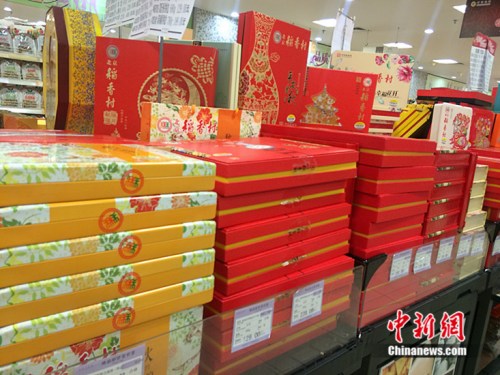
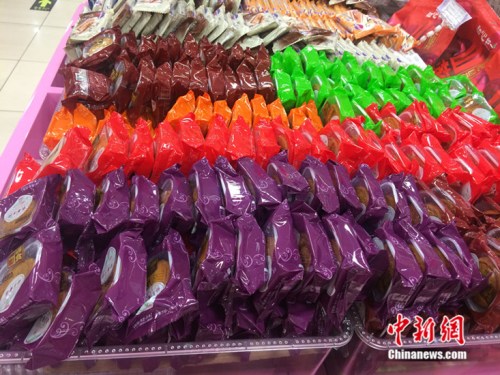
New standards for moon cakes are introduced to welcome the first Mid-Autumn Festival: five nuts should be collected for five-kernel moon cakes.

  BEIJING, Beijing, September 5 (Qiu Yu) The first Mid-Autumn Festival was ushered in after the introduction of the new moon cake standard. The new standard was formally implemented in December last year, and the Wuren moon cake, which has attracted much attention, is clearly defined.

  After investigating the moon cake market, the reporter found that the high-priced gift boxes above 2,000 yuan still exist, and ordinary gift boxes below 300 yuan are more popular. Because the new standard is not mandatory, there are still old packaged moon cakes on the market.

  Price — —

  Overall, it is the same as last year. The mooncake gift boxes below 300 yuan sell well.

  Many large supermarkets in Xicheng District of Beijing have put out mooncake gift boxes and bulk mooncakes. The reporter visited and found that the price of mooncake gift boxes ranged from tens of yuan to hundreds of yuan, and bulk mooncakes were mostly twenty or thirty yuan a catty, and some of them had promotions and discounts.

  A supermarket shopping guide in Xicheng District said that from the recent sales of mooncake gift boxes, gift boxes with a price of one or two hundred yuan are the most popular.

  The price of moon cakes sold online is also relatively close to the people. The reporter searched in JD.COM, Tmall and No.1 Store and found that the prices of the top 10 mooncake gift boxes were all within 200 yuan. Among them, the price of Tmall is lower than that of 100 yuan.

  Phenomenon — —

  Some high-end gift boxes are packaged three times the weight of moon cakes.

  There are still high-priced mooncake gift boxes on the Internet, but the sales volume is generally low.

  JD.COM, Tmall and No.1 Store all have mooncake gift boxes with a price of more than 2,000 yuan on sale. A three-story mooncake gift box costs more than 2600 yuan, and the price per gram of mooncake is more than 10 times that of ordinary mooncakes. Online customer service said that "brand" has raised the price of moon cakes to some extent.

  Another online salesperson of a high-end mooncake gift box said that in addition to the delicious mooncakes themselves, "packaging" is also the reason for the higher price of the gift box. According to the person, the net weight of the moon cakes in the gift box is more than 3 kg, and the total weight of the package is 12 kg. "The packaging material is tinplate, and the appearance is very high-end."

  However, the sales of high-end moon cakes online are flat. Take Tmall as an example. The monthly turnover of the top 10 mooncake gift boxes is less than 20, of which 6 are zero.

  Discover — —

  The new standard is not mandatory, and there are still old packaged moon cakes on sale.

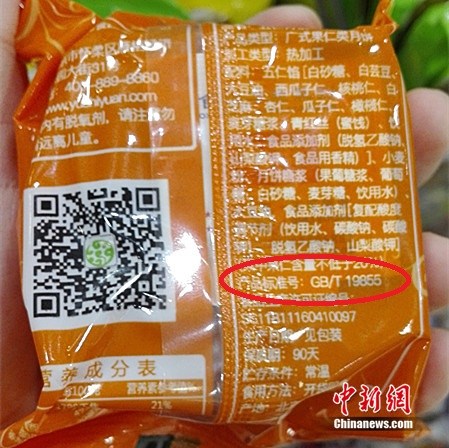
  The reporter noticed that some of the mooncakes on sale in the market have been printed with the product standard number "GB/T 19855", and some mooncakes are still packaged with the old version of the "GB 19855" standard.

  China Bakery and Sugar Products Industry Association explained in the report "Development Trend of National Mooncake Industry in 2016" that the new standard is recommended and not mandatory. For example, enterprises that implement this standard need to carefully study the revision of the standard and do a good job in the implementation of the standard.

  After changing to recommended standards, does it mean that the industry standards have been relaxed? Guo Yaping, deputy director of Beijing Daoxiang Village Food Factory, believes that although it is a recommended national standard, enterprises should strictly implement the contents mentioned in the standard if they choose to adopt this standard and print new product standard numbers on the packaging.

  If the enterprise chooses to implement the new standard, what will happen to the packaging printed with the standard number of the old product?

  Guo Yaping said that the cost of a mooncake packaging box ranges from a few yuan to a dozen yuan, and throwing it away in large quantities will cause waste. For the old packaging in stock, Daoxiang Village adopts the form of adding new labels as a whole, covering the original labels. The new packaging adopted the new product standard number from the time of printing.

  Popular science — —

  Wuren moon cake has a strict definition: five kinds of nuts must be collected.

  In terms of types, the styles of mooncakes sold this year have increased. The new standard adds six categories of moon cakes: Chaozhou moon cakes, Yunnan moon cakes, Jin moon cakes, Qiong moon cakes, desktop moon cakes and Harbin moon cakes.

  In view of the most concerned Wuren moon cake, the new standard puts forward that "the moon cake filled with five main raw materials, such as walnut kernel, almond, olive kernel, melon seed kernel and sesame seed, can be called Wuren moon cake".

  This definition immediately caused controversy: Does Wuren moon cake have to contain the above five kinds of nuts?

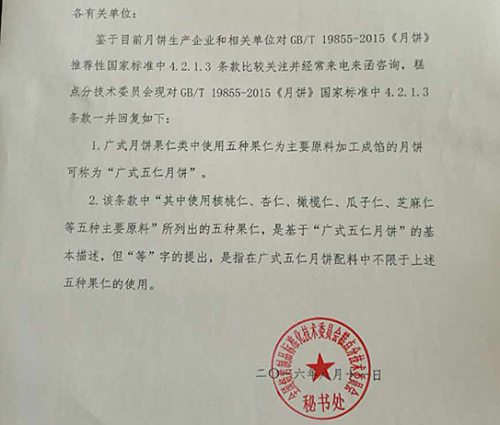
  In this regard, the Pastry Sub-technical Committee of the National Baking Products Standardization Technical Committee explained in the letter that the word "equal" refers to the use of the above five kinds of nuts in the ingredients of Guangdong Wuren moon cake.

  Guo Yaping said that according to the understanding of the above letter, whether it is a five-kernel moon cake with olive kernels in the south or a five-kernel moon cake with pine nuts in the north, as long as it is processed with more than five kinds of nuts such as peach kernel and almond, it can be called five-kernel moon cake.

  She said that moon cakes are traditional foods and are produced all over the country. The promulgation and implementation of the new moon cake standard not only standardizes the production behavior of the moon cake industry, but also encourages the inheritance and innovation of traditional food culture.

  Industry observation — —

  The cost increases. Why didn’t the mooncake manufacturers raise their prices significantly?

  A person in charge of a moon cake company revealed that the prices and labor costs of raw materials such as edible vegetable oil, white sugar and nuts have risen this year, leading to an increase in the cost of moon cakes.

  "The price of white sugar is fluctuating and rising," said Sun Yue, an analyst with Zhuo Chuang Information. Taking Guangxi sugar as an example, the average ex-factory price in August was 5,870 yuan/ton, up 15% compared with the same period last year.

  Li Wenqian, an analyst at Zhuo Chuang Information, said that due to the increase in peanut prices in the first half of this year, the first-grade peanut oil squeezed by manufacturers has increased by about 1000 yuan/ton compared with the same period of last year, with a year-on-year increase of about 7.41%.

  Although the cost has increased, some enterprises have not significantly increased the price of moon cakes.

  Guo Yaping said that Daoxiang Village has a product price management strategy and process method, and the price adjustment will only be carried out when the price fluctuation of raw materials exceeds a certain proportion of the cost. Although the cost of raw and auxiliary materials for moon cakes has increased, it has not yet reached the prescribed proportion, so the price remains basically unchanged this year.

  China Bakery and Sugar Products Industry Association pointed out in the report that it is expected that the sales price of mooncake retail market will be basically the same as last year, or increase slightly, despite the rising prices of some raw materials and labor costs this year.

  According to the report, when the mooncake industry continued to decline in 2013 and 2014, most enterprises optimized and adjusted their product structure, ensuring reasonable profits and making prices more reasonable and popular.

Little book-turning party: It turns out that the brain activity of "fruit powder" is similar to that of Christians.

The "Little Book-turning Party" is a sub-column of the "Book-turning Party" in The Paper: reading the knowledge in books in a well-documented way.

In the hit drama Ode to Joy, almost all the protagonists use Apple phones, except Qiu Yingying, who seems to have a replacement Android phone. We don’t know whether Apple also paid the advertising fee for this play, but it’s not surprising if there are a group of people around you who are using Apple phones, and everyone may encounter one or two "fruit fans" who are obsessed with Apple products and act as "free salesmen".

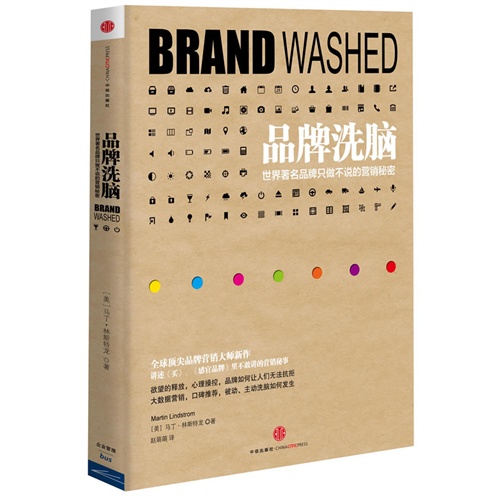
Martin Lindstrom of marketing guru said in his "brand brainwashing" that "fruit powder" is actually similar to Christians.

His exact words are as follows:

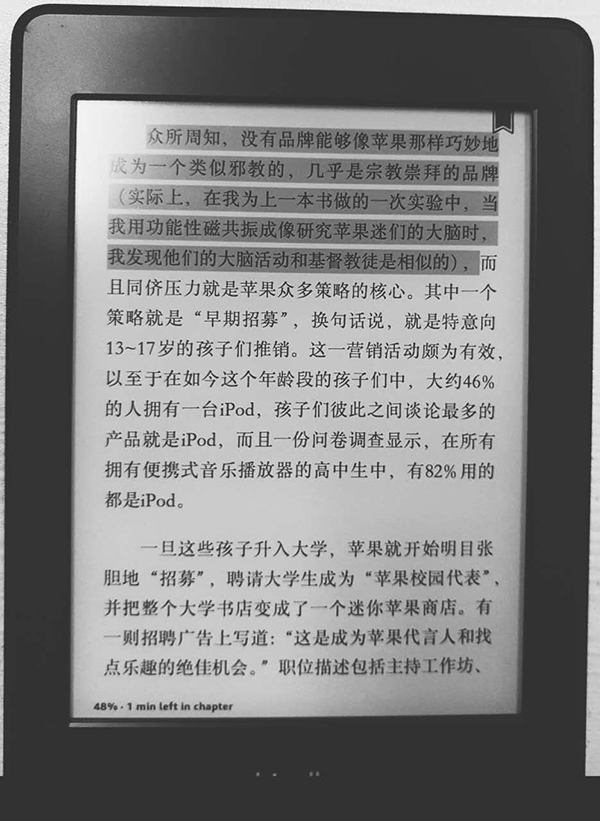
As we all know, no brand can become a cult-like, almost religious worship brand like Apple (in fact, in an experiment I did for my last book, when I studied the brains of Apple fans with functional magnetic resonance imaging, I found that their brain activities are similar to those of Christians), and peer pressure is the core of many Apple strategies. One of the strategies is "early recruitment", in other words, it is to sell it to children aged 13-17. This marketing activity is so effective that about 46% of the children of this age now own an iPod, and the product that children talk about most among themselves is the iPod, and a questionnaire survey shows that 82% of all high school students with portable music players use the iPod.

Once these children entered the university, Apple began to openly "recruit", hired college students to become "Apple campus representatives" and turned the whole university bookstore into a mini-Apple store. One job advertisement said, "This is a great opportunity to be an Apple spokesperson and have some fun." The job description includes hosting workshops, organizing activities, and establishing good relations with students, faculty and students’ parents. The most important thing is, "You will cooperate with the Apple team to implement marketing projects on campus, including promoting sales and raising the awareness of Apple products … We need a leader who can inspire peers and cooperate with student organizations."

This copy is very clever: who doesn’t want to think of himself as a leader, a trendsetter and a person who can inspire his peers? I would like to add that if you often go to the movies, you may think that people all over the world use Apple products-this is a victory that combines product implantation and peer pressure. In 2009, almost half of Hollywood movies-about 46%-featured Apple or Apple products. Although it is generally believed that this behavior does not involve money transactions, there is no better way to expose advertisements and brands.

Well-documented:

Martin thinks that Apple has obviously taken advantage of people’s psychology: it succumbs to some potential "peer pressure", that is, people want what others want. And the more obvious the needs of others are, the more we want what they have. According to Martin, this is what advertisers and marketers have known for a long time.

Black Friday and "11.11" snapping up may also take advantage of this psychology:

This fear of’ if someone else takes it, we will miss it’ drives fanatics to queue up at 4 am, just to get the latest iPad2 or a pair of UGG wool boots with rare colors, and this is why a bargain hunter was trampled to death outside Wal-Mart on Long Island on a black Friday a few years ago. If you bid for goods on eBay, you are likely to fall victim to this trap unconsciously. If there is only one product (for example, there is only one penguin tea set in the world), then the fear that’ others may easily get a set of mugs with orange beaks’ will drive people to raise the bid price exponentially-and pay a price far beyond the value of the product.

Martin thinks that the bestseller list also takes advantage of "peer pressure":

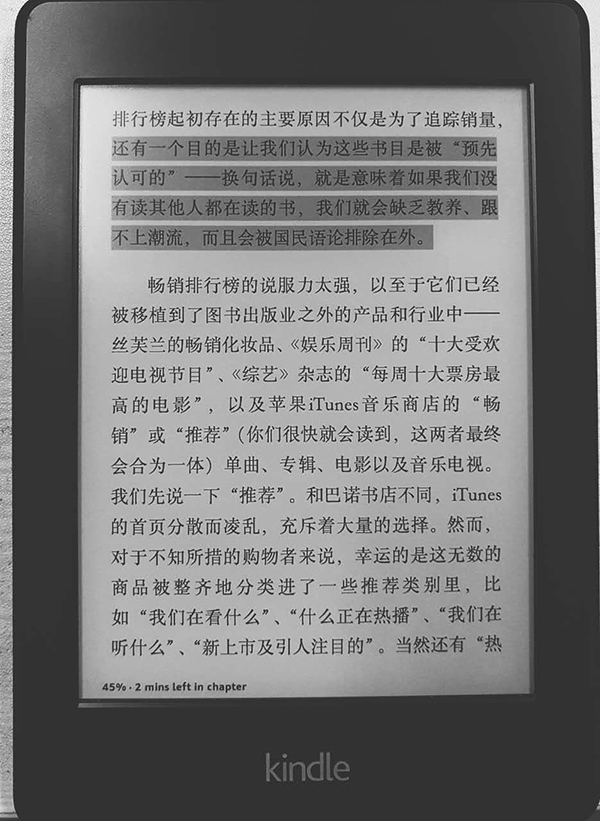
To know how much strangers’ preferences and purchases affect our decisions, just look at the leaderboard phenomenon. Imagine you walk into a large chain bookstore as big as a football field. Faced with a large number of choices, it is still quite risky to spend $27.99 on a novel or memoir that you later find hard to read. But wait, what’s on the independent shelf on your right? This week’s "Best-selling List of The New York Times", including fiction and non-fiction, has more than 20 books in total. Subconsciously, you think, "If so many people buy this book, it must be a good book", and then you think, "If so many people are reading this book, won’t it be out of date if I don’t read it?" Now, you not only avoid the pain of going through four floors and not knowing how to start, but also get the recognition of your peers who buy books. This is not a happy coincidence in the publishing industry. In fact, although publishers want you to believe the contents of the list, the main reason why the best-selling list existed at first was not only to track sales, but also to make us think that these books were "pre-approved"—in other words, if we didn’t read the books that everyone else was reading, we would be ill-educated, unable to keep up with the trend, and would be excluded from the national language theory.

Well-documented:

More interestingly, Martin found that even if consumers are "used", they still think that their buying behavior is rational:

Of course, we don’t always realize that the perceived popularity of goods affects our preferences. Recently, I asked 10 female fans in louis vuitton in a focus group: "Why do you like this brand so much?" Everyone mentioned the quality of zippers, leather and brand immortality. I am doubtful about that. So we scanned the brains of these 10 women with functional magnetic resonance imaging. Every time we show them pictures of louis vuitton products, the "Brodmann area 10" in the brain will be lit up, which will be activated when people see something they think is "cool". These women rationalize their buying behavior and tell themselves that they like this brand because of its high quality, but their brains know that they actually make choices because they are’ cool’. Even the brain can’t stand the fact that we are excluded, which seems to indicate that whether it is "hot" songs, "that" gifts or "trendy" designer handbags, what we finally buy has nothing to do with what we want, but more of what we think we should.

But the most interesting thing is that Martin found that even marketers themselves will fall into this trap:

For example, the planner of every advertising company I know (in most European advertising companies, this position is to do consumer research) has a beautiful Moleskine leather notebook. This was not sent when they joined the company; It has become an unwritten rule that every planner of an advertising company must own one and use it. If you don’t, it means that you are isolated and not an insider.

Book shadow:

If you can’t fight, you can’t talk: US sanctions can’t crush Iran, and the deadlock between the two sides is hard to solve before November.

Trump’s "olive branch" was categorically rejected by Iran.

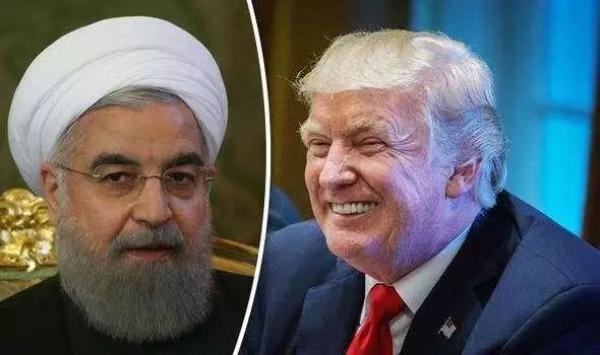
Just before Iran recently held a routine annual military exercise in advance in the Persian Gulf, Trump, who recently sent Iran a "capital tweet" implying the use of force, unexpectedly said that he was ready to meet with Iranian leaders at any time without preconditions: "I am willing to meet, especially when I may face problems such as war, death and famine. There is nothing wrong with meeting. " "If they (Iran) want to, I am ready to meet them at any time." "There is no precondition. If they want to meet, I will. " Trump’s bizarre "olive branch" was not only categorically rejected by Iranian conservatives and moderates, but also failed to change Iran’s Persian Gulf military exercises as scheduled, and was criticized by the media at home and abroad.

Since Trump announced his withdrawal from the Iranian nuclear deal on May 8 this year, the diplomatic game and public criticism between the United States and Iran have never stopped. At present, the international community, especially international public opinion, is doubly concerned about whether the game between the United States and Iraq is developing in the direction of opening peace talks or evolving in the direction of opening war? Opening peace talks is undoubtedly big news, and opening war is even bigger news. This is undoubtedly another unpredictable suspense that Trump has created for the world. In my opinion, in the short term, there is no possibility for the United States and Iraq to start negotiations, let alone war. The two sides are still in the stage of diplomatic game and public opinion attack and defense between pressure and anti-pressure, sanctions and anti-sanctions.

Trump’s diplomatic "soap opera" was embarrassed.

Trump’s casual attitude is not serious, and it is naturally difficult to cause serious treatment and response from Iran. Trump’s loose talk shows that the United States and Iraq can hold unconditional negotiations, which is a manifestation of his capricious and consistent style. Just a few hours before Trump’s speech, US Secretary of State Pompeo also said that the United States and Iran would never hold unconditional talks, and Pompeo was nicknamed "the mouse in the maze" by the media.

Although Trump’s diplomacy is unpredictable, it has also formed a certain "diplomatic routine" on many crisis issues: first, it issued extreme threats, then changed its position, held talks, and finally announced its victory. The most typical case is Trump’s North Korean diplomacy. However, the Iranian nuclear issue is not only fundamentally different from the DPRK nuclear issue, but also Iran’s complicated bureaucratic system, especially the dual structure of conservative and reform forces, and the constraints of religious leaders on the president are very different from North Korea’s power structure, and the geopolitical environment in which the two hot issues are located is also very different. What’s more, the US-DPRK summit was realized under the pressure and communication of Trump for eight months after he took office.

Therefore, Trump’s loose talk about holding US-Iran talks was also accused by the media as a "diplomatic soap opera", and Iran, which has been engaged in diplomacy on the Iranian nuclear issue for 15 years since 2003, naturally will not make a positive response at will. The prospect that it is difficult for the United States and Iran to hold negotiations in the short term is just as Gerald Blank, an expert at the Carnegie Endowment for International Peace in the United States, said: "Iran’s domestic political structure is much more complicated than that in the northern part of the peninsula, and it is not interested in diplomacy with the United States, especially after Trump asked the United States to withdraw from the multinational agreement known as the Joint Comprehensive Action Plan." "At present, if anyone in the Iranian government tries to contact Trump, they are severely criticized by others."

The reaction made by Iran also proves this point. Motahari, deputy speaker of the Iranian parliament, pointed out: "After Trump made an arrogant talk to Iran, negotiation is impossible. This is an insult. " Iranian Interior Minister Fazley said: "The United States cannot be trusted. How can people trust after the United States is arrogant and unilaterally withdraws from the nuclear agreement? " Arribi, director of the Iranian project of the World Crisis Group, commented that "no Iranian leader will meet with the US president who has repeatedly threatened Iran, attacked the Iranian leadership and violated the nuclear agreement at this time."

"Old hatreds and new foes" make the United States and Iraq not qualified for negotiations.

In essence, Trump’s idea that the United States and Iran can negotiate unconditionally is more of a diplomatic strategy, which not only alleviates the international community’s widespread criticism that the United States unilaterally withdrew from the Iranian nuclear deal, but also shifts the responsibility for regional tensions to Iran. At the same time, it is also a strategy to aggravate Iran’s domestic contradictions and disrupt Iran’s domestic political ecology. However, its arbitrariness and hypocrisy can be described as obvious, and Iran, which has rich diplomatic experience, will naturally not take it.

Of course, the deeper root of the difficulty in holding negotiations between the United States and Iran lies in the serious distrust accumulated by the confrontation between the United States and Iran in the past 40 years since the Islamic Revolution in Iran in 1979. The contradictions between the two sides spread throughout the social system, ideology and practical interests. From the beginning of the Islamic Revolution when the United States broke off diplomatic relations with Iran to the hostage crisis, from the 1980s when the United States supported Iraq to confront Iran in the Iran-Iraq war to the Clinton administration’s containment policy, to the Bush administration’s characterization of Iran as an "axis of evil" and its long-term sanctions against Iraq, and now the Trump administration brazenly withdrew from the hard-won the Iranian nuclear deal and exerted extreme pressure on Iran, it can be said that the old hatred between the United States and Iraq has not been solved, and new hatred has been added.

Therefore, negotiations between the United States and Iran are not realistic at all, just as Mehmetali Jaafari, commander-in-chief of the Islamic Revolutionary Guard Corps, said: "Iranians will not allow government officials to meet with the Great Satan." of course,Contact between the United States and Iran through a third party is not excluded. Some analysts pointed out that Oman’s foreign minister visited Tehran and Washington one after another last month, which is likely to play an information communication role between the United States and Iran.After Rouhani came to power in 2013, it was Oman that brokered the bridge between Iran and the United States, which finally led to the resumption of US-Iran contacts and Iranian nuclear talks. According to reports, Trump had sent the message of holding bilateral talks to Iran eight times before. However, the United States kept pressing and shouting about the talks. In addition, the Iranian nuclear deal involved China, the European Union and Russia, which made Iran not easily hold bilateral talks with the United States, and even more afraid of falling into the diplomatic trap set by Trump.

Judging from the future trend, the possibility that the United States and Iran will return to negotiations will not be ruled out even if the United States exerts certain pressure on Iran and forces Iran to compromise in some areas of the 12 conditions put forward by the United States (such as Syria and other issues), but this will not happen overnight, and it is difficult for Iran to abandon other parties in the Iranian nuclear deal and negotiate with the United States alone.

The weight of war: the United States and Iraq can’t bear it.

From the perspective of the United States, although Trump has changed the Middle East policy during the Obama era since he took office, he has continued to exert his strength on the three hot issues of Syria, Palestine and Israel, but its essence is still to maximize the benefits with the minimum investment, and its core is to consolidate the alliance with Saudi Arabia and Israel and profit from it by shaping Iran into a regional core threat. However, Trump, who gives priority to the interests of the United States, revives the domestic economy and ensures the victory of the mid-term congressional elections, has no systematic plan to go to war with Iran rashly. This may be one of the specific reasons why Trump recently said that the United States and Iran can negotiate unconditionally. Its purpose is to cool down the situation in the Gulf region, which is becoming more tense in the context of Iran’s recent military exercises.

In essence, the United States should be well aware of the disastrous consequences of going to war with Iran. If it chooses a "preemptive" war to completely overthrow the Iranian regime, it will trigger regional turmoil and even a full-scale war, and will impact the international energy market and the whole world economy. If limited military strikes involving Israeli, Saudi and other allies are chosen, the United States will not be able to change the Iranian regime in a short period of time, and Iran will definitely choose to threaten to block the US military bases in the Strait of Hormuz and intensify the conflicts in Syria, Yemen and other regions in an all-round way, and the forces fostered by Iran in the Middle East will continue to create troubles. Iranian President Rouhani warned that the war between the United States and Iran would be "the mother of all wars", and this is the profound meaning. The strategic depth of Iran and the Persian nationality’s resistance to power will also be feared by the United States, and the lessons of the United States in Iraq and Afghanistan are just around the corner. Therefore, if Trump is still rational, it is unlikely that the United States will choose to launch a war against Iran.

Iran is facing more serious challenges. The contradiction between Iran’s conservatives and reformists has intensified after the United States restarted sanctions, and the people’s livelihood crisis aggravated by a large number of foreign capital fleeing, currency depreciation and soaring prices has made Rouhani face the phenomenon of "second term curse" of the president in Iranian politics (that is, both reformist and conservative presidents will hit a wall in their second term and end up in a bleak way, and hostile factions will come to power in the next presidential election) more serious, while the United States has become Rouhani’s "second term curse". At present, coping with economic difficulties internally and alleviating the economic crisis; Saving the Iranian nuclear deal from the outside world and easing the pressure of U.S. sanctions are the top priority of the Rouhani administration, which makes it not take the initiative to choose war at all. At present, although Iran has held a very high-profile military exercise, Iran will not easily take actions such as blocking the the Strait of Hormuz to aggravate tensions without a comprehensive or limited military strike by the United States.

Based on the above factors, in a certain period of time in the future, the United States and Iran will continue to struggle mainly in the fields of diplomacy, economy and public opinion, supplemented by mutual deterrence in the military field, and even the friction between the two sides in a third-party battlefield such as Syria will not be ruled out, but it is unlikely that the two sides will engage in direct local wars and total wars.

Of course, the United States will hope that Iran’s economic collapse and even regime collapse will be caused by extreme pressure, and Iran’s political and economic difficulties will naturally continue to intensify. However, Iran’s political toughness is much higher than that of Arab countries where regime changes have taken place before. The political system of the Islamic Republic, which combines religious centralization with democratic elections, a relatively complete bureaucratic system, the mutual restriction between the two forces of reform and conservatism, the absolute loyalty of the Islamic Revolutionary Guard Corps, and the regime’s ability to resist pressure for a long time under war and sanctions, are all factors that enable the Iranian regime to maintain its resilience.

Therefore, before the end of the mid-term elections in the United States this year and the deadline set by the United States for the termination of trade relations with Iran (November 4), the relationship between the United States and Iran will remain in a stalemate, and its future development remains to be observed and evaluated.

(The author is the director and professor of the Middle East Institute of Shanghai International Studies University)

How to properly handle the blank wall? What aspects should be paid attention to when dealing with blank walls?

In the process of house decoration, the treatment of blank wall is a key link, which directly affects the quality and effect of subsequent decoration. The following will introduce in detail the proper treatment method of blank wall and the aspects that need to be paid attention to in the treatment process.

First of all, a comprehensive inspection of the blank wall is the first step. It is necessary to carefully check whether there are cracks, hollowing and other problems on the wall. You can tap the wall with a small hammer and judge whether there is empty drum by sound. If cracks are found, small cracks can be treated with special crack repairing agent; For larger cracks, it is necessary to cut the cracks first and then fill them with cement mortar. If there is an empty drum, the empty drum part should be eradicated and repaired with cement mortar again.

Followed by the treatment of the wall base. This includes cleaning the dust, oil and other impurities on the wall. You can use brooms, vacuum cleaners and other tools to clean up and ensure that the walls are clean and tidy. After that, choose the appropriate treatment method according to the flatness of the wall. If the flatness of the wall is poor and the error exceeds 5mm, it is recommended to use gypsum to level the wall first. Gypsum has the advantages of fast solidification and strong adhesion, which can effectively improve the flatness of the wall. If the wall flatness is good and the error is within 5mm, you can directly blow putty.

Scraping putty is an important step in the treatment of blank wall. Generally, it is necessary to scrape the putty for 2-3 times, and the interval between each time is 1-2 days, so that the putty can be fully dried. Pay attention to the technique when scraping putty, try to keep it even and flat, and avoid sagging and bumps. After scraping the putty for the last time, use sandpaper to polish the wall to make it smoother and more delicate. Pay even attention when polishing to avoid polishing marks.

After completing the above steps, you can decorate the wall. Common wall decoration materials include latex paint and wallpaper. If you choose latex paint, you should first paint the wall with primer before painting. The primer can enhance the adhesion between the wall and the top coat, and at the same time, it can also play a role in moisture prevention and mildew prevention. Topcoat generally needs to be painted for 2-3 times, and a certain time should be separated between each time. If you choose wallpaper, you should first paint a layer of basement membrane on the wall to prevent the wallpaper from being damp and moldy.

In the process of dealing with the blank wall, we also need to pay attention to the following aspects. The temperature and humidity of the construction environment have great influence on the wall treatment effect. Generally speaking, the construction temperature should be between 5℃ and 35℃, and the relative humidity should be below 85%. If the ambient temperature is too low or the humidity is too high, it will affect the drying speed of putty and latex paint, leading to problems such as cracking and peeling on the wall. In addition, pay attention to safety during construction and wear protective equipment, such as masks and gloves. When using electric tools, we should operate in strict accordance with the operating rules to avoid safety accidents.

The following table compares the advantages and disadvantages of different wall treatment materials:

material advantage disadvantage? latex paint Relatively low price, rich colors, good air permeability and easy cleaning. Scrubbing resistance is average, and fading may occur after a long time. wallpaper Rich patterns, good texture and relatively simple construction. Higher price, easy to get wet and moldy, and poor air permeability.

In a word, it is necessary to properly handle the blank wall according to the correct steps, and at the same time pay attention to the construction environment and safety issues, so as to create a beautiful and durable wall.

(Editor: liujing HZ010)

[Disclaimer] This article only represents the author’s own views and has nothing to do with Hexun. Hexun.com is neutral about the statements and opinions in this article, and does not provide any express or implied guarantee for the accuracy, reliability or completeness of the contents. Readers are requested for reference only, and please take full responsibility. Email: news_center@staff.hexun.com.

China’s rare and strange surname: "Death" is daunting.


  On April 13th, in front of the 14,000-square-meter surname square in the hometown of Huangdi in Xinzheng, Henan Province, the workers were doing the final polishing. It is reported that this surname wallIt is the first in China, and more than 3,000 surnames are carved on the walls of five surnames. China News Agency issued Li Zhiquan photo


    BEIJING: The Hong Kong newspaper published an article on China’s rare and strange surname today. The content is as follows.


    Surname is a very unique cultural phenomenon in China civilization. Behind every surname, there is a true story. Among many surnames, five surnames are both very rare and daunting.


    die


    It is said to be the penultimate "little surname". The "death" surname is mainly distributed in the northwest of China, which was developed from the four-character compound surname of ethnic minorities in the Northern Wei Dynasty. Both the East and the West are very shy about this kind of thing and are unwilling to open their mouths and shut up. However, with this as the surname, there is no way out, which is nothing more than an unlucky impression.


    difficult


    According to statistics, this is the penultimate surname of China. This is "difficult", read the sound. All the men, women and children who live in four small villages in Henan Province for generations are surnamed "Nan". This reminds the outside world of unpleasant things such as disasters and difficulties.


    It is said that the surname "Nan" moved northward with Xianbei, and the Songhua River was renamed "Nan Jiang" at that time. After several twists and turns, it was difficult for Xianbei people to set foot on the Korean peninsula.


    black


    Any culture advocates openness and darkness, and often has a bad feeling. As a surname, this word is pronounced "He". It’s just embarrassing to fall on paper.


    old


    As soon as you are born, you will be called "Lao …". If you don’t want to, you have to be called so. The word "Lao" will be with you all your life. Such as "old baby" and "old lady". There are two versions of this surname. As soon as it was said that it was changed from the Manchu surname of "Sakda" to the Han surname, the Manchu language of "Sakda" meant "old". Yi Shuo is one of the four indigenous surnames in Foshan, Guangdong.


    poison


    This surname, when called, sounds very scary. Who wants to deal with Mr. and Mrs. Poison? Even people with these surnames, no matter how warm-hearted they are, let strangers breed some fear. It is said that there was a poisonous family in Guogou, Taibao City, Chiayi County, Taiwan Province, whose ancestors were translators of the Qing Dynasty. After several generations of single biography, now, six men have been bred.


More historical news:


In 1966, Mao Zedong lived in seclusion in the "Drip Cave": 11 mysterious days.


Recent situation of Lin Biao’s beautiful daughter-in-law Zhang Ning (photos)


Ye Ting’s son uncovers the mystery of Ye Ting air crash (Figure)


Mao Zedong’s dying state of mind.


Zhang Yufeng’s first disclosure: part of the truth I know about Mao Zedong


Top Ten Anti-Japanese Generals of Kuomintang Army (Photos)


The little-known past of Chiang Kai-shek’s ace, Zhang Lingfu


Old age: Chiang Kai-shek’s crying after 49 years in exile


Absolute beauty is both talented and beautiful: the top ten beauties in old Shanghai.


Shi Hai: Zhang Xueliang’s guard battalion commander recalled the process of catching Jiang in Xi ‘an Incident (Figure)


Editor: Sun Jie

Apple may place an order with TSMC for more than $33 billion this year. 2nm is the key.

[CNMO Technology News] According to Taiwan Province’s "Economic Daily" quoted analysts, global consumer electronics giant Apple may purchase chip orders with a total amount of NT$ 1 trillion (about US$ 33 billion) from TSMC in 2025, which will become an important driving force for TSMC’s revenue growth. The analysis pointed out that this estimate is based on the background that TSMC’s share in Apple products continues to increase and its wafer fab in Arizona is about to play a key role.

Apple CEO Cook has repeatedly stressed that Apple is the biggest customer of TSMC’s Arizona plant. With TSMC’s continuous lead in advanced process, its upcoming 2 nm process is expected to be the main factor to increase Apple’s order amount.

The data shows that in TSMC’s revenue in the first quarter of 2025, the 3 nm process contributed 22%, a significant increase of 13 percentage points compared with 9% in the same period of 2024; However, the contribution of 5 nm and 7 nm processes decreased by 1 and 4 percentage points respectively. Analysts pointed out that the growth of 3 nm revenue is mainly due to Apple’s extensive use of this process for iPhone chips, and future 2 nm orders are expected to bring greater growth momentum.

According to reports, Apple’s purchase of chips from TSMC in 2024 was about NT$ 624 billion. If orders increase to 1 trillion yuan in 2025, it will mean an annual growth rate of 60%. However, analysts believe that the order amount in 2025 may fluctuate between 800 billion yuan and 1 trillion yuan, depending on the mass production progress of TSMC’s 2 nm process and the capacity climb of Arizona plant. If the median is 900 billion yuan, the annual growth rate will also reach 44%.

TSMC’s total revenue in 2024 was 90 billion US dollars. If Apple’s orders meet expectations, it will significantly increase Apple’s proportion in TSMC’s overall revenue and further consolidate its position as the largest customer.

At present, TSMC is facing fierce competition from Samsung and Intel in the field of advanced process. Among them, Intel plans to mass-produce the 18A process in 2025, trying to gain a share in the wafer foundry market. However, TSMC continues to be the most advanced wafer foundry in the world with its 2-nanometer process based on the new generation ring grid (GAA) architecture.

The Central Meteorological Observatory issued an orange warning for typhoon.

  CCTV News:The Central Meteorological Observatory issued an orange warning for typhoon at 10: 00 on August 30th. The center of Typhoon Sura (super typhoon) No.9 this year is located at 9: 00 am today (30th) on the sea surface about 580 kilometers south-east of Huilai, Guangdong Province, which is 20.2 degrees north latitude and 121.0 degrees east longitude. The maximum wind force near the center is above 17 (62m/s), and the minimum pressure at the center is 915 hectopascals.

  It is estimated that "Sura" will move to the northwest at a speed of 10-15 kilometers per hour, move into the northeastern South China Sea on the night of the 30th or the early morning of the 31st, and gradually approach the coastal areas from eastern Guangdong to southern Fujian. It may land on the above coastal areas during the day on September 1st (strong typhoon level or super typhoon level, 45-52m/s, 14-16), or it may move to the south-west direction in the coastal areas of eastern Guangdong.

  Gale forecast:From 14: 00 on August 30 to 14: 00 on August 31, there will be strong winds of 6-8 grades and gusts of 9-10 grades in bashi channel, Taiwan Province Strait, the sea south of the east of Taiwan Province, the northeastern South China Sea, the coastal areas of Fujian, the southern coast of Taiwan Province Island and the coastal areas of central and eastern Guangdong. Among them, the winds in bashi channel and the easterly waters of the northeastern South China Sea are 9-11 grades, and the winds in some sea areas can reach 12-13 grades.

  Precipitation forecast:From 14: 00 on August 30 to 14: 00 on August 31, there were heavy rains in parts of central and eastern Fujian, eastern and southern Taiwan Province Island, and local heavy rains (100-150 mm).

  Defense guide:

  1. The government and relevant departments shall, in accordance with their duties, do a good job in typhoon prevention and emergency rescue.

  2. Water operations and passing ships in relevant waters should return to Hong Kong to take shelter from the wind, strengthen port facilities, and prevent ships from anchoring, grounding and collision.

  3. Stop large-scale indoor and outdoor gatherings and dangerous outdoor operations such as high altitude.

  4. Reinforce or dismantle structures that are easy to be blown by the wind. Personnel should not go out at will. They should stay in windproof and safe places as far as possible, so as to ensure that the elderly and children stay in the safest place at home, and the dangerous people will be transferred in time. When the typhoon center passes by, the wind will decrease or stay still for a period of time. Remember that the strong wind will suddenly blow and you should continue to stay in a safe place to avoid the wind.

  5. Relevant areas should pay attention to prevent flash floods and geological disasters that may be caused by heavy precipitation.

Snow leopard and her friends won the honor of the Chinese documentary film conference


1905 movie network news On the evening of November 18th, the second Chinese documentary film conference "Golden Gull" was held in Zhuhai, Guangdong. Eight films stood out from the 32 entries and won nine honors. Before the closing ceremony, the conference also held the "Glory Avenue" ceremony, where many of the finalists first met the audience.


In the category of works, he won the special recommendation for the annual documentary film works; Get the recommended works of natural science; Get the recommended works of culture and history; "Just Run" won the recommended works of social documentary; Get the recommended works of international communication.


Among the individual honors, "The Direction of Savoie Flowing" Chen Danyan became the director specially recommended by the Organizing Committee; "Snow Leopard and Her Friends" became the photography specially recommended by the organizing committee; Become a special recommended clip of the organizing Committee; Chad Cannon became a special sound effect recommended by the organizing Committee.


"Thank you for the Chinese Documentary Film Conference, thank you for judging teachers, and thank you for all the people who have made this film. Film creation is an endless road, and we will continue to work hard." When receiving the award on stage, the producer of Snow Leopard and Her Friends said with great emotion. The film took six years to shoot, and it was not easy to go all the way. Not long ago, the film just won the Best Documentary Award in the 36th China Golden Rooster Award.


"This year’s competition is particularly fierce. There are works that have won the Golden Rooster Award for Best Documentary, as well as movies on the theme of Winter Olympics. It is really unexpected to win the award." Standing in the spotlight of the podium, the director of "Invisible Peak" shared his mental journey of winning the prize. At the same time, he also said that winning the film is not a personal victory, but a victory for all filmmakers. I hope that the Chinese documentary film will get better and better.


When the director of "Not an Island" frankly filmed the film, he was deeply impressed by the fact that the recording engineer was afraid to move because of the mosquito bites on his arm holding the equipment in order to ensure the radio quality. The music part of this film was completed online, and the composer Richard Cannon was deeply moved by the kindness of Chinese presented in the film.


In addition, Liu Shihua, an internationally renowned violinist and pianist, brought classic songs such as Meditation to the audience. It is worth mentioning that 45 years ago, the Central News Recording Film Studio filmed a documentary called "Spring Bud", and Lv Siqing, who was eight years old at that time, was one of the masters of the film.


This year’s Chinese Documentary Film Conference is organized with the concept of "China characteristics, international vision and humanistic feelings", aiming at paying tribute to ordinary people in the industry, attracting more high-quality resources into the industry to expand the market space, and promoting the high-quality development of documentary films in China.

Seize the regulatory opportunity, and the EU’s "Artificial Intelligence Act" enters the final negotiations.

  □ Rule of Law Daily reporter Wang Wei

  According to a recent report by DPA, the plenary session of the European Parliament passed the draft authorization of the Artificial Intelligence Act with an overwhelming majority of 499 votes in favor, 28 votes against and 93 abstentions. This means that the bill enters the final negotiation stage of EU legislation to strictly supervise the application of artificial intelligence technology, and the European Parliament, the European Commission and member States will conduct "tripartite" negotiations to determine the final terms of the bill. The German "Business Daily" said that the "Artificial Intelligence Act" is expected to be finally approved by the end of this year, but it may take several years before it fully takes effect.

  Be prepared for negotiations

  According to the report, the European Parliament decided to add more security control measures to generative artificial intelligence tools such as ChatGPT to ensure that the research and development and application of artificial intelligence comply with relevant EU laws and regulations.

  As the world’s first comprehensive legislation aimed at artificial intelligence through parliamentary procedures, the draft has formulated detailed rules in terms of security, privacy, transparency and non-discrimination. According to the website of the European Parliament, the European Parliament "is ready for negotiations to formulate the first artificial intelligence bill in history". According to the legislative agenda, the European Parliament will hold "tripartite" negotiations with the European Commission and member States on this draft authorization, and European legislators hope to reach a consensus on the final version of the bill before the end of this year.

  In May this year, the Market Committee and the Civil Liberties Committee of the European Parliament passed the draft negotiating authorization for the proposal of the Artificial Intelligence Act put forward by the European Commission in April 2021. Previously, the European Parliament and the Council of the European Union had made several rounds of revisions and discussions on the draft, and after the emergence of generative artificial intelligence applications such as ChatGPT, EU legislators urgently discussed the issues not covered in the original draft. The European Parliament stated that this proposal, if formally approved, will become the first regulation on artificial intelligence in the world.

  The draft will apply to entities that put artificial intelligence systems on the market or put them into use in the EU (whether in the EU or in a third country), entities that use artificial intelligence systems in the EU and entities that use artificial intelligence systems in a third country, but the output of the systems is used in the EU or has an impact on people in the EU.

  Risk classification supervision

  A prominent feature of the draft authorization of the Artificial Intelligence Act is that it pays attention to formulating a supervision system based on risks, so as to balance the innovative development of artificial intelligence and safety norms. The draft divides the risk of artificial intelligence into four levels: unacceptable risk, high risk, limited risk and minimal risk, corresponding to different regulatory requirements. Among them, the use of high-risk artificial intelligence must be strictly regulated, and system providers and users must abide by the provisions of data management, record keeping, transparency and artificial supervision to ensure the stability, accuracy and safety of the system. For those who violate the regulations, the draft sets a fine of up to 30 million euros (1 euro is about 7.895 yuan) or 6% of the global annual turnover.

  The draft strictly prohibits artificial intelligence systems that pose unacceptable risks to human security, including systems that deploy subconscious or purposeful manipulation techniques, exploit people’s weaknesses or use them for social scoring, and expands the classification of high-risk areas of artificial intelligence to take into account the harm to people’s health, safety, basic rights or the environment. The draft also requires artificial intelligence companies to maintain artificial control over their algorithms, provide technical documents, establish a risk management system for "high-risk" applications, and set up a special supervision system for generative artificial intelligence such as ChatGPT. Each EU member state will set up a supervisory body.

  In addition, the regulatory sandbox (which means that enterprises are allowed to test innovative products, services and business models with real individual users and enterprise users in a real market environment by setting restrictive conditions and formulating risk management measures) mechanism is introduced to control risks and promote innovation, and the artificial intelligence system is developed, tested and verified to reduce risks before it enters the market or is put into use. The draft also proposes that this mechanism is also allowed to test innovative artificial intelligence under realistic conditions to encourage artificial intelligence enterprises to continue to innovate.

  Face important challenges

  The EU’s attempt to establish a unified legal supervision framework for artificial intelligence is an important symbolic example in the development of global artificial intelligence. The discussion and attempt of effective regulation on artificial intelligence in the EU will have a global impact, which may lead to more and more countries trying to follow up the exploration of relevant regulations.

  Regarding the decision of the European Parliament, the German Social Democratic Party expressed its support: "The potential and risks of artificial intelligence should be concerned by the whole society." However, some opponents worry that excessive supervision may bring higher costs and excessive burdens to European artificial intelligence companies.

  Companies that are in a leading position in the development of artificial intelligence are, to some extent, technology companies that have faced the risk of antitrust violations, violated existing laws and caused information leakage in the past decade. Based on this, Sam altman, CEO of OpenAI, said that he would lead his team to withdraw from the European market if the AI Act over-regulated AI.

  Experts say that the EU’s promotion of artificial intelligence legislation is conducive to maintaining the EU’s leading position in the fields of digital sovereignty and science and technology, and through such a comprehensive legislation, it will seize the opportunity of global artificial intelligence supervision. But it has its own limitations. It adopts horizontal legislation, not aiming at specific artificial intelligence application fields, but trying to bring all artificial intelligence into the scope of supervision, and will face a lot of interpretation problems at the implementation level.

  Some voices further pointed out that the EU has not reached a consensus on what impact artificial intelligence technology may bring to mankind. From a dialectical point of view, artificial intelligence can not only benefit and serve human beings, but also bring threats or injuries to human beings if it is not used properly. How to balance innovation and constraints is a very important challenge facing the EU legislature. In addition, the unified legal framework does not involve specific legal norms, and the actual implementation effect may be "greatly reduced".

  The international community believes that at present, the development of artificial intelligence technology is still in the exploration period. At this time, the EU enacted the "Artificial Intelligence Act", which released a strong signal that the EU is strengthening its regulations in the digital field. How to better balance and link technological innovation and institutional innovation needs to be constantly revised in practice.