The Ministry of Communications issued a document to strengthen the supervision of marine low-sulfur fuel and control air pollution.

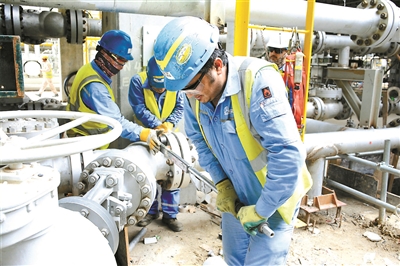
  People’s Daily, Beijing, November 12 (Reporter Liu Zhiqiang) Recently, the Ministry of Transport and other 13 departments jointly issued the Guiding Opinions on Strengthening the Supply Guarantee and Joint Supervision of Low-sulfur Marine Fuel, proposing to maintain a fair, orderly and healthy marine fuel circulation market order, enhance the supply capacity and quality of low-sulfur marine fuel in China and promote the development of green transportation through policy guidance, industry self-discipline and strengthened supervision.

  It is understood that with the implementation plan of ship emission control zones in the Pearl River Delta, Yangtze River Delta and Bohai Rim (Beijing-Tianjin-Hebei) and the approaching of the time limit for ships to use low-sulfur fuel in 2020 proposed by international conventions, ensuring the compliance of marine low-sulfur fuel supply has become the key to control air pollution from ships at present and in the future.

  The Guiding Opinions make it clear that the supply of low-sulfur fuel for ships should be guaranteed through policy guidance to meet the needs of the shipping market. First, establish a basic supply system for marine low-sulfur fuel, complete relevant policy formulation this year and next, guide domestic refining and chemical enterprises to produce compliant marine low-sulfur fuel, and dredge the information channels of "production, marketing and use". The second is to speed up the revision of marine fuel standards, and complete the research and revision of relevant standards and specifications such as Marine Fuel Oil, Ordinary Diesel Oil and Ship Fuel Supply and Receiving Procedures and Testing Methods in 2019.

  The Guiding Opinions make it clear that it is necessary to strengthen supervision to crack down on illegal acts of non-compliant marine fuel entering the circulation market and promote the fair, orderly and healthy development of the marine fuel circulation market. First, strengthen the supervision of marine fuel. From 2018, comprehensively strengthen the supervision of the production, circulation and use of marine fuel, and increase the proportion of "double random" sampling. The second is to strengthen the cooperation of marine fuel supervision departments, establish a multi-sectoral joint law enforcement system in the production, circulation and use of marine fuel in 2018, and organize special governance actions; Establish a regulatory information notification system, open up information communication channels between various regulatory departments, and regularly disclose regulatory information to the public.

The maximum battery life is 610 kilometers, and the BYD Sea Lion 07 EV is about to go on sale. Is it expected to become a popular model?

In today’s domestic new energy vehicle market, BYD can be said to have a high status and influence in the rivers and lakes, and in terms of sales, BYD’s performance is also very good. Last month (March), BYD’s sales reached 302,459 units. Facing the increasingly competitive new energy vehicle market, it has increased its efforts to develop and launch new models. Coupled with its affordable price, it has won the favor of more and more car fans and friends. A few days ago, the editor obtained a set of real car street photos of BYD Ocean’s new SUV – Sea Lion 07 from online channels. According to relevant information, the new car will be officially launched in mid-April this year. Are you full of expectations for the arrival of the new car? Let’s follow the editor to learn more about it.

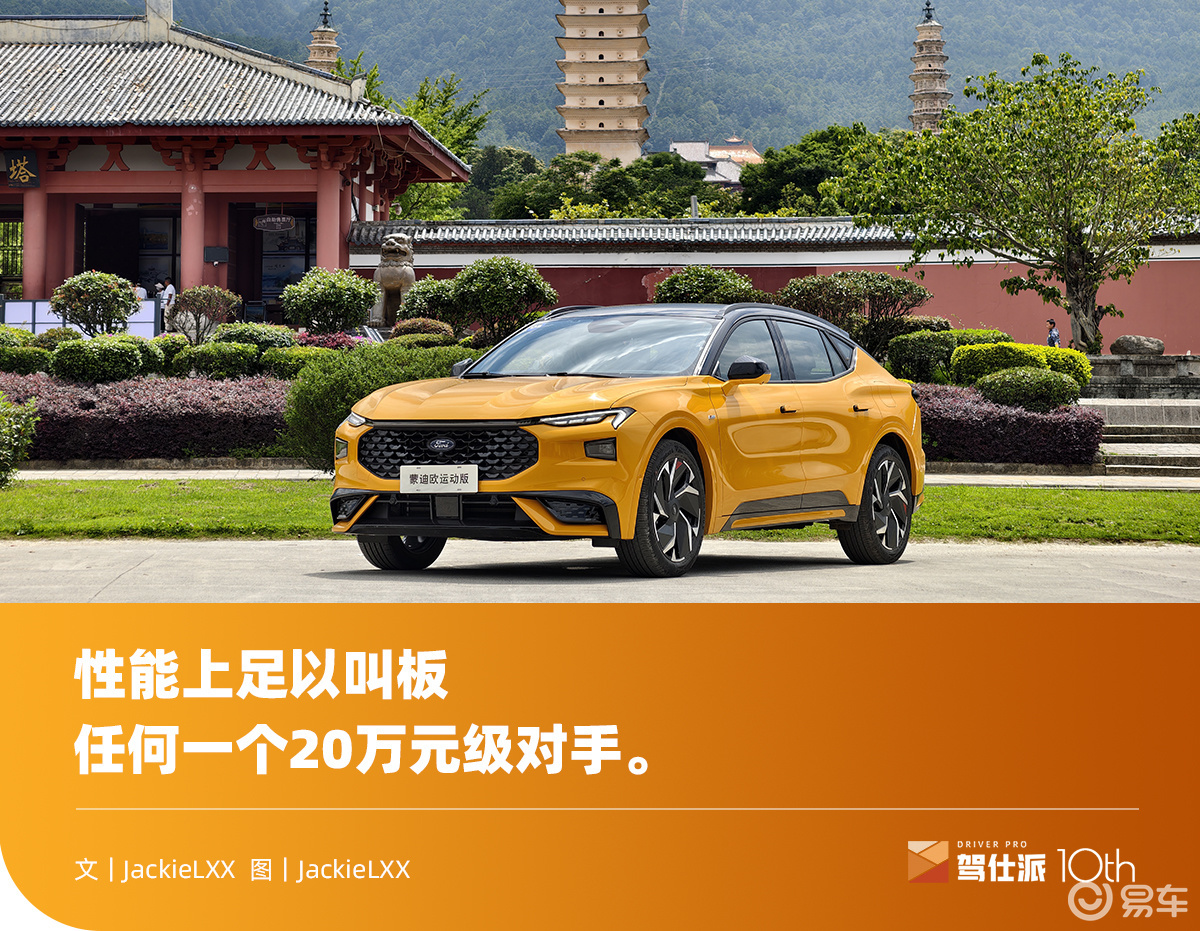
BYD Sea Lion 07 EV, the new car is based on the e platform 3.0 to create, in terms of price, as a reference, the new car is expected to cost around 190,000 yuan – 260,000 yuan, if this is the case, will you pay for it? In terms of styling design, BYD Sea Lion 07 EV uses the latest family-style design language of Ocean Network, the front face adopts the current popular closed grille treatment, the huge "BYD" letter logo, adds a bit of due brand recognition, the higher projection of the gluten line on the hood, plus the sharp "C" shaped headlight group design on both sides, and the air inlet surrounded by the blackening treatment, so that it looks young and fashionable overall. In addition, the new car also features concealed door handles, low wind resistance rims below, and blackened spoilers, which further enhance the overall sense of stylish sports.

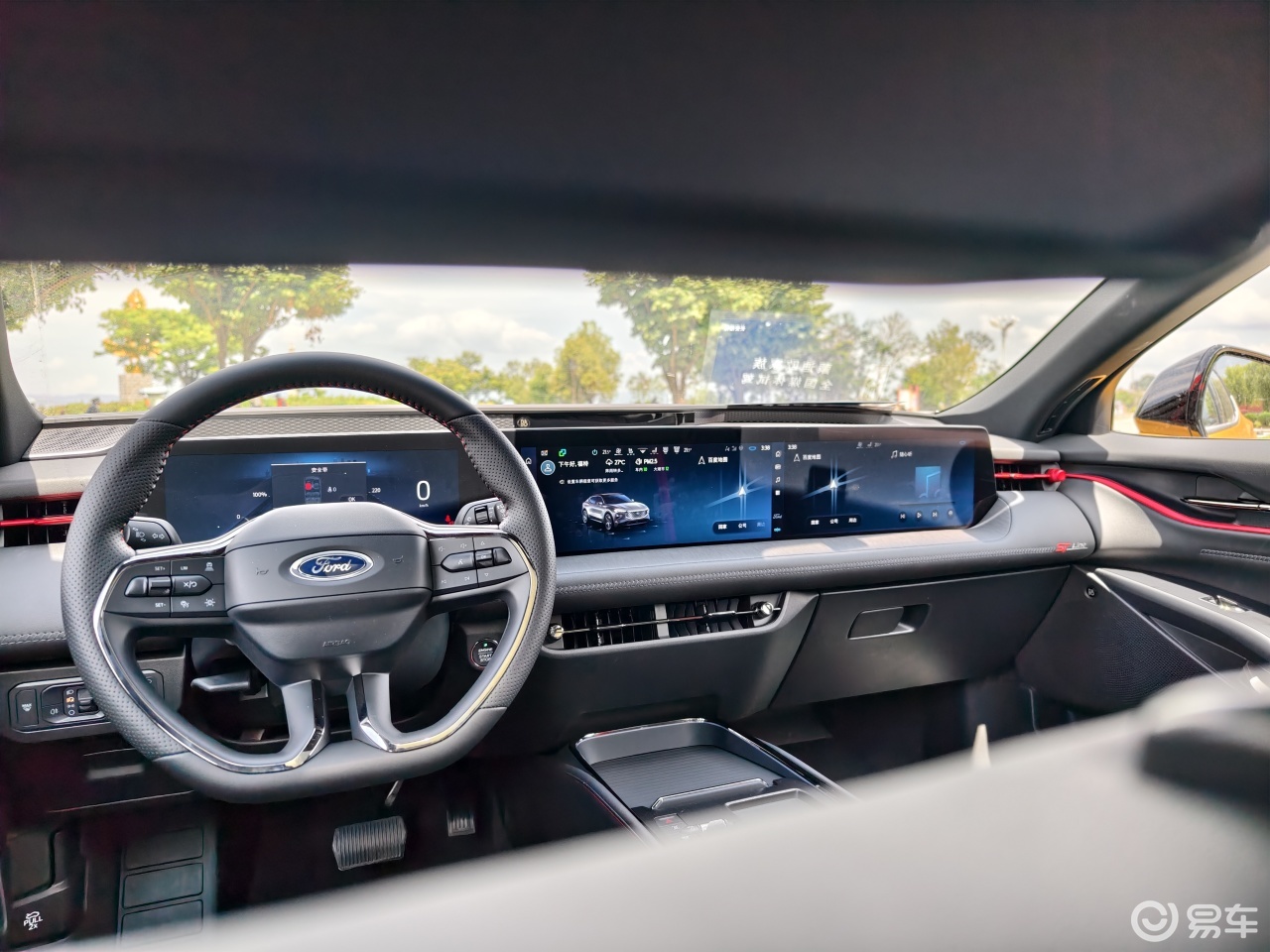
As a pure electric medium-sized SUV, the BYD Sea Lion 07 EV has a length, width and height of 4830/1925/1620 mm, and a wheelbase of 2930 mm. This body data performance is relatively good, but compared to the Denza N7, the Sea Lion 07 is slightly inferior in terms of both length, width and wheelbase. In terms of interior design, we can see from the interior diagram above that the Sea Lion 07 looks very similar to the interior of the Seal DM-i. At first glance, it feels very simple. The full LCD instrument panel and the floating central control large screen enhance the sense of technology. In addition, the new car is also equipped with a wireless charging panel for mobile phones and a high-end "Eye of the Gods" intelligent driving system, which supports high-speed NOA, a four-frame multi-functional directional break, and a delicate and compact crystal electronic stopper, as well as a large area of soft material coverage, thus creating a comfortable and technological interior atmosphere.

In terms of power, BYD Sea Lion 07 EV offers single/dual motor models, of which the maximum power of the two-wheel drive version single motor is 170 kW/230 kW, equipped with a capacity of 71.8 kWh/80.6 kWh lithium iron phosphate battery pack, pure electric battery life of 550 km/610 km, four-wheel drive version dual motor comprehensive power of up to 390 kW, equipped with a capacity of 80.6 kWh battery pack, pure electric range of up to 550 km, the maximum speed of up to 225 km/h. In general, BYD Sea Lion 07 EV as a new mid-sized SUV in the family, in addition to the appearance of online, power performance and battery life, also has a relatively good performance, and the new car also uses CTB battery body integration technology, equipped with front double fork arms, rear five-bar independent suspension and cloud-C intelligent damping body control system, the future officially listed, if the new car price in the 190,000 yuan – 260,000 yuan, do you think it will become a popular model? Welcome to the following to discuss together. (18/edit)

The live-action version of "Taishan Mountain" will shoot "True Love" and the actor will star in 2016.

    The film tells the story of john clayton III (Mount Tai) returning to human society from the African jungle for many years, and his wife Jane has been with him all the time. Today, Mount Tai is once again in Congo, Africa, at the order of the Queen. This place is ruled by a warlord, Leon Rum (Waltz), who controls a huge diamond mine. Mount Tai is accompanied by a former mercenary, George Washington Williams (played by samuel jackson), whose mission is to overthrow the warlords and liberate the people here. It is reported that Mount Tai will be filmed in Britain.

The latest theatrical version of Detective Conan: a witness in Heisei era

  After reading Detective Conan: Boxing of the Qing Dynasty, I realized the creative thinking of this series of new works: pushing roles and selling CP. Detective Conan’s theatrical version is not only an enhanced version of TV animation in scale, but also a Hollywood action film, which is a temple fair-style work of all ages and sexes. Just as "The Avengers" has built a Marvel hero universe with many characters, Iron Man American captain Raytheon Black Widow is all in battle, and there is always a role for you; Conan’s theatrical version is guaranteed to be dazzling in 100 minutes. Even if you forget the plot when you leave the theater, you will find your favorite role and willingly pay for the surrounding derivative goods.

  Producers take care of old fans and accommodate new audiences. In addition to the fixed cast, the moderator of each new theater pushes one or two other fresh male characters, successfully opening up the road of role idolization.

  In 2018, "The Executor of Zero" made An Shi Tou popular. The fan story of "spending money like water on An Shitou" has been written into the new issue of the best-selling book "Waste of Women’s Picture Book". Crazy people collect more than 20 An Shitou dolls and spend more than their total clothes. In order to make An Shitou (Seiyuu Furuya Rei) a "man of 10 billion yen" (that is, "The Executor of Zero" achieves the goal of breaking the box office by 10 billion yuan), they posted "Guarding the box office" on the online forum.

  There is no doubt that Detective Conan has become the largest IP brand of Japanese movies, and the consumption mode of Conan’s theatrical version is different from that of ordinary movies. Conan is popular, suitable for children, and deeply loved by female audiences; Conan can also be a minority, allowing a few diehard house fans to follow the model similar to idol idolize.

  In 2017, "Tang Hong’s Love Song" successfully topped the Japanese annual box office champion. In 2018, although "Executor of Zero" failed to break 10 billion yuan in the end, it narrowly defeated "Code Blue" in the box office list, but its revenue was 9.1 billion yen, which still set its own box office record for six consecutive years, greatly surpassing its previous work. In 2019, the theatrical version of Detective Conan: Boxing of the Qing Dynasty still maintained this momentum. After 10 days of release, the box office has exceeded 3.5 billion yen, once again hitting the highest level in the same period. Therefore, this film is expected to become the first animated film derived from TV series to break through the 10 billion yen mark in history. In addition, even though Avengers 4, which swept the world, was released in the same period, Conan still maintained a strong momentum. The former only took the Japanese box office championship in the first week of release, and then it was overtaken by Boxing of the Qing Dynasty which had been released for three weeks … …

  One of the leading characters in Boxing of the Qing Dynasty is Kaito Kuroba, and the other is Serena Sebastian’s boyfriend, karate king Kyogoku Makoto. As early as 1999, when the second theatrical version of "The Magician at the End of the Century" was released, the cartoonist G?sh? Aoyama had this awareness: "Hiraji and Kidd are very popular, so let them appear in the film". Kaito Kuroba’s appearance frequency in the theatrical version is higher than that in the TV version (6 of the 23 theatrical versions feature Kidd; Hattori Heiji also made six appearances, drawing a tie). As the main character of Boxing of Guo Qing, this time, not only the case revolves around Kidd, but Kidd monopolizes two of the three love lines.

  Three pairs of CP Conan × Kidd, Xiaolan × Kidd and Garden × Kyogoku Makoto all have enough freshness.

  Conan × Kidd: Conan, who had no passport, bypassed the customs and came to Singapore under Kidd’s cover. Kidd borrowed the identity of Shinichi with Conan’s acquiescence; The two exchanged (beat) each other (love), ridiculed (scold) and satirized (Qiao) all the time, and they also shared a room in the hotel.

  Xiaolan × Kidd: Kidd played Shinichi all the time, accompanied Xiaolan as a couple, and traveled to Singapore together. One of the selling points of this theatrical version is that Singapore is based on real scenes, and the scene in the trailer that Jinsha Bay air swimming pool enjoys the night scene together turns out to be Xiaolan and Kidd.

  Serena Sebastian × Kyogoku Makoto: This couple has more to watch. Serena Sebastian sometimes has a big nerve, and from time to time shows a girl’s heart; Kyogoku Makoto exudes the hormone of "a man in physical education" and has a honest and frank personality. Conan’s cases solved by using anesthesia needles to borrow the mouth of the garden are usually very exciting. In "Boxing of the Purple Youth", Yuanzi, who has the identity of Miss Suzuki Consortium, helped Kyogoku Makoto to qualify for the karate meeting, and showed her infatuation with "Lord Kidd" without scruple, showing the appearance of taking off hairband for the first time, which was extremely cute.

  Kyogoku Makoto’s gentleness and shyness at ordinary times are in sharp contrast with his strong fighting capacity in the battle mode. "She’s my girlfriend. Do you have a problem with that?" — — Kyogoku Makoto’s directness contrasts with Kudou Shinichi and Hattori Heiji, who are hesitant in love. The small details buried in Kyogoku Makoto (such as the secret of a band-aid on his head) are also full of interesting points. It can be said that Kyogoku Makoto has the same potential of being as popular as An Tong.

  If Conan is Spider-Man, then Kyogoku Makoto is Hulk. There are two memorable climaxes in Boxing of the Qing Dynasty. One is the critical moment before the Big Bang, when the picture was switched between several landmark buildings in Singapore, and Debussy’s Moonlight Sonata was played to the music. On one side is Xiaolan, who knows nothing about the immediate crisis, and on the other side is Conan, who is anxious. In the atmosphere created by Moonlight Sonata, it seems that time is frozen instantly. The story of the hero saving the United States, which will be staged next, is familiar to the audience, which is equivalent to Spider-Man peter parker rescuing his girlfriend Mary Jane. The second place is that Serena Sebastian was attacked, and Kyogoku Makoto became angry like a Hulk (or the Super Saiyan in Dragon Ball).

  Comics have been serialized for 25 years, animation has been broadcast for 23 years, and there is no sign of ending. "Ten thousand pupils" has become a kind of teasing to Conan. The old fans of Conan series are very dissatisfied with the theatrical version in recent years. One of the common complaints is that there are too few reasoning elements, and the details can’t stand scrutiny, underestimating the audience’s IQ; The second complaint is that "Kudou Shinichi, a junior high school detective, vs. the dark organization" is Conan’s main plot, but the theatrical version has not promoted the main plot at all.

  Such a complaint stems from a fundamental misunderstanding of Conan’s work. Conan’s comic/TV version is different from the theatrical version. The TV version accompanies the audience with an approachable sense of daily life. The "famous detective in Heisei era" has become a veritable witness in Heisei era (some critics have published a book "Detective Conan and Heisei"). The theatrical version belongs to its own field, which not only carries out more extensive business cooperation (for example, the 11th Striker commemorates the 20th anniversary of the start of the J League in 2012), but also pays more attention to the replacement of scenes, taking the story stage to cruise ships or to Kyoto and Singapore. Japanese-made live-action movies have been in the doldrums all the year round, but Conan’s theatrical version has a steady pace and played steadily, giving people a general sense of peace of mind as Hollywood action movies.

  Li Si Garden

The largest tributary of the Yangtze River will draw up a negative list of environmental protection

The regulations on prevention and control of water pollution in Hanjiang River Basin were revised for the first time after 19 years.

The largest tributary of the Yangtze River will draw up a negative list of environmental protection


The Hanjiang River joins the Yangtze River (photo by Song Zhentao)

  On the 26th, the Regulations on the Prevention and Control of Water Pollution in Hanjiang River Basin of Hubei Province (Revised Draft) was submitted to the 12th meeting of the Standing Committee of the 13th Provincial People’s Congress for deliberation. Hanjiang River is the largest tributary of the Yangtze River, which flows through 40 counties (cities, districts) in 10 cities (forest areas) of our province. The water pollution problem in the basin affects the vital interests of many residents. The current regulations were implemented in 2000, which was the first revision after 19 years. This is another major tributary of the Yangtze River in our province, which has been upgraded by legislation after Hubei introduced the regulations on water ecological environment protection in Qingjiang River Basin in September this year.

  Highlights of draft

  Defining the responsibilities of administrative departments and establishing compensation mechanism for horizontal ecological protection

  The revised draft proposes that the provincial people’s government will establish a joint conference system for water pollution prevention and control in the Hanjiang River Basin, coordinate and coordinate major issues such as water pollution prevention and control planning, land and space use control, natural resource asset management, ecological protection compensation, and study and solve major problems in water pollution prevention and control in the Hanjiang River Basin.

  In view of the current problems in the implementation of the compensation mechanism for ecological compensation in the Hanjiang River Basin and the unclear standards for ecological compensation in the upstream and downstream cross-border areas, the revised draft proposes that, referring to the relevant guidance documents of the Ministry of Finance, the provincial government should support the local people’s government in the Hanjiang River Basin to establish a compensation mechanism for horizontal ecological protection and increase support for key ecological functional areas, major agricultural products producing areas and difficult areas.

  Make a negative list of Hanjiang River development and put the protection of drinking water sources in a prominent position

  Lv Wenyan, director of the Provincial Department of Ecological and Environmental Protection, said that cities along the Han River all regard the main stream or tributaries of the Han River as the main drinking water sources. The draft puts the protection of drinking water sources in a more prominent position, which not only stipulates the risk prevention system of drinking water source protection areas, but also stricter control measures, such as negative list management, ship water pollution prevention, urban and rural sewage and garbage pollution prevention systems.

  In terms of water pollution prevention and control measures, the revised draft intends to stipulate the implementation of the negative list system for industrial access in the Hanjiang River Basin, formulate a negative list for the development of the Hanjiang River Basin, and make it public. The revised draft proposes that the negative list generally includes the following prohibitive provisions: projects explicitly eliminated by the state, prohibited from construction, and inconsistent with national industrial policies; Development activities in geological parks, world natural and cultural heritage, scenic spots, nature reserves, forest parks, wetland parks and flood storage and detention areas are prohibited; Activities prohibited in drinking water source protection areas; Prohibit activities in Danjiangkou reservoir area and the upper reaches; Other prohibited activities as prescribed by law.

  Strengthen risk prevention and control and water ecological protection. It is forbidden to build aquatic restaurants on the Hanjiang River.

  In view of the common problems in the Hanjiang River Basin, such as reduced runoff, reduced flow velocity, decreased self-purification ability of water bodies, reduced pollution capacity and frequent water blooms, the draft stipulates that the people’s governments at or above the county level in the Hanjiang River Basin should strengthen the unified dispatch of water resources, formulate and implement plans for ecological water allocation and ecological water replenishment, ensure the demand for ecological water, and control the ecological flow of hydropower projects at the same time.

  It is forbidden to produce and sell phosphorus-containing washing powder, detergents, detergents and other cleaning products in Hanjiang River Basin. It is forbidden for any unit or individual to use ships or floating facilities to provide catering services other than finished fast food in Hanjiang waters. In violation of this provision, the market supervision and management department shall order it to stop the illegal act and impose a fine.

  In view of the characteristics of the river basin, the draft also strengthens the measures to prevent and control water pollution in key areas. For example, the draft also stipulates that the people’s government at the county level in the Hanjiang River basin should demarcate the forbidden areas for livestock and poultry breeding and aquaculture in its administrative area in accordance with relevant national and provincial science. No new livestock, poultry and aquatic farms shall be built, rebuilt or expanded in the forbidden areas.

  Review site

  In any case, we must ensure the ecological basic flow of the Han River.

  On the morning of the 27th, the Standing Committee of the Provincial People’s Congress deliberated the revised draft regulations in groups. The Standing Committee of the Provincial People’s Congress and the representatives of cities and states attended the meeting and put forward their insights, including balancing the relationship between protection and development of the Han River, cascade development in the middle and lower reaches of the Han River, protection of drinking water sources, ecological base flow, solid waste treatment and incineration mechanism, etc.

  When deliberating the regulations, some representatives thought that in recent years, with the changes in environmental protection policies, environmental awareness and environmental protection requirements, it is very necessary to revise the regulations on water pollution prevention and protection in the Hanjiang River Basin again after 19 years. To protect the ecology of the Han River, we need to pay attention to the cascade development of the middle and lower reaches of the Han River. Especially after the Danjiangkou water transfer project, the water volume in the middle and lower reaches of the Han River has decreased significantly. Once, the large flow had a strong role in diluting pollutants, but now some tributaries are affected by the flow, and water blooms still occur. At present, the five-stage cascade development of Hanjiang River has been basically completed, and the next step should be to clearly define the ecological basic flow that has been built.

  "In any case, we must ensure the ecological base flow of the Han River." Xiong Tie, deputy to the provincial people’s congress, agreed to increase the ecological flow of the Han River in the regulations. He said that since the South-to-North Water Transfer Project, the pressure of water transfer in the Hanjiang River Basin has increased during the dry season. If we want to ensure a Hanjiang River, we must ensure the ecological basic flow and keep the water quantity in the lower reaches of Danjiangkou in a specific range.

  Cheng Jiagang, director of the Standing Committee of Xiangyang Municipal People’s Congress, believes that the protection of Hanjiang River should balance the relationship between protection and development. As a national development strategy, the Hanjiang Economic Belt has a small flow below the Hanjiang Dam, and experts and scholars also believe that the fewer hydropower stations, the better. The hydropower station planned to be built after scientific research and demonstration should be analyzed in detail.

  Present situation of water quality

  Provincial Department of Ecological Environment Protection: The water quality of the main stream of Hanjiang River is better than that of its tributaries.

  According to the monitoring of the Provincial Department of Ecological and Environmental Protection, the water quality of the Hanjiang River has improved from January to September this year, and the overall water quality of the main stream is excellent, and the water quality of all 20 provincial control sections is excellent.

  According to the relevant person in charge of the Watershed Department of the Provincial Department of Ecology and Environment, although the overall water quality of the tributaries of the Hanjiang River is good, there are still some tributaries that are not satisfactory. Especially in the dry season, the amount of water in the middle and lower reaches is reduced, which is not conducive to the spread of pollutants. The pollution situation of tributaries such as Sihe River in Shiyan and Zhupi River in Jingmen will be aggravated, and some of them have even had "water blooms".

  Journalist visit

  Qiaokou did not see the boat. The length of the folk river measured that the Han River was getting clearer and clearer.

  On the afternoon of 26th, the reporter visited Qiaokou Hanjiang River.

  The 63-year-old Lu Jianjun lives in Jiangwan New Town, Guangdian, near Jiangtan. After eight years’ stay, he has witnessed the radically changed riverside environment. "There used to be these trees and trails, just a large wasteland and vegetable fields." Now, the river beach has planted flowers and trees, built leisure trails and equipped with fitness equipment. He will come and have a look every day. The surrounding residents have also developed the habit of walking and relaxing by the river. "There are hundreds of people here, which is very lively."

  In the view of Zhang Wei, a folk river chief in Wuhan section of the Han River and a science and technology counselor at Daxing Road Primary School in Jianghan District, Wuhan, the water quality change of the Han River is visible. In 2012, the school set up a base in Longwang Temple, with a set of water quality testing instruments. The measured data shows that the Hanjiang River is getting clearer and clearer.

  Zhang Wei still remembers that six years ago, he went to a student’s home for a home visit and found that their whole family lived on a boat by the Han River under Qingchuan Bridge, and the domestic sewage was directly discharged into the river. Now, the "house boat" on the Han River has been properly placed. They have taken water from the water intakes of several waterworks along the Han River, and the water quality has always been good.

The international gold price has fallen. Why are people still keen on buying gold?

  Recently, the price of domestic gold retail market has been rising continuously, which has aroused heated public opinion. In 2022, the minimum retail price of gold was only 368 yuan/gram, but now the price of jewelry gold in some areas has reached 615 yuan/gram, which has soared by 63% in a year and a half. However, at a discount, the price is generally 570-600 yuan/gram. 

  The price of gold has risen, first of all, because of the arrival of the traditional holiday consumption peak season, and the demand for gold consumption such as marriage has increased. According to the data of China Gold Association, the national gold consumption in the first half of this year was 554.88 tons, a year-on-year increase of 16.37%. Among them, gold jewelry was 368.26 tons, up 14.82% year-on-year, accounting for more than 60% of the total consumption; Gold bars and coins reached 146.31 tons, a year-on-year increase of 30.12%. The domestic physical gold market is a relatively closed market, and the price will rise when the market demand increases greatly. 

  At the same time, the central bank’s interest rate cut has a certain impact on the price of gold. The central bank’s interest rate cut injects liquidity and encourages investment and consumption, which will lead to the flow of funds to gold consumption and safe-haven investment, thus pushing up the price of gold. 

  In this wave of gold buying craze, young people have become the main force, which is different from the traditional perception that aunts buy gold. 

  Young people buy gold more because they lack better investment options. 

  Not surprisingly, young people are also Chinese. Chinese always likes to buy gold, and the influence of this cultural gene is subtle. Many times, it is not that young people are different from the previous generation, but that they are not old enough. When they grow up, when the time is right, they often drink white wine, buy gold and dance square dance like their elders. 

  In fact, young people have long been the main buyers of gold. According to the White Paper of China Gold and Jewelry Consumption Survey in 2021, customers aged 25 to 35 account for 75.59% of the consumers in gold shops. Faced with this trend, in recent years, in order to attract young customers, gold jewelry brands have been making their products younger, launching cartoon models and joint models, such as tinkling cats, HelloKitty and Cinnamoroll, which are welcomed by young people. 

  Among them, new varieties such as "Jin Doudou" and "Little Yellow Croaker" are the most sought after, and "Save Golden Beans" has become a popular financial management method in the post-1990s, so buy a few once in a while. Many stores on the online shopping platform have a monthly sales volume of "Jin Doudou" products exceeding 10,000. These products have obvious saving function first. This product is simple in shape, usually one weight is one gram, and it is also easy to count. The slogan of the merchants is "saving money to be a good product" and "small golden bean investment fund", which also emphasizes the function of preserving value and saving. In fact, among gold products, the sales of gold beans, gold coins and gold bars have the fastest growth rate, surpassing all kinds of gold jewelry, which means that consumers, especially young people, pay more attention to the saving value function of gold products. 

  The price of one gram in Jin Doudou is 500-600 yuan. For young people, although there is no interest, it seems to be more reliable than risky stock markets and funds in the context of rising gold prices. At present, the economic pressure is great, and young people want to avoid danger. Buying gold is actually because there is nothing else to buy. The stock market is not good, and all kinds of jokes circulating on social media are viral. Young people are naturally more exposed to these paragraphs, and naturally they are afraid of the stock market and financial management. 

  In the face of the price increase of gold, a mentality is to buy up and not buy down. I feel that although the price of gold has risen greatly, I have this demand and I am worried that it will continue to rise, so I will still buy it. Moreover, there is hope in my heart: after buying it, the price of gold continues to rise, and it will be earned. There was an online poll on "Will the price of gold rise in the future" initiated by the media, in which 608 people voted and 67% of the respondents chose "Will it rise". This mentality will also affect young people. 

  Moreover, these Jin Doudou, small yellow croaker, because of their shapes, have a certain social function, and they can make friends when they buy them. To some extent, for young people, this is like a blind box or a hand-made one, which also has the function of showing off. Buying two blind boxes a week costs the same as buying a Jin Doudou a month, and Jin Doudou’s show-off function may be stronger. 

  However, from the perspective of financial management, buying physical gold is not a good choice for hedging or saving. 

  The price of gold fell in dollar terms, while the price of RMB rose. Did young people buy loneliness? 

  In most cases, gold is still a risky financial asset. Moreover, it is difficult to realize physical gold. Unless the financial collapse and social collapse, paper gold and gold contracts are much better than physical gold. Therefore, buying gold is actually a helpless choice for young people in the economic downturn, financial turmoil and lack of knowledge in the stock market. 

  In addition, the international gold price is falling now. 

  Since the beginning of this year, the international gold price has fallen from a high level after consolidation, and then rebounded, rising from $1,850 per ounce. On May 4, the international spot price of gold stood at $2,080. But since then, the international gold price has started to fall, and the current price per ounce is around $1,930. Therefore, although it is rising at home, it is falling internationally. 

  Domestic gold prices have risen strongly. In the previous period, the gold futures rose from 453 yuan per gram in mid-August to 480 yuan per gram on September 15th, which is a record high since the gold contract was listed for 13 years. During the year, Shanghai gold futures rose by 15%, which also set the best annual performance in 2019. In the physical gold market, the price of gold has exceeded that of 600 yuan per gram. 

  One reason for this price deviation is the exchange rate. In the gold trading market, the domestic gold price is quoted in RMB, while the international gold price is quoted in USD. Changes in the exchange rate between RMB and USD will also make the trend of domestic gold price and international gold price different. As the Federal Reserve keeps raising interest rates, the exchange rate of RMB against the US dollar has been in a depreciation channel, which leads to a greater upward trend of domestic gold prices. For example, when the international gold price is 1900 USD/oz, and the exchange rate of USD to RMB is 1:7, then each gram of gold is about 428 RMB. But if the exchange rate between the US dollar and RMB is 1:7.3, each gram of gold will rise to about 446 yuan. Therefore, this can also explain the deviation of international and domestic gold prices. 

  Another reason is that China has recently imposed some restrictions on the import of precious metals, and the domestic supply of gold is limited. Data show that China’s net import volume in July was 25.769 tons, lower than that in June, which was 34.648 tons. The total amount of gold imported through Hong Kong decreased by 21% to 30.239 tons. The reason for this may be related to domestic economic regulation and foreign exchange reserve management. Restricting the import of gold can better control the outflow of foreign exchange and help stabilize the value of RMB. 

  This means that the domestic gold market price is a policy city, which is greatly influenced by the policy. On the one hand, the policy follows the market and has its objective laws, but on the other hand, it also means that if the policy ends, the domestic gold price may withdraw sharply. 

  Young people are keen on social public opinion, but lack knowledge. Nowadays, most of the public opinions that young people are exposed to are lack of depth and analysis of key details, and most of them are directed at emotions and panic. Young people’s ideological background, few modern economic and financial knowledge framework. Therefore, it is easy to go with the flow. The upsurge of buying Jin Doudou has also become a microcosm of the lack of cognition.

The Historical Evolution and Folk Inheritance of the Spring Festival

    Year is a sign of time and embodies the rhythm of life. This tradition has lasted for at least 3,000 years in China.

    In ancient times, the Spring Festival was called the first day of the year, Zhengdan, Yuanri, etc., and the first day of the first month was called the Spring Festival only after the founding of the Republic of China. As the first year of the New Year, the Spring Festival has gone through at least 3,000 years in China. Its emergence is directly related to the formation of the concept of ancient calendar years. Of course, in essence, it is rooted in the time feeling and time consciousness of ancient ancestors.

    The ancients took astronomy, phenology and personnel activities as important references for time changes, and the concept of time cycle of years should have been mastered by people before Xia, Shang and Zhou Dynasties. "Er Ya Shi Tian" has "Xia Yue Sui, Shang Yue Si, Zhou Yue Nian, Tang Yu Yue Zai." The Tang Yu era was probably the late Neolithic Age, when the year was called "Zai", which meant the movement and change of time. In the first year of Emperor Wudi of the Han Dynasty (the first 104 years), the first month of the summer calendar was officially determined as the beginning of the year. Since then, although the calendar has been constantly revised, the beginning time of the first month has not changed, and the annual festival has been fixed. Year 2008 is the time symbol of agricultural society, which embodies the rhythm of farmers’ life. This tradition has lasted for 3,000 years in China.

    During the Qin and Han Dynasties, China society gradually broke away from the influence of early primitive religious beliefs, people’s concept of "Year of the Year" changed fundamentally, and their time habit of obeying the natural lunar calendar changed gradually, and the coordination between festivals and social life at the age of the Year was concerned. As the first year of the Spring Festival, the social significance is obvious after the Qin and Han Dynasties. The court regards the first year of the Spring Festival as an opportunity to show and strengthen the righteousness of the monarch and the minister, while the people regard it as a good time for family gatherings in the countryside.

    Before the Qin dynasty to Hanzhong period, the beginning of the year was in October of the summer calendar, and the first day of October was the New Year. After the mid-Han Dynasty, the first year of the year fell on the first day of the first month, which was called the first month of Dan, Zhengdan and so on. The first lunar month is an important celebration day for the royal family in the Han Dynasty, and the court will hold a large-scale court meeting. Under the influence of the imperial court, the folks in the Han Dynasty moved the folk activities of the New Year Festival from the traditional La Ri and La Tomorrow to the "Zhengri" on the first day of the first month. The Four People’s Moon Order records the sacrificial ceremony and celebration activities of the people in the Eastern Han Dynasty. First of all, offering sacrifices to ancestors and respecting elders are the main contents of the etiquette of the Han Dynasty. The whole family, big or small, sat in front of the ancestral tablets in order of rank, and the family members toasted their parents in turn with joy. Secondly, pay tribute to the clansmen and relatives of the township party. After the celebration ceremony of family sacrifice on Sunday, people go out to pay their respects to their relatives and neighbors, and use the opportunity of the festival to communicate with them. The tradition of paying New Year’s greetings in the first month of the later generations developed from the custom of paying tribute to the New Year on the right day of the Han Dynasty.

    During the Wei, Jin, Southern and Northern Dynasties, it was still a grand ceremony of the imperial court to congratulate people at the beginning of the year, but in the folk, people crowed in the Yuan Dynasty, first set off firecrackers in front of the gate, "to rid the mountain of evil spirits", and then the whole family dressed neatly and paid homage to their elders in turn. Since the Tang Dynasty, the Spring Festival has enjoyed a government statutory holiday, with seven days off, three days before the year and three days after the year. As usual, the imperial court held the ceremony of the early dynasty, while the people got together and held a banquet to celebrate.

    In Song, Yuan, Ming and Qing dynasties, the Spring Festival is called Yuan Day or New Year’s Day and New Year’s Day. Zhengdan Chaohui ceremony is still an important royal ceremony. As a national ceremony, the Emperor’s Zhengdan Chaohui is grand and spectacular, and it is an important part of national time politics. The grand celebration of the DPRK shows the peace of the country internally and the national prestige of the Chinese empire externally. At the same time, the official also took the opportunity of watching festival lights and enjoying acrobatic performances to show the attitude of sharing happiness with the people in order to harmonious society.

    For example, in the Northern Song Dynasty, "On the first day of the first month of the lunar calendar, Kaifeng House was closed for three days", that is, gambling was banned for three days and people were allowed to entertain. In the Ming Dynasty, the folk Spring Festival in Beijing was more lively and interesting. When the family started on the morning of New Year’s Day, they led their wives to worship the heavens and the earth, worship their ancestors, cook jiaozi and celebrate the longevity of their elders.

    On January 1, 1912, after Sun Yat-sen took office as interim president in Nanjing, he introduced the western calendar, taking the Gregorian calendar as the standard year. At this time, official festivals were separated from traditional folk festivals, and two calendar systems appeared in China. One was the official western solar calendar system, which was used as the time standard for public administration and international communication. One is the calendar system of Yin and Yang in traditional society, which people are used to, serving agricultural time and daily social life. In January, 1914, the Ministry of Internal Affairs of Beijing government put forward in its submission that "it is proposed to designate Lunar New Year’s Day as the Spring Festival" and it was approved. As a result, the traditional lunar new year’s eve was officially renamed as "Spring Festival", and the traditional New Year’s Day and New Year’s names were placed on January 1 of the Gregorian calendar.

    At one time, the government of the Republic of China was not satisfied with the existence of the dual calendar structure, trying to use the Gregorian calendar in a unified way, and all the traditional festivals and customs were moved to the new calendar system to celebrate the Gregorian New Year’s Day, but the Lunar New Year. But the effect of doing so is not ideal. At the beginning of 1934, the government stopped the compulsory abolition of the lunar calendar, and had to admit that "folk customs should not interfere too much with the old calendar year, except for public institutions." The folks can celebrate the Lunar New Year again.

    When New China was founded in 1949, it inherited the tradition of 1911 and adopted the calendar method of A.D. Chronology, but paid special attention to the traditional festivals, and stipulated the legal holidays such as New Year’s Day, Spring Festival, Labor Day and National Day and their holiday dates. Since then, "Spring Festival" has become the name of the Chinese New Year in the whole society.

    The Spring Festival is at the turning point of the annual cycle and the four seasons cycle. With the pace of the Spring Festival, it is like unfolding a long scroll of old customs.

    The Spring Festival is a China festival with the longest history, the widest geographical spread and the largest number of festivals. It is truly the first festival of the Chinese nation and a major festival with world influence. The Spring Festival is at the turning point of the annual cycle and the four seasons cycle. Its festivals are rich and vivid, full of the beauty of human ethics, emotion, art and wisdom. In order to fully present the face of the traditional Spring Festival, we are following the footsteps of Chinese’s Spring Festival, and in accordance with the order of festivals, we are gradually launching a long scroll of annual customs. Let’s take a look at the custom of sending the old year.

    1. "Laba porridge"

    The eighth day of the twelfth lunar month is called Laba Festival. Laba Festival is a prelude to the New Year Festival. North China ballad sings well: "Wife, wife, don’t be greedy, it’s New Year after Laba." After Laba, it means entering the festival stage. On Laba Day, people want to eat seasonal Laba porridge.

    There are various legends about the origin of Laba porridge, and the most influential one is to commemorate the Buddha’s enlightenment. Legend has it that Buddha Sakyamuni fainted one day because of fatigue. Fortunately, a shepherdess cooked mixed rice and spring water with her to make porridge for him to eat. For this reason, Buddhist disciples cooked Laba porridge on the eighth day of Laba and distributed it to the poor to satisfy their hunger and keep out the cold, as a sign of great mercy. Therefore, Laba porridge is also called "Buddha porridge".

    Of course, eating porridge in Laba is not only influenced by Buddhism. In fact, in ancient China, there was a custom of offering sacrifices to gods with red bean porridge on the winter solstice. In fact, the ingredients of Laba porridge all have folk meanings, which are homophonic: longan symbolizes wealth and reunion, lily symbolizes Pepsi and harmony, red dates and peanuts symbolize early birth, lotus plums symbolize love and heart-to-heart, walnuts symbolize harmony and beauty, and preserved oranges and chestnuts symbolize good luck, etc. People look forward to a better life in the future.

    2. Send the kitchen god in the next year

    After Laba is off-year, off-year is the 23rd of the twelfth lunar month in the north and the 24th of the twelfth lunar month in the south. Folk songs such as "Twenty-three, Sweet Melon Sticks" and "Twenty-three, king of people" all talk about offering sacrifices to stoves, which is an important festival custom in traditional off-year years. The Kitchen God, commonly known as the Kitchen God, the Kitchen God and the Kitchen Master, is a special deity worshipped by the people in China during the New Year Festival. The name of Kitchen God appeared in the Warring States Period. After the Wei and Jin Dynasties, Kitchen God became the eyes and ears of the gods to monitor the lower world. It stayed in people’s homes, lived with the people day and night, and monitored every move of the people. It is inevitable that people will bump into each other in their daily lives. People are worried that Kitchen God will make a small report, so they befriend it, commonly known as "Mei Zao". Flattery to the gods is a common manifestation of folk beliefs, but it is more vivid and interesting in the sacrifice to the kitchen god. For example, smearing the stove door with distiller’s grains is called "drunken life"; Provide kitchen candy to the kitchen god, and pray and pray: "Sweet and spicy, the kitchen god is mo Yan". This kind of candy with high viscosity not only sticks to the mouth of the kitchen god, but also sweetens his heart.

    Step 3 sweep the dust

    "Twenty-four, dust." When the Kitchen God is sent away, people should clean and wash and welcome the New Year. Since the kitchen god went to heaven on the 23 rd and 24 th of the twelfth lunar month, "the custom is called all is forgiven." Usually, people are cautious about cleaning the house for fear of offending the gods. Now they have sent away the kitchen god who lives at home, and people have been given the opportunity to clean at will.

    Dusting is one of the passing ceremonies of eliminating the old and welcoming the new at the end of the year, and it is also a time-space purification ceremony at the end of the year. People try their best to clean up the upper and lower parts of the house, the corners of the walls and the top and bottom of the cabinets. Although cleaning the house is an actual hygienic behavior, it is a necessary space purification activity before the start of sacrificial activities in ancient people’s lives, which has symbolic significance of cleaning and purifying human settlements.

    4. Prepare food for the New Year.

    After offering sacrifices to the stove, people entered the stage of preparing food for the New Year’s Festival in the folk song of "Twenty-five, grinding bean curd". Of course, the New Year’s food is not only tofu, but also the abundance of food is a typical feature of the New Year. As the saying goes, "Adults look forward to farming, while children look forward to the New Year". Because there are many rare foods and entertainments in the New Year Festival. Festival food can best reflect the unity and locality of folk customs.

    The traditional food shared by the whole country in New Year’s Day is rice cake. Eating rice cake in the New Year means getting higher every year, and praying for better every year. Shandong New Year steamed cake is the most typical example: it is steamed from the beginning of the twelfth lunar month to the end of the twelfth lunar month, and the steamed food is eaten until February 2, which is a good family. Jiaozi is an important food for the Spring Festival in the north. As the saying goes, "If you are poor, you will be rich, but you will not eat jiaozi.". Jiaozi food was also prepared years ago. Of course, meat is the most important food in Chinese New Year, and there must be meat in Chinese New Year.

    5. Body Cleanliness: "Cleaning up the Sickness" and Shaving the Year

    After busy preparing food for the New Year, people began to bathe and fast to welcome the New Year. Bathing to remove filth is one of the main customs of the old New Year’s Day. In the New Year’s Festival transition ceremony, in order to turn the transition time into a special purification stage, people not only purify time and space by exorcising evil spirits and sending gods, but also the human body itself needs to be cleaned to get rid of the old and welcome the new. People in Hefeng, western Hubei province "bathe" in the sun, which is called "washing the dust every other year" and "washing sloppy". Tujia people wash all their quilts and clothes on the 28th of the twelfth lunar month, and the whole family, old and young, take a bath with mugwort. People in Changzhou, Jiangsu Province take a bath on the 26th of the twelfth lunar month, which is called "washing Fulu", and take a bath on the 27th day and night, which means "washing chirping and weeding".

    The cleaning behavior of human body at the end of the year is a necessary ceremony. In addition to bathing, there is also shaving the year. As the saying goes, "If you have money, shave your head for the New Year". At the end of the year, we must shave the new year and clean the New Year.

    6. Decorate the door: window grilles, New Year pictures, peach symbols and Spring Festival couplets.

    After cleaning and bathing, people will decorate the door, the so-called "twenty-eight, decals." Decals, including Spring Festival couplets, doornotes, New Year pictures, paper-cut window grilles, etc.

    Let’s talk about the door god first. The earliest door god was a puppet carved from peach wood, which appeared in the pre-Qin period. The door gods in Han Dynasty have evolved into two figures, their names are shentu and Yu Lei. Legend has it that shentu and Yu Lei are two brothers who are responsible for catching evil spirits that harm the world. Door gods are increasing in future generations, mainly including Zhong Kui, Qin Shubao and Wei Chijingde.

    Door-keeper painting is a picture with the image of the door-keeper. Later, the theme of the painting was expanded and it became a New Year picture that decorated the house and added joy during the New Year Festival. In ancient paintings of door gods, deer, happiness, BMW, bottles, saddles and other symbols were often painted. New Year pictures have a wide range of themes, with festive and auspicious as their themes, such as surplus in successive years, happy ever after, the blessing of the immortals, and making a fortune.

    Peach boards, peach symbols and Spring Festival couplets, which generally appeared later, are important decorations at the New Year’s gate. Before the Song Dynasty, there was a peach symbol hanging at the door, which was written with the words to ward off evil spirits and pray for blessings. The peach symbol was replaced once a year. Everyone may be familiar with this poem: the sound of firecrackers is one year old, and the spring breeze sends warmth into Tu Su, and thousands of families? ? Day, always change the new peach for the old one. With the change of the times, people want to express more and more wishes, and the words on the peach symbols are longer and longer, gradually forming a neat auspicious couplet. So the Spring Festival couplets, a new year’s door decoration, appeared. Although the Spring Festival couplets originated in the late Tang Dynasty and the Five Dynasties, it should be in the Ming and Qing Dynasties that couplets were written on paper to popularize society.

    Next, let’s talk about the custom of Chinese New Year.

    1. New Year’s Eve dinner

    The New Year’s Eve dinner originated from the ancient year-end ritual. With the development of the family society, the polytheistic sacrifice gradually evolved into the ritual of the twelfth lunar month, which mainly offered sacrifices to ancestors. Chinese’s New Year’s Eve dinner is a family reunion dinner. This is the most abundant dinner in a year, which is a dinner for people and gods.

    Traditional New Year’s Eve dinner, dishes full of meaning. For example, Suzhou people’s New Year’s Eve dinner is commonly known as "family fun", and there is a dish called Anle dish-made of air-dried eggplant stalks mixed with other fruits and vegetables. When people eat New Year’s Eve, they must eat this product first for good luck. There are two indispensable dishes for the New Year’s Eve dinner in southern China. First, there is a fish with a complete head and tail, which symbolizes that there is more than one year; The second is meatballs, commonly known as mariko in the south, which symbolizes round and round. There must be water chestnuts in the traditional Peking man’s New Year’s Eve dinner, which is homophonic "must be neat", that is, the family must be neat.

    Of course, there are regional differences between the North and the South. In addition to dishes, the South wants to eat Ciba or rice cakes, while the North generally eats jiaozi. Jiaozi originated in China very early, and it can become the symbol food of the Northern New Year. On the one hand, jiaozi itself is delicious, on the other hand, jiaozi is a symbol of time change. In folk customs, the time of the old and new years alternate at midnight, and on the occasion of the alternation of New Year’s Eve and New Year’s Eve, the whole family eats jiaozi to celebrate the new year. In addition, in order to spice up the holiday life, some places also add candy, peanuts, dates and even coins when wrapping jiaozi. Whoever eats jiaozi with what stuffing will get a good omen. Eating candy indicates that life is as sweet as honey; Those who eat peanuts mean immortality; Eating dates means getting children early; Those who eat coins naturally have good fortune in the New Year.

    2. lucky money

    After dinner on New Year’s Eve, the elders should give the younger generation lucky money to wish the younger generation a safe New Year. Lucky money is the most anticipated gift for children in the New Year. Legend has it that lucky money originated earlier, but it really became popular in the Ming and Qing Dynasties. There are two kinds of lucky money: special money and general money. The special lucky money is an imitation. Its material is copper or iron, and its shape is square or long. Generally, the money is engraved with "good luck", "happiness in life" and "long life".

    During the Ming and Qing Dynasties, money in circulation was usually used as lucky money. This kind of lucky money is given directly to the younger generation, and some are placed at the foot of the bed or beside the pillow after the younger generation sleeps. The lucky money was originally meant to be a blessing, but the use of circulating money to make children old brought the joy of independent consumption to children. This situation is probably a new phenomenon after the Ming and Qing Dynasties, which opened the trend that the lucky money changed from a belief function to a holiday economic function. After the Republic of China, all money shops issued special red paper change tickets at the end of the year in case people spent money on lucky money. At that time, it was also popular to wrap 100 copper coins in red paper, which meant "long life"; Give the lucky money to the adult junior, and the red paper is wrapped in an ocean, symbolizing "abundant financial resources" and "a million profits". After using modern paper banknotes, parents like to choose new banknotes with connected numbers, which indicates that future generations will "get rich again and again" and "get promoted again and again".

    Step 3: keep your age

    After the New Year’s Eve dinner, the whole family sat around the stove, chatting about the future and talking about the land until the dawn of the fifth watch to usher in the new year. On New Year’s Eve, people wait for the arrival of the new year in the form of staying up all night, which is called "keeping the old year".

    The custom of observing the age has a history of nearly two thousand years in China, and the purpose of observing the age is to pray for a long life. Because it stays up all night, people have to sit up, so it is called "endure the year" in the northern proverb. In order to prevent people from sleeping on New Year’s Eve, people also formed a taboo, saying that if they sleep that night, they will be in poor health the next year. Keeping the age is to strengthen the body and prolong life. In ancient times, observing the age was an important way to pray for parents or the elderly, so most people insisted on observing the age. Since ancient times, people have always regarded observing the old age as an important process to bid farewell to the old and welcome the new. Watching the new year is a farewell to the old year and a watch for the new year.

    The folk custom of keeping the old age is mainly manifested in the fact that the lights stay on all night on New Year’s Eve. The fire of Nian originated from the need of exorcism in ancient times: there was a folk saying that there was a monster named Nian who often came out to eat people on New Year’s Eve. Because Nian animals are afraid of red lights, people hang red lanterns at the door and light red flames in the courtyard, thus ensuring the safety of their families. This folklore expresses people’s feelings of tension and instability in the time change, so people drive away the darkness with lively lights and welcome the arrival of the new year dawn. On New Year’s Eve, besides the New Year’s fire, there is also the custom of "burning lights to shine on the New Year", that is, burning lights and candles all over the New Year’s Eve. On New Year’s Eve in the Ming Dynasty, all houses were lit with candles, and candles were specially lit at the bottom of the bed, which was called "wasting". It was said that after this, the wealth at home would be enriched in the coming year.

    Let me talk about the custom of welcoming the new year.

    In ancient society, people waited for cock crow to tell time. The cock crow on the first day of the first month is especially meaningful, it calls for the arrival of the new year. Of course, with the change of modern China’s timing means, people have set the landmark of old and new time at midnight.

    1. "One-year-old in firecrackers"

    With the New Year’s Eve, there are firecrackers and fireworks. On the day of seeing off the old and welcoming the new, people enjoy setting off fireworks and firecrackers.

    New Year’s firecrackers originated from primitive religious beliefs, which people use to exorcise evil spirits and pray for blessings. Folklore believes that firecrackers and other sounds can drive away ghosts and evil spirits. The Chronicle of the Age of Jingchu, which was written in the middle of the 6th century AD, has recorded that on the first day of the first month, "the cock crows before the court" to drive away the mountain monsters and evil spirits. At that time, it was really a firecracker. The method was to barbecue the bamboo tube in the fire. The bamboo tube was heated and expanded, and finally it exploded. Until the Tang and Song Dynasties, this kind of firecracker was still used. Fan Chengda, a Song Dynasty poet, wrote a story about the firecrackers in Wudi at that time. In addition to the traditional natural firecrackers, gunpowder firecrackers also appeared in the Song Dynasty. This kind of gunpowder firecracker not only has thunderbolt, but also has smoke. The smoke emitted by firecrackers has the effect of killing germs in the air, so people often set off firecrackers when the plague occurs.

    During the Ming and Qing Dynasties, gunpowder and firecrackers became more popular. People not only used firecrackers to drive away exorcises, but also used them to send gods, greet them and receive New Year visitors. The sound of firecrackers adds to the festive atmosphere. On New Year’s Eve in Beijing in the Qing Dynasty, "the sound of firecrackers was like thunder and thunder, all over the ruling and opposition parties". In Suzhou for the New Year, gongs and drums beat and the streets heard each other. When giving gifts to the gods, we should put more firecrackers, which are known as single-sounding, double-sounding, and one-book-winning. There is also a kind of whip with hundreds of small explosions, which makes a lot of noise and is called "Baowang Whip".

    In modern times, firecrackers in rural areas during the Spring Festival are a must-have item. If there is no firecrackers during the Spring Festival, people will feel empty. Today, when the New Year bell of CCTV Spring Festival Gala rings at midnight on New Year’s Eve, the whole country is in a state of uproar, with fireworks flying and firecrackers ringing all over the country. Chinese, which has always been reserved, is now integrated into the carnival world.

    2. Sacrifice to Heaven and Earth and Ancestors

    People greeted the New Year with firecrackers resounding through the sky, and the gods who reported the old year back to heaven returned to earth with a new mission. In order to welcome the new god, various families set up incense tables and made pious sacrifices. In the New Year, it is a tradition that existed in the Han Dynasty, which has been followed by the people. In the New Year, people welcome back the gods, and the arrival of the gods means that the annual time will return to the daily world where people and gods coexist.

    Ancestor sacrifice is the most important family sacrifice in the Spring Festival. Ancestor sacrifices are frequently recorded in the Book of Rites, such as "drinking heavily?" It is the ancestral sacrifice gift of the ancestral temple at the end of the year. After the Ming and Qing Dynasties, due to the revival of patriarchal clan system, ancestor worship became an important part of the New Year ceremony again. Since the Republic of China, people still keep the habit of offering sacrifices to their ancestors during the Spring Festival. Generally, ancestral tablets are set in family halls. Before people eat the reunion dinner, parents should invite their ancestors home for the reunion dinner in turn. After the ancestors enjoy it, their families will eat at the table.

    It is this year after year of ritual reunion that strengthens the family’s sense of cohesion and ensures the continuity of the family. As the basic unit of society, the family is also the basic unit of cultural inheritance. The long-standing inheritance of China civilization has a certain internal relationship with the extension of China family society.

    3. Wear new clothes and pay New Year greetings

    It is a custom in Han Dynasty to greet the New Year with fresh and clean clothes. There is a folk song in the north: candied melons offer sacrifices to the stove. When the New Year comes, the girl wants flowers, the boy wants firecrackers, the old woman wants to eat new rice cakes, and the old man wants to wear a new fedora.

    In the folk society, the new clean clothing is not only the beauty of the New Year’s Day, but also has divine significance. The new clothing is to pray for blessings and eliminate disasters. After passing the threshold of the old year, people get a new life. Wearing new clothes and hats symbolizes that people have entered a new life journey. This new dress of the body and the new decoration of the portal both reflect Chinese’s awareness of attaching importance to the time renewal of the New Year.

    After welcoming the new year in the morning, it is followed by the New Year and the New Year. The order is home first, then outside. In the Ming Dynasty, New Year greetings in Beijing prevailed in the ruling and opposition circles. At that time, there were two forms of New Year greetings:

    One is to meet and bow down. If people meet relatives and friends on the road, they will also get off the bus and kowtow to pay New Year greetings on the road. Another kind of New Year greeting is a false form of etiquette. In the mid-Ming Dynasty, there was a custom of "looking at the door and posting posts" in the capital, and some courtiers paid attention to etiquette, such as Chang ‘an Avenue in the east and west, where courtiers lived the most. At this point, people don’t ask about knowledge and ignorance, but look at the door and post.

    In the old days, New Year greetings emphasized family relations, and the process of New Year greetings was the process of strengthening family relations. He clan in Dongxiang Road, Jiangxi Province holds a group worship every year on the first day of the first month. Group worship is not limited to one clan, but is carried out throughout the He clan in Henglu. The group worship is progressive according to the ethical order of the young and the old recorded in the genealogy, that is, the younger generation pays New Year greetings to the elders, and the small room pays New Year greetings to the big room. The order of generations cannot be changed. Until today, rural cities still maintain the traditional custom of celebrating the New Year, and there is still the habit of bowing down in local villages in Shandong and Hebei.

    Step 4 pick up the god of wealth

    When the new year comes, it means the arrival of the new god of wealth. There are many incarnations of the God of Wealth. From the perspective of folk beliefs, there are the God of Wealth, Wu Caishen, Five-way God of Wealth, Qinglong God of Wealth and so on.

    From New Year pictures and temple clay sculptures, we can often see the image of the god of wealth, dressed as a civil servant, and it is said that he is the leader of the Shang Dynasty. Bigan was a loyal minister. His heart was dug by Shang Zhouwang, but he survived because he ate the panacea that Jiang Ziya gave him. He spreads his wealth widely among the people, because without his heart, he is unbiased. Another god of wealth is Fan Li. Fan Li is a master of management. He amassed wealth three times and dispersed it three times. His genius of getting rich and his quality of attaching importance to righteousness have won people’s admiration.

    Look at Wu Caishen. Marshal Zhao Gong of Wu Shen is a household name. Marshal Zhao Gong is a Taoist figure with a good name and a clear word. The Emperor of Heaven named him "Marshal Zhao of Zhengyi Xuantan", and he was in charge of the lucky messenger and Lishi Xian Guan. Another Wu Caishen was Guan Gong, who was given various titles by emperors of past dynasties because of his loyalty and bravery. Influenced by the Romance of the Three Kingdoms, people regard Guan Yu as the embodiment of loyalty, especially some industrial and commercial organizations in modern times regard Guan Gong as the patron saint and god of wealth of the industry.

    The belief in the five-way god of wealth is mainly circulated in the south. The so-called five roads refer to the five roads in the east, west, north and south. The five-way god is also a walking god, that is, going out five ways is the way to get rich. If you don’t come, you will run around and get it. Commercial trade depends on traffic, and the convenience and safety of traffic depend on the protection of the god of the road, the walking god. The traditional worship of walking gods has evolved into the god of wealth under the background of the development of commercial economy. In Shandong and Zhejiang, the custom of taking Qinglong as the god of wealth is still popular. Most of the folk pictures of the dragon god of wealth are flying around the dragon, and the two immortals are on both sides of the dragon god of wealth. In front is the cornucopia, and Qinglongkou is swallowing jewels.

    "Greeting the God of Wealth" and "Receiving the God of Wealth" are important sacrificial contents in the Spring Festival, usually from the first day of the first month to the fifth day of the first month. During this period, when people meet, they say "Congratulations on making a fortune" and "making a fortune" becomes the most active vocabulary at the beginning of the year.

    Finally, by the way, I want to talk about "Lantern Festival" on the fifteenth day of the first month.

    If the New Year is a folk drama with the participation of the whole people, the Lantern Festival on the 15th day of the first month is the finale of this drama.

    Lantern Festival is a typical festival custom, so it is also called "Lantern Festival". The Lantern Festival began to flourish in the Sui and Tang Dynasties. Every year, Yang Guang, Emperor Yangdi, held a grand Lantern Festival in Luoyang, the capital city, to entertain foreign messengers and to boast about the wealth of China. Lantern Festival was even more popular in the Tang Dynasty. In order to enjoy the whole country, the emperor of the Tang Dynasty extended the lantern festival on the fifteenth and eleventh nights of the first month to three nights, and stipulated that the official family would have a three-day holiday on the fourteenth, fifteenth and sixteenth of the first month. In order to enjoy the lanterns all night, the usual curfew was cancelled during the festival, which is called "Jin Wu can’t help it". City life in Song Dynasty further developed, and Lantern Festival lights became more prosperous. In the Ming Dynasty, the Song system was fully revived, and the Lantern Festival custom was extended to ten days in Yongle period. From the eleventh day of the first month, officials in Beijing had a ten-day holiday.

    Another custom of Lantern Festival is to eat Yuanxiao. Yuanxiao is a seasonal food, and it became fashionable to eat Yuanxiao on the fifteenth day of the first month in Ming and Qing Dynasties. After the ninth day of the Ming Dynasty, the capital city began to eat Yuanxiao, which is made of glutinous rice powder, round, filled with walnut kernel and white sugar, as big as walnuts, and is called "dumpling" in Jiangnan. In the Qing Dynasty, Suzhou people called it Mariko, and Hangzhou people called it "Lantern Mariko". After offering sacrifices to ancestors, family members and fellow villagers enjoy the dumplings together to get the meaning of reunion.

    "Men and women playing" is a special cultural landscape of Yuanxiao. Lantern Festival in the first month is the only "carnival" festival in a year. At this stage, people break the daily order constraints and go out of their homes one after another, going to the theatre, visiting lanterns and solve riddles on the lanterns, walking away from all diseases and making trouble at night. Even women who hide their boudoir on weekdays have a rare opportunity to travel. Some people say that Lantern Festival is the ancient Valentine’s Day in China, which seems to have some truth. Today’s urban public life needs a public festival like Lantern Festival, which can have collective activities of watching the lights and enjoying the moon and folk customs, and carry out square-style community gatherings. Through the common festival customs, the public’s awareness and responsibility of public cultural space will be enhanced, so as to cultivate the spiritual tradition of community sharing.

The government thinks more and enterprises worry less.

  Coiled steel products waiting for shipment in Caofeidian Port Area of Tangshan Port, Hebei Province. In recent years, Hebei has deepened the "streamline administration, delegate power, strengthen regulation and improve services" reform, the business environment has been greatly improved, and the development of enterprises has become more dynamic. Xinhua news agency

  The person in charge of an enterprise in Hebei (left) received the first "multi-certificate integration" business license from the staff of Shijiazhuang Administrative Examination and Approval Bureau. Our trainee reporter Chen Yuanqiu photo/bright picture

  The operator of the 961890 hotline in Handan is accepting people’s calls, and the decibel meter above the traffic area always reminds them to provide "gentle" service. Our reporter Chen Haibo photo/bright picture

  Not only is the business environment in Yanzhao land getting better, but the ecological environment is also improving. The picture shows Jizhou District, Hengshui City, Hebei Province, strengthening the environmental management around Hengshui Lake and building the past saline-alkali land into an ecological park. Xinhua news agency

  [New Era, New Weather and New Action]

  The number of provincial-level administrative examination and approval items has been reduced from 1,495 to 474, and the proportion of internal organs of government agencies has been reduced by no less than 20%. "Internet+government services" has reduced the time for people to do things by 24%, and complaints from enterprises have been "promptly answered" … … This is the scene that the reporter saw in Hebei Province recently. Hebei province stimulates market multiplication by power subtraction and service addition, and constantly innovates in the transformation of government functions.

  The report of the 19th National Congress of the Communist Party of China proposes to transform government functions, deepen decentralization, innovate supervision methods, enhance government credibility and execution, and build a service-oriented government that people are satisfied with. In recent years, Hebei Province insists on improving the business environment as an important starting point to promote economic transformation and upgrading, and continues to deepen the "streamline administration, delegate power, strengthen regulation and improve services" reform, effectively stimulating market vitality and social creativity.

  "Wings of Birds" Helps Market Prosperity

  On the morning of December 8, Li Suduan, a citizen of Shijiazhuang who had just finished his business, happily showed his business license to reporters in the service hall of Shijiazhuang Administrative Examination and Approval Bureau. In another week, her company can officially open.

  "In the past, it was very troublesome for enterprises to apply for permits, filling out various forms, and saying that this was unqualified was unqualified. I didn’t expect it to be so fast now. The materials submitted the day before yesterday got the business license today. " Li Suduan opens the "Handheld Application" APP on his mobile phone, which is an exploration of "internet plus" in Shijiazhuang’s government service. You can APPly for a business license by uploading the electronic information to the app. "As long as I bring my ID card to the examination and approval bureau, and then sign my name on my mobile phone several times, I will get my business license."

  The convenience that Li Suduan feels comes not only from "Internet+government services", but also from "integration of multiple certificates" and "reduction of certificates" to promote "simple administration". Since 2014, Shijiazhuang has implemented the "three certificates in one" on a pilot basis. After continuous integration, it has reached the "twenty-six certificates in one". At the end of February 2017, Shijiazhuang City Administrative Examination and Approval Bureau was established, and hundreds of administrative examination and approval items in the city were placed under the unified management of the bureau. "All integrated licenses will no longer be issued, with ‘ Reduce the certificate ’ Promote ‘ Simple administration ’ It is more convenient for enterprises to apply for certificates. " Li Peng, Director of Enterprise Registration Department of Shijiazhuang Administrative Examination and Approval Bureau, said.

  "In the past, enterprises had to submit more than 20 kinds of materials and run more than 20 departments. Now you only need to submit a set of materials to the administrative examination and approval bureau, and the relevant filing and registration can be completed. " Han Yakun, window clerk of Shijiazhuang Administrative Examination and Approval Bureau, showed the reporter the integrated catalogue of 26 license items, involving more than 20 departments such as Tourism Commission, Transportation Bureau, Forestry Bureau and Wenguang New Bureau. “‘ Integration of multiple certificates ’ Its essence is information sharing and intercommunication among departments. We have set up a joint meeting mechanism of various departments, and strive to integrate all the licenses required for the establishment of enterprises, so that information can run more and people can run less errands. "

  Broadening the scope of enterprises is the first step of market prosperity, and strengthening supervision and building a new law enforcement system are also the top priorities of market prosperity and order. On December 11th, in Shijiazhuang Industrial and Commercial Bureau, Zhao Junguo, director of the Credit Construction Division of the Bureau, showed the reporter the "Hebei Double Random and Double Informing Integrated System" in the computer. The system implements hierarchical management of inspection objects and law enforcement personnel, formulates a double random spot check plan, and carries out cross-departmental joint spot checks.

  Lu Shuanzeng, deputy director of Shijiazhuang Industrial and Commercial Bureau, told the reporter that in the past, there were some drawbacks in the supervision of market entities by various departments, such as arbitrary law enforcement, willful law enforcement and selective law enforcement. Since the implementation of "double random and one open", due to the traceability of the inspection process, the fairness and justice of supervision and law enforcement have been guaranteed, and cross-departmental joint spot checks have also achieved a new situation of collaborative supervision. The number of inspections is reduced, and the burden on enterprises is greatly reduced. “‘ Double Random and One Open ’ Gradually lead the society to the construction of a credit system, rely on credit to supervise and rely on society to govern together. " Lu Zengzeng said.

  Like Shijiazhuang, the administrative examination and approval bureaus of 9 cities and 110 counties (cities, districts) in Hebei Province have been formally established and put into operation. Moreover, the province has also promoted the reform of the publicity system of administrative law enforcement, the record system of the whole process of administrative law enforcement, and the legal review system of major law enforcement decisions to safeguard the legitimate rights and interests of enterprises. Forgiveness and strictness are compared to "the wings of a bird" by the local people. With the help of this "bird’s wings", the business environment in Shijiazhuang has been greatly improved, and the total number of market players has increased from 380,000 at the end of 2013 to about 805,000 at present.

  Do a good job of service and attract "flowing water from the source"

  It is necessary to let enterprises enjoy efficiency and convenience, but also let them feel respect and recognition. In recent years, Hebei Province has changed its work style and built a new type of relationship between government and business, so that market participants have a real sense of gain. This can be seen from Xingtai City, where investment attraction is in full swing and development is constantly attracting "flowing water from the source".

  From Xingtai East Station in high-speed railway station, the most striking thing is a big sign with the names of the top 100 taxpayers in Xingtai. Behind this small move is great sincerity. "We have also included the top 100 taxpayers and legal representatives in Xingtai Yearbook to enhance the whole society’s sense of identity with entrepreneurs and entrepreneurship." Hao Lishuang, deputy director of Xingtai Investment Promotion Bureau, told reporters.

  Of course, in order for enterprises to have more sense of acquisition and belonging, we must finally do a good job in service. Xingtai City adheres to the principle of "enterprises do things inside the wall and the government does things outside the wall", transforming government functions and optimizing the business environment. In order to be a good "nanny" for enterprises, they set up key enterprise service offices, and established a weekly visit system, a monthly meeting system, and a communication and coordination system for running into the province. Since the beginning of this year, we have solved 28 difficult problems such as land index, power supply and heating, and capital for 12 local enterprises such as Chaowei Battery and Yufeng Group, and won the trust of enterprises.

  In this regard, Hao Lailong, the main person in charge of the Jingding Murad Biotechnology Industrial Park project in Julu County, Xingtai City, was deeply touched. This is a foreign investment project, which introduces the technology of Dr. Murad, winner of the Nobel Prize in Physiology and Medicine. "Xingtai China Merchants Bureau set up an investment project team to actively guide and help us with various preliminary procedures. Knowing that there is a lack of technical talents after the completion of the project, they actively promote the technical docking between famous universities at home and abroad, set up Industry-University-Research base, set up practical teaching and employment bases in local universities in enterprises, and introduce professional and technical personnel. " Hao Lailong said.

  In Linxi County, Xingtai City, you can hear similar words. "When we first came to the west, we had no place to live and rent a house, so they gave us a free intermediary; Help us apply for a temporary residence permit, apply for a driver’s license, and conduct annual inspection of vehicles … …” Wang Jian, head of Linxi Edible Fungi Project of Shanghai Guangming Group, said.

  Speaking of this edible fungus project, there is another story. In 2014, Shanghai Guangming Group wanted to select a site in the north to expand the production capacity of edible fungi. There are many professional mushroom growers in Shangu Village, Dongliu County, Linxi County, and they are trying to become bigger and stronger. Lv Tingxiang, secretary of the village Party Committee, went to Shanghai to "seek relatives" in person after receiving the news. At that time, knowing that a senior leader of Guangming Group was attending an art exhibition, he rushed to the scene and opened the topic with a book "The Story of Lv Yulan" that he carried with him. Lv Yulan is a national model worker who went out from Dongliu Shangu Village. He was famous all over the country that year, and this business leader has always admired Lv Yulan. As a result, Guangming Group began to pay attention to Linxi, and Linxi invited the enterprise to do field trips many times, which finally contributed to the project landing.

  Lv Tingxiang is one of countless "N" in Xingtai’s investment promotion system. Xingtai City has built a new investment promotion system of "1+4+21+N", in which "1" refers to the leading group for introducing major investment promotion projects in Xingtai City, with the secretary of the municipal party committee as the general manager and the mayor as the team leader; "4" refers to the establishment of four professional investment promotion departments in relevant departments; "21" refers to 21 counties and cities; and "N" refers to the establishment of "investment promotion teams" at the grassroots level in various towns and villages, and finally forms a three-dimensional and comprehensive investment promotion team.

  They also set up an investment promotion working group on WeChat, and the investment promotion directors of counties and districts joined the group to share investment promotion information, connect resources and exchange investment promotion experience. "Some good projects are of great interest to all counties. We discuss them in groups and jointly decide where to put them according to the industrial characteristics and environment of each place, so as to attract investment accurately." Hao Lishuang said.

  Solving the demands of the masses with "a wave of inspiration"

  In order for enterprises to introduce and stay, and to make people live a more comfortable life, we must listen to their voices and be "responsive, reasonable and fruitful". In view of the problem that enterprises and the masses have no access to complaints, Hebei Province has integrated various service hotlines and launched 961890 mass service hotlines in various cities, establishing an unobstructed complaint consultation channel. In Handan, this homophonic service hotline has been almost exploded recently.

  "We are going to carry out the construction and renovation of the staff canteen. How should we go through the formalities?" The person in charge of the renovation project of the 718 canteen of CSIC recently called the 961890 mass service hotline in Handan. With the help of the hotline platform, this project, which used to take 160 working days to complete the formalities, solved the problem in only 20 days.

  A hotline, is it so magical? All localities and departments have their own hotlines, such as Handan. In the past, there were 23 industry hotlines, including 12345 (mayor’s hotline), 12369 (environmental hotline), 12358 (price hotline) and 12333 (labor security service hotline). The hotline is supposed to be an emergency, but too many numbers and unclear responsibilities may make people more anxious. Handan 961890 mass service hotline integrates the above-mentioned 23 hotlines of industry departments, accepts the demands of the masses in all aspects of production and life in a unified way, and truly realizes the "one-number call", which solves the problems of inconvenient memory of the masses with many numbers, low connection rate, low service quality, and lack of unified management in different sectors.

  The number is unified, is the appeal really better solved? According to reports, for general consulting questions, the operator directly answers them by querying the knowledge base; For professional questions that need to be answered by relevant departments, the operator can use the three-way call function to connect with relevant departments, and the professionals will give a reply; For appeals, if the relevant responsible units need to reply after handling them, an electronic work order will be formed and transferred to the relevant units for handling.

  They also set up a regular return visit mechanism to supervise the whole service. "Within three working days after the hotline call, we will call back directly and ask the other party to rate our service. Matters that are dissatisfied with the masses and are indeed the responsibility of the organizer shall be returned to the organizer for re-processing and timely follow-up. " Du Hui, director of the mass service hotline management office in Handan City, told the reporter that the calls of the masses were first supervised by the service hotline, and those that were not completed on time were handed over to the government supervision office, and those that were still not completed on time were held accountable by the supervision bureau.

  At present, Handan’s 961890 hotline receives more than 2,000 pieces a day, which are the hot and difficult issues that the masses are most concerned about. The hotline platform started big data analysis, and analyzed the information and data of these problems and the handling situation of each unit, providing decision-making reference for government services. At the same time, through in-depth data mining, according to the frequency of hot words and keywords, we can find the focus of public attention and provide guidance for the development of the industry.

  Since the beginning of this year, Handan’s 961890 hotline has successively assigned more than 150,000 problems reflected by market players and the masses, with a completion rate of 98% and a satisfaction rate of 95%. Among them, it handled more than 1,100 sudden emergencies such as water cut-off, power cut-off, gas cut-off, fire and repair of municipal facilities, and played the role of "barometer of social conditions and public opinion, serving the masses as a bridge, and maintaining a stable pressure reducer".

  A small detail is enough to show the delicacy and thoughtfulness of hotline service. Handan 961890 hotline is equipped with a decibel meter in the traffic acceptance area to monitor the voice of the operator. "This is to always remind us to treat every caller gently and help them solve every problem sincerely and patiently." Du Hui told reporters.

  Whether it is Shijiazhuang, Xingtai or Handan, the local government is stimulating market multiplication and continuously releasing market vitality by "subtracting" power and "adding" service. In the first half of this year, the total number of market players in Hebei Province reached 4.27 million, rising from the 10th in 2013 to the 7th.

   (Reporter Chen Haibo, Yan Jiankuo, trainee reporter Chen Yuanqiu)

The Futian pickup truck that can be bought for 177,800 yuan started at 238 horsepower.

With the progress of social civilization, we can see that many high-tech technologies have been applied to mass-produced vehicles, and the driving experience of consumers has been improved, which is highly playable. The configuration performance of is a point that consumers pay more attention to. The strength of the car still needs to be understood before we know, so let’s take a look.

Let’s take a look at the appearance of the General F9 SUV. The front of the General F9 SUV gives people a very cool feeling and looks very sporty. At the same time, the front headlights present a lovely design style, and the whole is very streamlined. The car is equipped with LED daytime running lights, front fog lights, automatic opening and closing, delayed closing and so on. Coming to the side of the car, the body size of the car is 5340MM*1960MM*2080MM. The car adopts clean lines, and the side circumference looks very simple. With large-sized thick-walled tires, the overall visual effect is very delicate. In terms of the rear end, the overall shape of the rear end of the general F9 SUV echoes the front face, and the taillights are very fashionable and concise. Coupled with the unique exhaust pipe, the overall layout is impressive.

Coming into the car, the interior of General F9 SUV looks very clean and refreshing, and the overall design of the gas field is still in place. The steering wheel of the car is very in line with the interior style, made of leather, and its practicality and face value are not bad. Take a look at the central control. The design of the center console is reasonable, which makes the interior design quite layered, which is in line with the temperament of the car. The interior feels good. Let’s take a look at the dashboard and seats. The dashboard of the car presents an elegant design style and is very eye-catching. The car uses leather seats, and the seats are wrapped in place, which is basically enough for daily use.

General F9 SUV is matched with an automatic manual transmission (AT) gearbox, with a maximum power of 175KW and a maximum torque of 360N.m, with good power performance.

The car is equipped with traction control (ASR/TCS, etc.), original interconnection/mapping, Bluetooth /WIFI connection, cruise control, intelligent key and other configurations, and the configuration performance is quite good, bringing drivers and passengers a comfortable car experience.

The model class introduced today is the most considered class when many people buy their first car, mainly because the size of this class is moderate and the price is reasonable. Today, you can go to the 4S shop to experience this car.

The first store in Chongqing, which was "exploded" by Fat East, is coming! How about the reporter showing you the "fat content"

Yonghui Nanping wanda plaza Store, the first large supermarket in Chongqing to learn from Fat East, will be unveiled on November 15th. As the first store to be changed, what are the new changes? What good things can I buy that are full of fat? Upstream journalists will take you to explore the store and get a sneak peek!

After more than a month’s adjustment of the well-known supplier Chaopang Donglai, the upstream journalist saw that the store after the "explosive reform" cancelled the compulsory line, broadened the channel of the store, and the overall layout was more transparent and bright. This will be more convenient for consumers to go to different regions to buy goods.

As a learning object, of course, the "fat content" soared. This time, there are more than 7,500 new products, and the product structure has reached more than 80% of the stores in Pangdonglai. The store is prominently displayed with "DL" series seafood snacks, baked desserts, oatmeal crisps, laundry detergent, and essays by Yu Donglai, the founder of Fat Donglai, all of which are explosive goods with high traffic in Henan stores.

After the rejuvenation, the store has also done a lot of "addition" in service: there are magnifying glasses, blood pressure meters, love wheelchairs and love medicine boxes for the elderly and the disabled; Give a hand-held cooking menu to the cooking "Xiaobai"; Arrange a pet placement area for the "hairy child" and look after it by a special person; There is also a charging treasure for free use within 1 hour …

In addition to goods and services, employee welfare is also an important aspect of Yonghui’s study. It is understood that the salary of ordinary employees in Yonghui Chongqing has increased from 3,000 yuan to 5,000 yuan and above. Increase the number of vacation days, employees can enjoy 10 days paid vacation and issue birthday and holiday welfare cards after working for one year.

"Starting from December 2024, Chongqing Yonghui will gradually carry out the independent adjustment and reform work of learning from Fat East in other districts and counties." Cai contradiction, deputy general manager of Chongqing Yonghui Supermarket Co., Ltd. introduced that from the past experience, after the reform of each store, the passenger flow, sales volume and word of mouth have been greatly improved, which further promoted the development of surrounding business districts.

Hong Yong, a researcher at the Research Institute of the Ministry of Commerce, believes that the "adjustment and reform effect" of Yonghui Supermarket has begun to take shape, and it is expected to become an important model to promote the growth of some business districts in the future.

"At present, it seems that the restructuring of Yonghui Supermarket in several cities has enabled young consumers to return to offline, which has formed an obvious driving effect on their business districts. This’ restructuring effect’ is reproducible, especially in the first few restructuring stores in a district." Hong Yong said that next, there may be many commercial bodies and government investment departments extending "olive branches" to strive for the landing of the store, with a view to further revitalizing consumption.

Upstream journalist Guo Xinxin photography gan chivalrous