[National Hypertension Day] Blood pressure should reach the standard, and Beijing You ‘an Hospital will carry out health education activities on hypertension prevention and treatment.
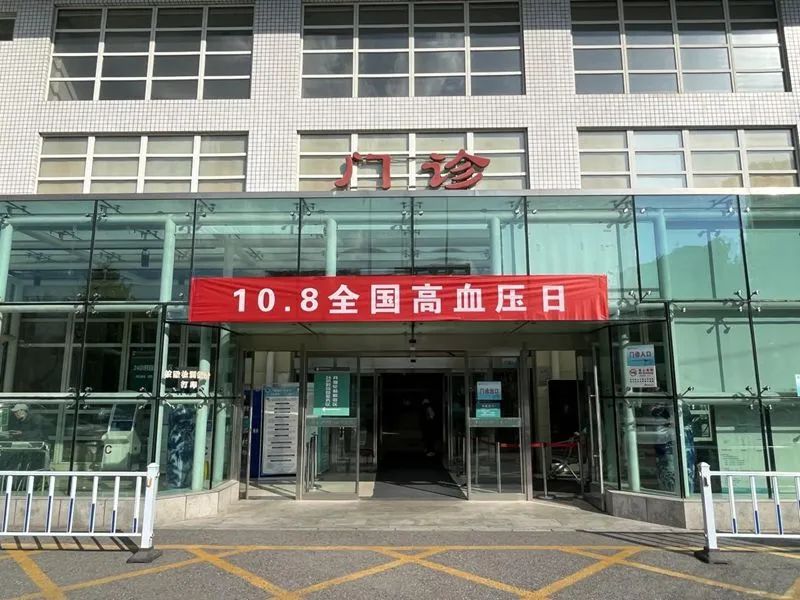
October 8, 2023 is the 26th National Hypertension Day. The theme of this year’s activity is "Know your blood pressure, and lower your blood pressure to the standard". In order to popularize the basic knowledge of hypertension prevention and control, urge hypertensive patients to monitor their blood pressure regularly, carry out hypertension prevention education and popular science propaganda, and guide the masses to do a good job in self-blood pressure management, the Cardiovascular Department of Beijing You ‘an Hospital held a free clinic on hypertension and health education activities.
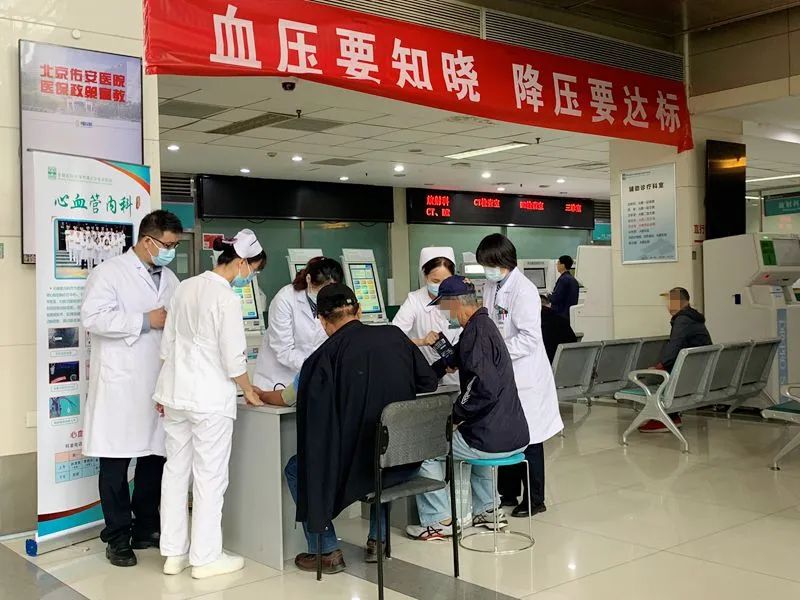

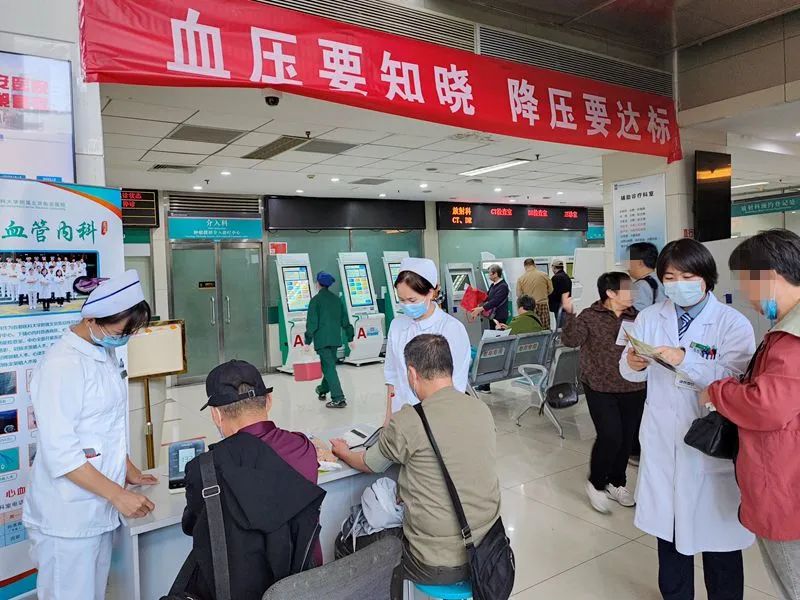
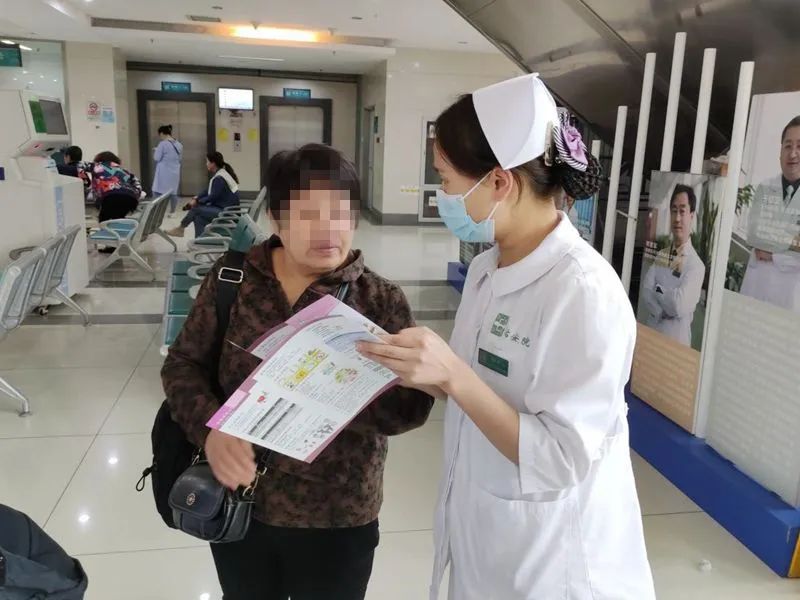
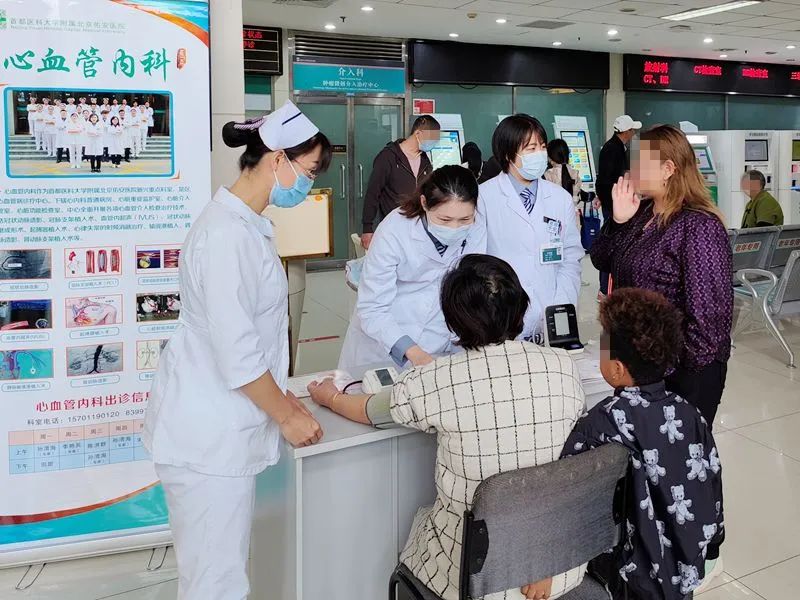
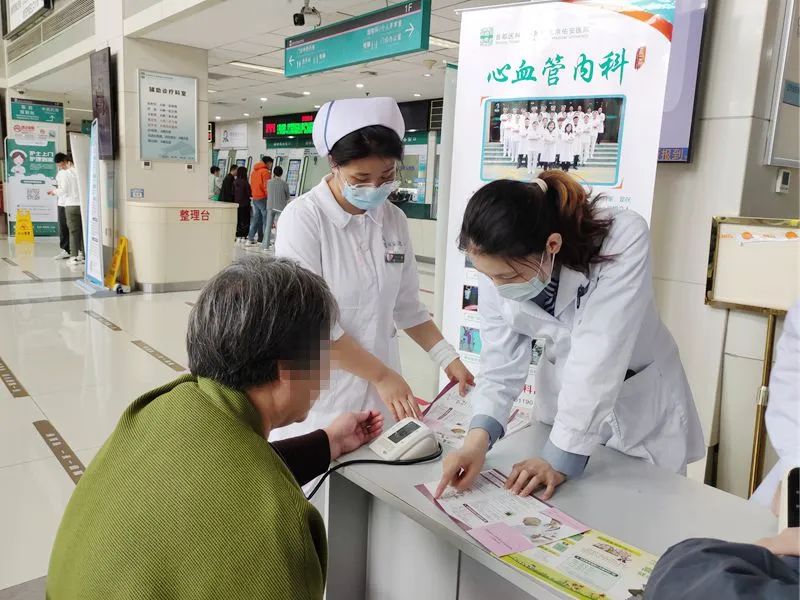
On the morning of October 8th, the medical staff of Cardiovascular Department of You ‘an Hospital measured blood pressure for the patients and their families who came to see a doctor, distributed information on hypertension health, popularized the routine knowledge of hypertension, explained the steps of how to effectively control hypertension, established the knowledge of hypertension prevention and control such as controlling salt intake, quitting smoking and limiting alcohol, and establishing a healthy lifestyle, and patiently answered questions for the patients and their families who consulted.
Cardiovascular disease is the number one killer threatening human health, accounting for the first cause of human death, and 50% of cardiovascular diseases in the world are caused by hypertension. Many patients with hypertension have no symptoms, and the symptoms are not obvious. Only some patients may have symptoms such as dizziness, headache, tinnitus, and neck tightness when their blood pressure rises significantly, which will lead to organ damage such as heart, brain, kidney and eyes, and eventually lead to organ failure. Therefore, whether it is complicated with hypertension or not, we need to correctly understand this disease, especially for patients with hypertension, we should "know the blood pressure and reduce the blood pressure to the standard".
In the case of not using antihypertensive drugs, the blood pressure of the hospital clinic was measured three times on the same day, and if the systolic blood pressure was ≥140,
MmHg and/or diastolic pressure ≥90
MmHg can be diagnosed as hypertension; Home self-measured blood pressure reading ≥135/85
MmHg was also diagnosed as hypertension; Patients with 24-hour ambulatory blood pressure monitoring have an average blood pressure systolic pressure ≥135 and/or diastolic pressure ≥85mmHg during the day, and an average blood pressure systolic pressure ≥125 and/or diastolic pressure ≥75 at night.
MmHg, the daily average blood pressure, systolic blood pressure ≥130 and/or diastolic blood pressure ≥80.
MmHg is hypertension.
There are many reasons for hypertension. The main causes are genetic factors, excessive sodium intake and secondary renal diseases. The inducing factors are smoking, drinking, overweight and obesity, and long-term mental stress.
It is recommended to use an upper arm sphygmomanometer certified by international standards. When measuring, the surrounding environment should be quiet and warm, and the upper arm center should be flush with the heart, and the cuff should be elastic enough to extend into 1-2 fingers. Before blood pressure measurement, you should empty your bladder, do not smoke, drink coffee or exercise for at least 30 minutes, stay in a sit-in state for at least 5 minutes, and do not talk during the measurement; It is recommended to measure blood pressure three times with an interval of 1 minute each time, and take the average value of the last two times.
All patients with hypertension should adhere to a healthy lifestyle, such as limiting sodium intake, losing weight, quitting smoking, moderate exercise and maintaining psychological balance. In addition, antihypertensive drugs should be treated as soon as possible to ensure a smooth blood pressure reduction. For general hypertensive patients, it is recommended that the blood pressure drop below 140/90mmHg; Patients with diabetes or chronic kidney disease should be reduced to below 130/80mmHg; Patients over 80 years old can relax the standard appropriately, and it is suggested that the blood pressure should drop below 150/90mmHg.