[May Day Special] Hu Zunyuan, the first "May Day" International Labor Day in New China
Welcome to pay attention to "Local Records of Sichuan"!
The First May Day International Labor Day in New China
Hu zunyuan
May 1st International Labor Day, also known as International Labor Day, Labor Day, etc. In 1866, the First International Geneva Conference put forward the slogan of eight-hour work system. On May 1, 1886, a large-scale strike and demonstration involving about 350,000 people was held in the United States with Chicago as the center, demanding that working conditions be improved and an eight-hour working system be implemented. In order to commemorate this great workers’ movement, in July, 1889, at the Second International Founding Conference organized by Engels, it was announced that May 1st every year would be designated as the International Labor Day, which is now the May 1st International Labor Day, and it is a national holiday in more than 80 countries in the world.
On October 1, 1949, under the correct leadership of the Communist Party of China (CPC), the people of China fought bravely, carried out the Great Revolution, the Agrarian Revolution, War of Resistance against Japanese Aggression and the War of Liberation, and finally won the national liberation and established People’s Republic of China (PRC), where the people were the masters of their own affairs. Workers have become the most respected people, and the working class has changed from an oppressed and enslaved position to the leading class of state power. On December 23, 1949, the Twelfth Meeting of the State Council of the Central People’s Government adopted the "Uniform National Holidays and Remembrance Days", which designated "May 1" International Labor Day as the most memorable and celebrated holiday, with a holiday of one day.
May 1st, 1950, as the first "May 1st International Labor Day" ushered in after the founding of People’s Republic of China (PRC), is of great significance. Throughout the country, this festival has been warmly celebrated in the form of parades, rallies and cultural performances. Among them, the celebration in the capital Beijing is the most grand, enthusiastic and representative.
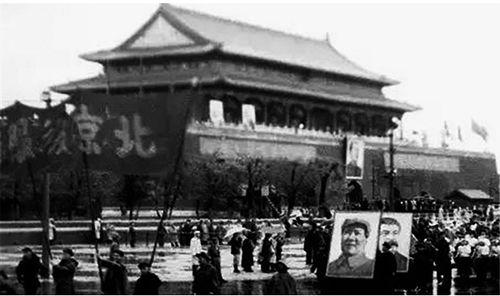
On May 1, 1950, more than 200,000 people in the capital Beijing took part in a parade to celebrate the first May Day in New China.
1. President Mao Zedong personally revised the "May 1 Slogan"
On April 22, 1950, the All-China Federation of Trade Unions issued the Notice on Commemorating the May 1 ST Labor Day, requiring all trade unions across the country to widely and deeply publicize the significance and tasks of commemorating the May 1 ST International Labor Day; Cities and industrial zones should hold mass meetings and processions on May 1 to review and mobilize the fighting forces of the masses. In the evening, various entertainment parties can be organized, and model workers in production should be specially entertained; Newspapers published by local trade unions should publish a special issue of "May Day" and organize more manuscripts of workers and the masses.
On April 26th, the Central Committee of the Communist Party of China issued "Slogans to Celebrate May 1st Labor Day", with a total of 38 articles, which clearly put forward relevant policies and tasks in all aspects. For example, the first one is: "Celebrate the first May Day after the founding of People’s Republic of China (PRC)!" According to relevant information, the first draft of the slogan was drafted by Hu Qiaomu and sent to Liu Shaoqi for review. Liu Shaoqi made several specific revisions to the slogan, such as "Long live Chairman Mao!" Revised as "Long live Comrade Mao Zedong, the great leader of China people!" Liu Shaoqi submitted the revised draft to President Mao Zedong for review. Mao Zedong has also revised three of them. First, change "resolutely implement the economic policy of giving consideration to both employers and employees" to "resolutely implement the policy of giving consideration to both public and private interests"; The second is to change "not moving the property of the rich peasants" to "not moving the land property of the rich peasants"; The third is to change "people in Taiwan Province, Xizang and other areas to be liberated" to "people in Taiwan Province, Xizang and other areas to be liberated, prepare all possible conditions, cooperate with the timely March of the People’s Liberation Army, liberate themselves and complete reunification".
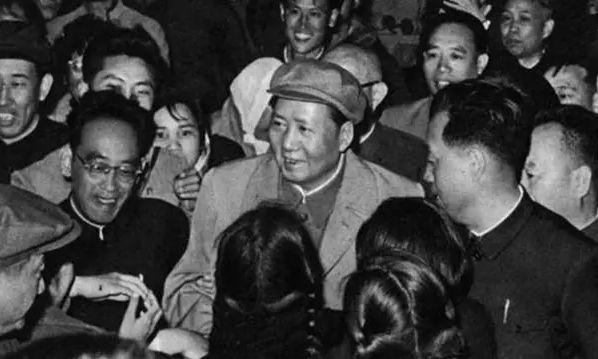
On May 1, 1962, President Mao Zedong met people from all walks of life on the Tiananmen Gate.
Second, Chinese People’s Political Consultative Conference held a commemorative meeting.
On the afternoon of April 29th, the National Committee of China People’s Political Consultative Conference held a commemorative meeting for cadres with more than 4,500 participants. The meeting was presided over by Zhou Enlai, and Liu Shaoqi made a long speech at the meeting. The full text of the speech was published on the front page of the People’s Daily and other domestic newspapers on May 1, 1950.
Liu Shaoqi’s speech at the May Day commemorative meeting was submitted to President Mao Zedong for revision and approval in advance. Mao Zedong made a serious revision to the speech draft, and wrote a letter to Liu Shaoqi at 5 am on April 29th to explain it. The letter said: "The report has been slightly revised and has been sent to you for reading. Chen Yun didn’t read the documents during the leave and didn’t send them to him. The main points of the revision are as follows: don’t say’ this year is the last difficult year’, because there will be difficulties in the next few years, and they will still be quite serious, but they will be reduced year by year. Everything else that said that the difficulty’ will soon pass’ was deleted. Take the northeast as an example. One section is merged into the previous section. The paragraph on the international situation is more strategic. Explaining the rich peasants’ strategy is a bit cumbersome, leaving it for the future. The paragraph on correcting commandism is more comprehensive, and don’t talk too prominently about financial and economic cadres. The slogan was added. If you have time, please print it after you speak, send me the proof and read it again, and then publish it. "
Mao Zedong’s slogan refers to the slogan at the end of Liu Shaoqi’s speech, adding: "Long live the unity and cooperation of all ethnic groups, democratic classes, democratic parties and people’s organizations in China!"
Liu Shaoqi’s speech was full of enthusiasm. At the beginning, he said with pride: "Labor Day has been designated as one of the most important legal festivals in the country by the Central People’s Government, and factories, workshops, institutions, schools and troops of the People’s Liberation Army have been ordered to have a holiday on this day. The people’s army and police will not ban people from holding celebrations and processions. On the contrary, they will join the people in celebrating and processions … For the first time in history, most working people in China are under the protection of their own government. How can this not make us and the working people in China feel very excited and proud! "
Finally, he pointed out: "If our work style is better, our shortcomings and mistakes are less, and our work is better, then we can better unite the people of China, inspire the enthusiasm of the people all over the country, increase their strength, and enable our country and people to tide over the current difficulties and create a bright future more quickly. And all this is exactly what we want to achieve when we celebrate Labor Day this year. "
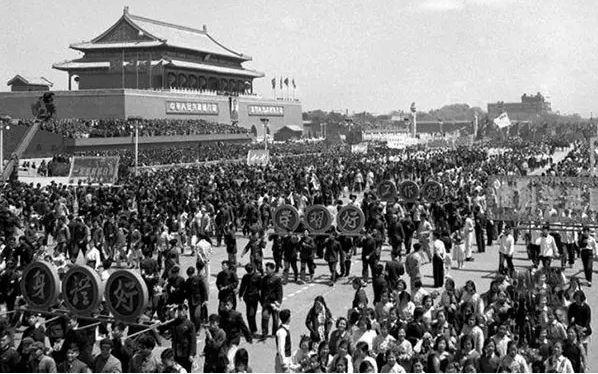
1956年5月1日,北京举行群众游行,庆祝“五一”国际劳动节
三、20万人冒雨进行大游行
5月1日,北京春雨绵绵。人们高举红旗、敲锣打鼓、扭着秧歌、高唱着歌曲,从四面八方向天安门广场进发,隆重热烈地庆祝新中国的第一个五一劳动节。上海《大公报》5月6日刊登的记者高汾采写的通讯《跟我们的领袖在一起—-记首都“五一”大检阅》中具体形象地描写道:“5月1日的清晨,天上飘着暗云,一会儿开始降着蒙蒙细雨。11时未到,远从郊区来的,从工厂、机关、学校、作坊、家庭来的,战士们、工人们、学生们、市民们都穿着整齐的新衣,打着各色彩绸旗幡、巨像标语,带着满心欢喜向天安门附近各指定地点集中。雨越来越大了,但是带着一片嘹亮歌声与锣鼓声的队伍越来越多了,20多万人参加游行的队伍,在(下午)2时以前完全按照总指挥部指定地点有秩序地排列成队,等待接受人民领袖的检阅。”
Mao Zedong, Chairman of the Central People’s Government, Zhu De, Liu Shaoqi, Soong Ching Ling, Li Jishen and Zhang Lan, Vice-Chairmen, Zhou Enlai, Prime Minister of the State Council, and other party and state leaders, members of the Central People’s Government Committee, members of the National Committee of the China People’s Political Consultative Conference, principal leaders of various hospitals, ministries, conferences, departments and banks of the Central People’s Government, and leaders of various democratic parties and people’s organizations reviewed the parade. Attending the ceremony were envoys from the Soviet Union, the Czech Republic, North Korea, Romania, Hungary, Poland, India and other countries, delegations from the Communist Youth League of the Soviet Union, and Indonesian workers’ delegations.
Gao Fen, a reporter from Ta Kung Pao, wrote in his communication: "Especially the friends from the Soviet Union participated enthusiastically, and the viewing platform could not accommodate them. They were squeezed into the viewing seats of the first-class cadres of the Central Committee and North China. They were crowded in the crowd, and raindrops hit their faces and beautiful new clothes. They didn’t care, just like every Chinese present, they had an excited smile on their faces. It’s like having a holiday in front of their own leaders and Red Square. "
At 3 pm, Nie Rongzhen, then mayor of Beijing, announced the start of the parade. 120 salutes rang out, and the military band played "National Anthem of the People’s Republic of China" and "Internationale". When people in the parade saw President Mao Zedong, they were very excited and cheered. Some people kept throwing their hats into the air. The newly formed People’s Liberation Army Air Force and Navy also appeared in the parade.
“人民公安部队万岁”的口号声,一直响到整个队伍完全通过。
傍晚时分,下了一天的雨停了,天空中出现了绚丽的晚霞和彩虹,空军的战机翱翔在天安门上空,以排列整齐的队形,展示了高水平的空中飞行表演技能。当夜幕降临时,天安门城墙上五颜六色的彩灯和城楼上的灯光齐放,广场上灯火辉煌,首都公安部队走在游行队伍的最后,当他们迈着整齐的步伐,精神抖擞地通过天安门广场时,全场一片轰动,口号声此起彼伏。
当天晚上8时15分,游行结束。高汾写道:“时间已经过去5小时半,毛主席始终没有离开过他的位置。他的脸上时而庄严,时而微笑,他的手几乎永远高举起来,向群众有力而迅速地摆动着……经过几小时呼喊并不觉疲倦的刘副主席以更嘹亮的喊声高呼:‘中华人民共和国万岁’‘五一劳动节万岁’‘世界持久和平万岁’为大会的结尾,喊声冲破黑夜的长空,它将化为建设新中国保卫世界和平的一股强韧的力量!”
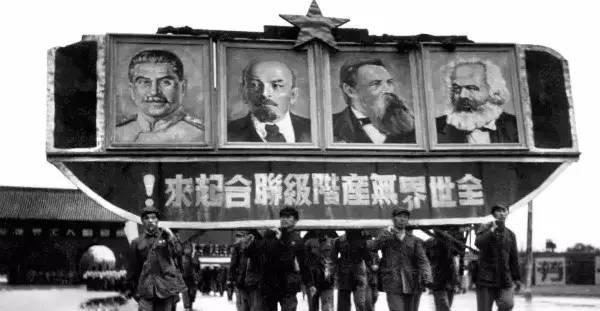
On the May 1 ST Labor Day in 1950, a parade composed of all walks of life in the capital Beijing participated in the celebration. The picture shows the front of the parade, holding high the colossus of Marx, Engels, Lenin and Stalin, the world’s great revolutionary instructors.
4. Celebrations throughout the country are splendid.
On the same day, in cities and rural areas all over the country, songs were everywhere and red flags were flying. Tens of millions of people in Qian Qian held rallies and parades to celebrate May 1 ST Labor Day, which jointly showed a spectacular picture of the Chinese laboring masses celebrating the victory of the great struggle and wishing the motherland prosperity and strength.
On the banks of the Huangpu River, bright five-star red flags have been flying over the streets and lanes since the early morning, and the continuous parade in the streets has attracted thousands of Shanghai citizens from their homes. In the morning, there were more than 20,000 workers’ pickets, security forces and mass organizations in the city, and an armed review was held. Mayor Chen Yi called on Shanghai workers to continue to carry forward the revolutionary struggle spirit of the past 30 years, overcome difficulties, and break out new forces in the journey of building a new China and a new Shanghai. Subsequently, the city held a parade to celebrate the district, with a total of more than 500,000 participants. In addition, the forms of celebration include physical fitness, discounted movie tickets and discounted books for workers. The first club of the working class in Shanghai-Huxi Workers’ Club was officially unveiled on the eve of Labor Day, and the "Labor Park" built by the workers themselves was officially opened.
In Tianjin, on the bank of Haihe River, more than 40,000 workers and representatives from all walks of life gathered at Minyuan Stadium to celebrate. Mayor Huang Jing put forward five tasks to the workers in the city, such as supporting the war of liberation, responding to the government’s call to launch a large-scale production campaign, helping unemployed workers, and learning politics, culture and technology, so as to carry forward the spirit of internationalism and consolidate unity with the Soviet Union and people’s democratic countries. The meeting adopted a signature campaign to ban atomic war in response to the call of the World Congress for Peace, and decided to set up a Tianjin branch of the China Congress for the Defence of World Peace. After the meeting, the participants held a parade and celebration in the city in four ways. The municipal music troupe, mass theatrical troupes, people’s cultural centers in various districts and other literary and art groups have staged operas, dramas, dances, slides and other commemorative celebration programs.
Shenyang combined the May 1st International Labor Day and the May 4th Youth Day celebrations. On May 1st, 160,000 workers, staff and students held a grand rally. Dressed in all kinds of brand-new uniforms, facing the rising sun, they carried huge portraits of Ma, En, Lie, Si, Chairman Mao Zedong and Commander-in-Chief Zhu De and walked neatly through the streets. Advanced producers hold the award flags they won in the May 1 ST production competition and walk in the forefront of the teams of all units. Many factories also send out propaganda trucks, or decorate them with huge portraits of model workers, or mark the good news that our factory has overfulfilled the national production tasks with striking figures. At 8 o’clock in the morning, the celebration meeting opened with a salute. They took a group of cavalry as the forerunner and organized and orderly parades around the main streets of the city. At night, the city square and the People’s Stadium held celebration parties respectively.
In the mountain city of Chongqing, laborers celebrated the first May Day International Labor Day after the founding of New China with unprecedented joy. Red flags are flying everywhere in the city, and the sound of gongs and drums is endless. Wallpapers and pictures written by the workers themselves are posted in every street and factory. At noon on May 1, a commemorative parade was held in different districts of the city. Wherever the procession went, the audience lined the streets to watch. Auto workers also appeared in the streets to decorate a new car for the May Day International Labor Day. In the Yangtze River in front of Chaotianmen Gate, more than 20 barge workers in red were driving dragon boats and singing in the middle of the river, which won warm applause from the audience.
In addition, other provinces and cities all over the country have also held commemorative meetings or celebrations related to the May 1 International Labor Day.
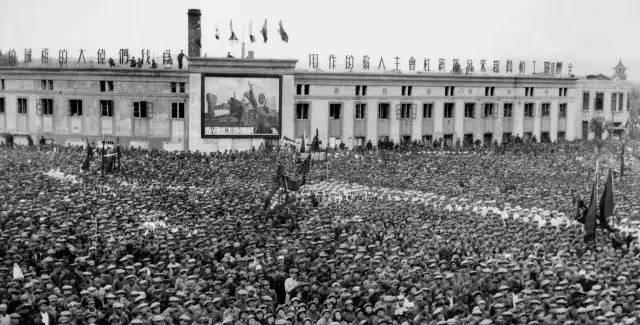
In May, 1950, more than 70,000 working class and people from all walks of life in Fushun, Liaoning Province, expressed their commitment to do a good job and work safety at the conference commemorating the May 1st International Labor Day and the May 4th Youth Day.
V "Labor Day" in the history of China
In fact, China celebrated Labor Day thousands of years ago.
The rudiment of "Labor Day" is the legend recorded in "Imperial Century": On February 2 of the lunar calendar every year, Fuxi and Shennong, the leaders of the ancient tribal alliance, personally went to the fields to "cultivate and plant", and all tribal members also cultivated and worked with them. The Records of the Historian recorded Zhou Wuwang’s naming February 2nd as "Spring Dragon Festival", and after the celebration, he followed Fuxi and Shennong’s example and led hundreds of civil and military officials to plough the fields. According to historical records, from the Tang Dynasty, February 2nd of the lunar calendar was named "Farming Festival" or "Labor and Agriculture Festival". On that day, the emperor wanted to personally lead hundreds of officials to work in the fields, and farmers were asked to carry agricultural tools with red silk to plow and sow in the fields. On February 2nd of the lunar calendar, emperors and subjects went to the fields to work together when it was raining, which expressed not only advocating and advocating labor, but also the connotation of the unity of heaven, earth and people.
可见,中国古代的“劳动节”,其本意更接近于字面意思,与恩格斯1890 年在第二国际大会上宣布设立的五一国际劳动节在本质上有很大不同。
1950年的5月1日,各行各业的劳动者20余万人聚集在天安门广场,载歌载舞,庆祝自己的节日,他们个个兴高采烈、斗志昂扬,浑身上下都流露出当家作主的喜悦。
70多年过去了,我国在不同年代都举行了不同主题的庆祝活动,广大劳动者通过各具特色的形式表达和体现了节日的主题。几十年来,虽然劳动的形式不断发展演变,但劳动精神始终传承,一代代中国劳动者始终在勤奋工作、奋发图强,勇于创新、甘于奉献,不断创造出更加美好、更加幸福的新生活。
来源:安徽党史方志
作者:胡遵远(安徽金寨干部学院副院长,金寨县委党史和地方志研究室主任)
方志四川部分图片、音视频来自互联网,仅为传播更多信息。文章所含图片、音视频版权归原作者或媒体所有。
原标题:《【五一特辑】新中国第一个“五一”国际劳动节‖胡遵远》
阅读原文