Why is Bao Beier "obsessed" with remake?
Special feature of 1905 film network Bei’er BaoIt’s a double remake again!After The Big Man, Bao Beier brought a new film, a remake of the Korean film The Secret Zoo.The ultra-high frequency rate of 6 movies in 5 years also makes him a well-deserved "professional remake household".
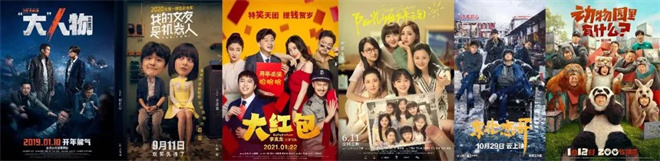
In sharp contrast to the quantity, except for "Big People", none of the above douban scores passed. What’s in the zoo? It is only 5.3 points, and people can’t help worrying about the box office prospects of the film.
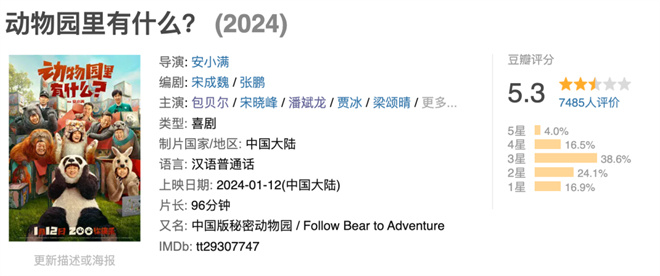
Dubbed by netizens as "the first person with Chinese characteristics", why is Bao Beier "obsessed" with the remake? What’s wrong with word-of-mouth after repeated battles and defeats?
What is in the zoo?
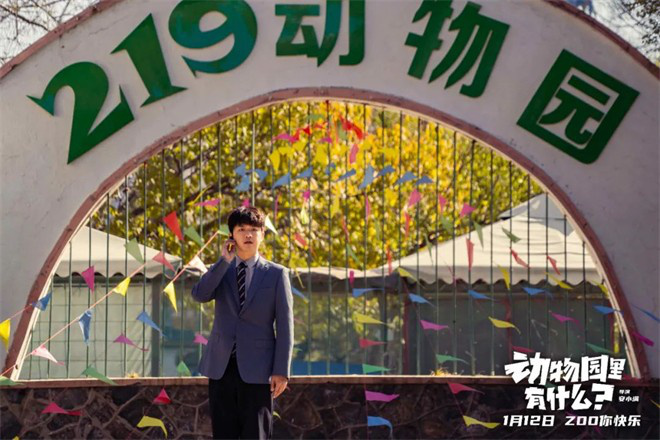
What’s in the zoo? A remake of the Korean film The Secret Zoo tells the absurd story of a group of people pretending to be animals to save the endangered zoo. With its novel setting and comedy effect, the film once ranked among the top ten box office of Korean movies in 2020.
But at the same time, the reputation of the film is not outstanding, and the Douban score is only 6.6 points. Plot routines, sensationalism and other issues make this film only stay at the level of "popcorn comedy", which also makes people wonder why the Bao Beier team chose such a mediocre work as the remake object.
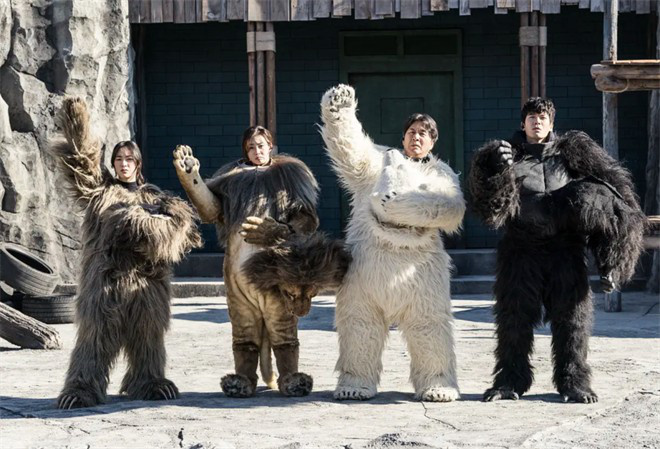 Korean original stills
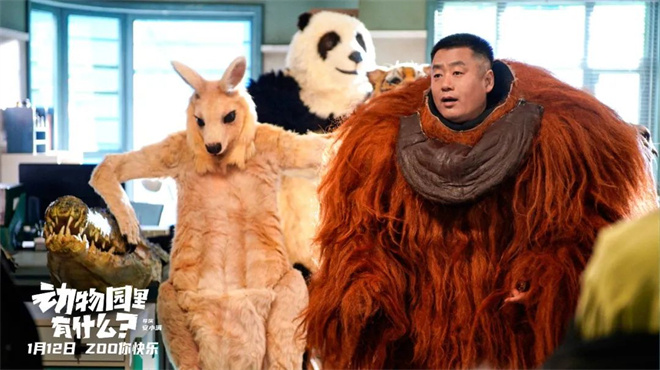
The remake continues the core setting of the original — — Employees pretend to be animals to save the zoo.This absurd setting is hard to convince itself, and the original version has not done much on credibility.writingchapter, full of loopholes has become the source of jokes, but the China version has repeatedly stressed how credible it is that people dress up as animals.
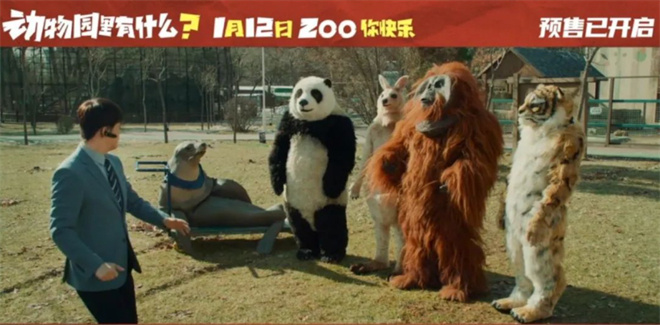
Such rough props, costumes and performances are completely "fake at first sight", and it is hard to believe that adults with a sound mind will think that this is a "real animal".
The film’s repeated emphasis that "no one will think there are fake animals in the zoo" can’t convince the audience at all, making it difficult for the film to stand firm in setting.
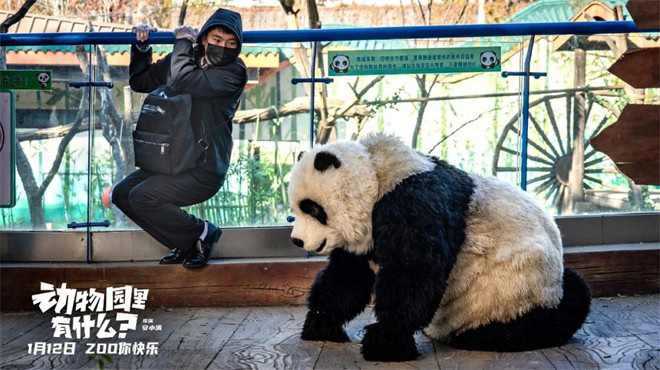
In order to "localize" and keep up with hot spots, the remake also added the "national treasure" panda to the animal team.
Not to mention that as a national protected animal, there is no possibility for local zoos to conjure up one out of thin air. After the giant panda research expert appeared on the stage, all kinds of "blind" general mystery operations are even more questionable.
Comedy can be absurd, but it can’t be absurd. It abandons the basic logic and forces it to be funny, which really lacks respect for the audience.
Besides the giant panda, what’s in the zoo? In the process of localization, a large number of elements of northeast comedy have been added.
Bao Beier, Song Xiaofeng and other "Northeast Comedians" get together, and when they open their mouths, it is a familiar smell, and they also contribute some jokes.
But on the whole, "Laughter Fruit" basically stays at the level of skit-like, hard-to-laugh jokes, and the aesthetics of comedy needs to be improved.
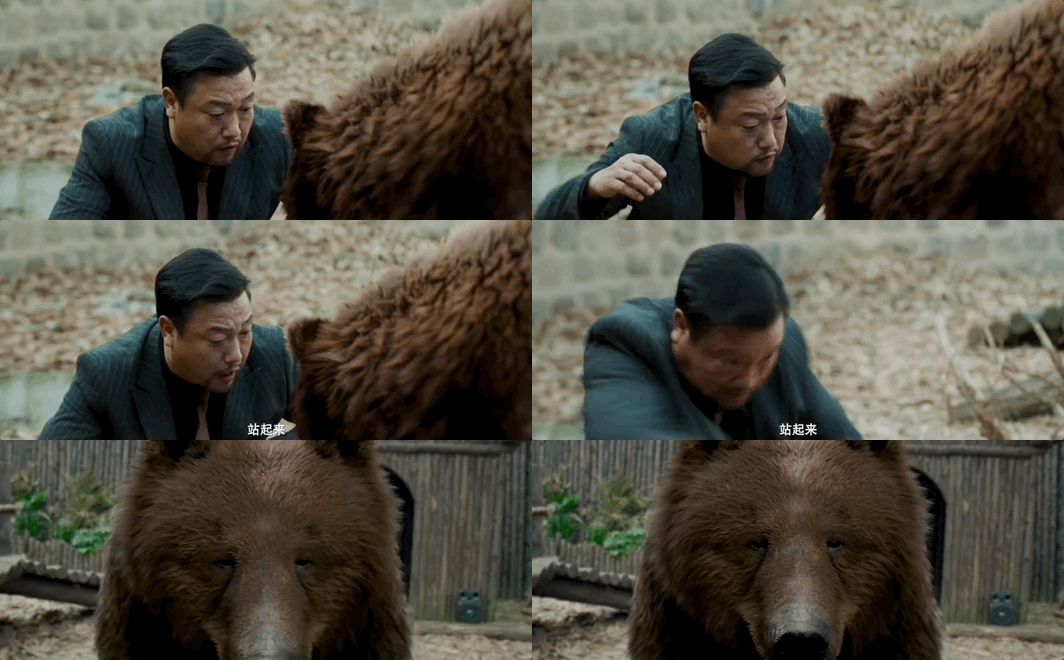
Admittedly, compared with the Korean version, it can be seen that China’s version strengthens the image of a little guy whose hero is frustrated, and also tries to tease and satirize "The world is a huge grass-roots team", but its rough script and illogical setting make its interpretation of characters and themes superficial and can’t really resonate with the audience.
After reading it, I just want to say: in the fantasy world of movies, employees can tease tourists by wearing animal costumes, but in the real world outside the play, it is not as easy as expected to please the audience with the "straw team".

Why is Bao Beier still remaking?
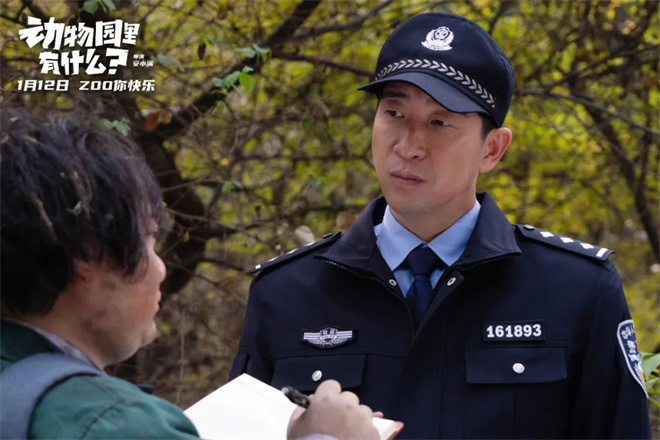
A careful audience may find out, what’s in the Zoo? ",the policeman played has such a similar line: no matter what kind of big man, he can’t escape legal sanctions if he breaks the law.
This is obviously a tribute to Wang Qianyuan’s previous film "Big Man" with Bao Beier. This remake of a Korean high-scoring film is also of special significance to Bao Beier.
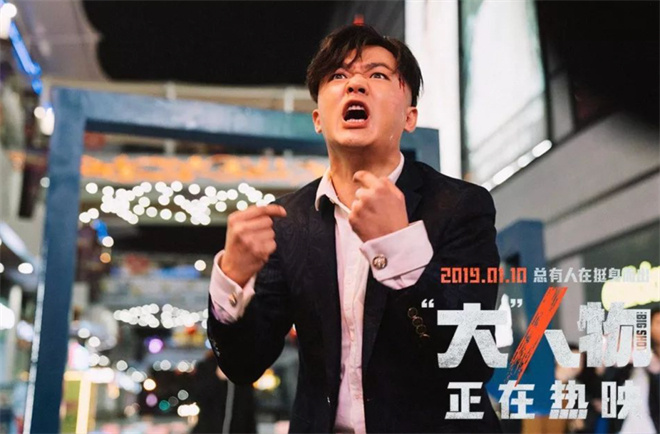
In it, he created an image of the rich second generation, which was arrogant and unscrupulous, and gained the recognition of many audiences. The classic bridge "Tonight’s consumption is paid by Zhao Gongzi" was once popular all over the network and is still relished by people.
In the end, "The Big Man" won 380 million box office and became a little dark horse of that year, with a score of 6.4, which also became the highest score of Bao Beier’s starring works in the past five years.
It is also the success of "The Big Man" that makes Bao Beier, who has tasted the sweetness, embark on the road of remake.
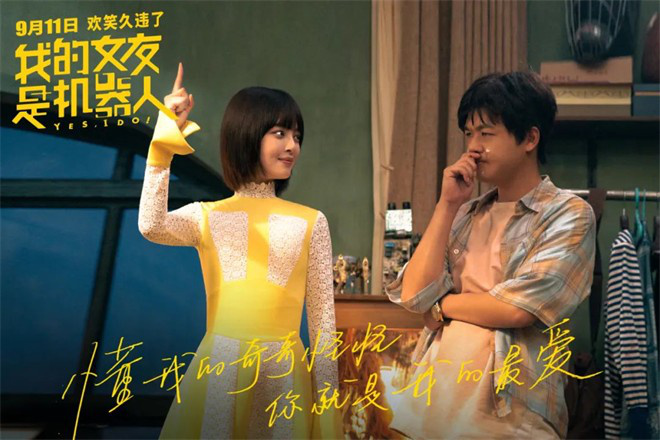
In 2020, Bao Beier starred in My Girlfriend is a Robot, a remake of a Japanese classic movie.
As a result, the score was only 3.6 points, the special effects were scrawled, the people were misplaced, and the second half was forced to stir up feelings, all of which made the original pure love atmosphere disappear, which can be said to be the existence of "destroying classics".
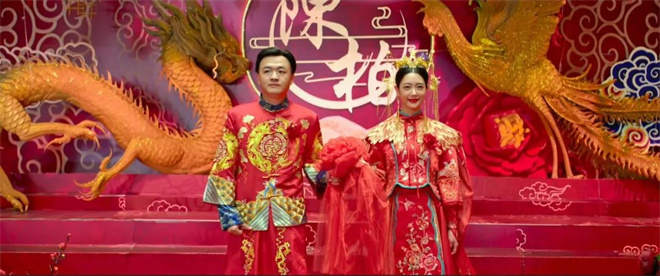
In 2021, "The Big Red Packet" was remake from the director’s old work in 2014, and continued to tell the story that the man asked the woman to "fake marriage" in order to recover the red packet. However, even if the original director personally sits in the town, he can’t escape the fate of word of mouth.
It is worth mentioning that the film unexpectedly won 235 million box office in the unpopular period by virtue of its comedy type advantage. The reason may be like a line in the film: "We are entertainment films, so we can fool the audience into paying for tickets."
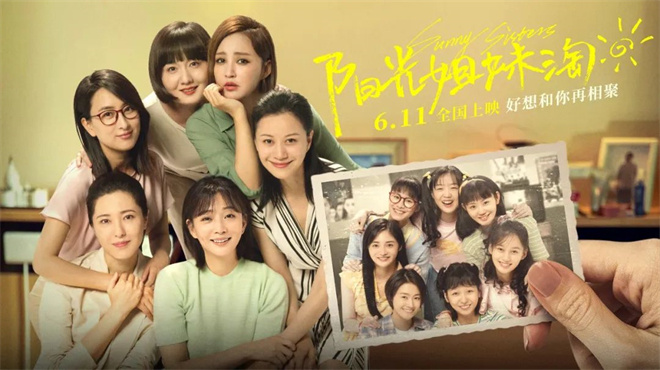
Also in 2021, Bao Beier’s second directorial work boldly chose to remake the Korean classic IP "Sunshine Sisters Amoy".
Perhaps it is because the original works are deeply rooted in people’s hearts, and Bao Beier adopted the following creative mode, and many plots and shots even reached a 1:1 frame-by-frame reproduction.
In his words: "The works that have been shaped like this are put there like a model, so that I can learn more about the skills of directing invisibly."

The whole film really looks like a student’s homework of an entry-level director Taskmaster.
But that’s exactly where the problem lies. The characters and stories in "Sunshine Sisters Amoy" have lost their vitality without the Korean soil and background of the times. Even if they tried their best to find a large number of China’s service roads in the 1990s for packaging, it is difficult for the audience to substitute and believe them.
It is the reason why the Bao Beier version of Sunny Sisters Amoy lost both box office and word of mouth that it only learned the skin, but didn’t learn the essence of the original, and then rebuilt the emotional core that can resonate.
It is understandable to reduce costs and avoid risks by remaking classic IP from the perspective of business logic, but it is not difficult to draw a conclusion from the successful cases in domestic and foreign markets that remake itself is not a shortcut to success.
Both China’s version of "Loyal Dogs and Eight Men" have made innovations in story and aesthetics on the basis of retaining the essence of the original, and made the audience willing to pay for the remake with more localized narrative and more contemporary methods.
However, it’s more like a lazy performance that you just want to "lie down and make money" by blindly remaking frame by frame or imitating others, which is also the reason why everyone feels resistant and tired of Bao Beier’s frequent remakes.
In the face of low scores in his works, Bao Beier once responded in an interview: I think low scores are a good thing for me, which proves that my ability is not worthy of such a high score, so I need to study.
As for the direction of learning, the best-selling domestic original comedy in the "next door hall" may bring some inspiration. In Bao Beier, where the fast lane of "remake" is soaring, it is time to stop and think: What kind of comedy does the audience want to see?