Appreciation | Picture Bricks Collected in Chengdu Museum: An Encyclopedia of Han Dynasty Society
Since the last century, a large number of Eastern Han Dynasty portrait bricks have been unearthed in Chengdu Plain. These stone reliefs now in Chengdu Museum not only reproduce the scenes of people’s production and labor, but also depict the scenes of streets, restaurants, trips, songs and dances. They are regarded by experts as "encyclopedias of studying the society of the Han Dynasty" and also reflect the ancient concept of life and death that "things die like life, things die like existence".
Since the last century, a large number of Eastern Han Dynasty portrait bricks have been unearthed in Chengdu Plain. As a funeral art prevailing in the Han Dynasty, stone reliefs are architectural structures for carving portraits on tombs and other buildings, depicting colorful earthly life and magnificent fairy world. "Things die like life, things die like existence" is a deep-rooted concept of the ancients, and it is also an unbreakable principle, so this small space hides the vast world at that time.
These stone reliefs not only reproduce the scenes of salt industry, agriculture, fishery, textile and other production labor, but also depict the scenes of streets, restaurants, trips, songs and dances, and are regarded by experts as "encyclopedias for studying the society of the Han Dynasty".
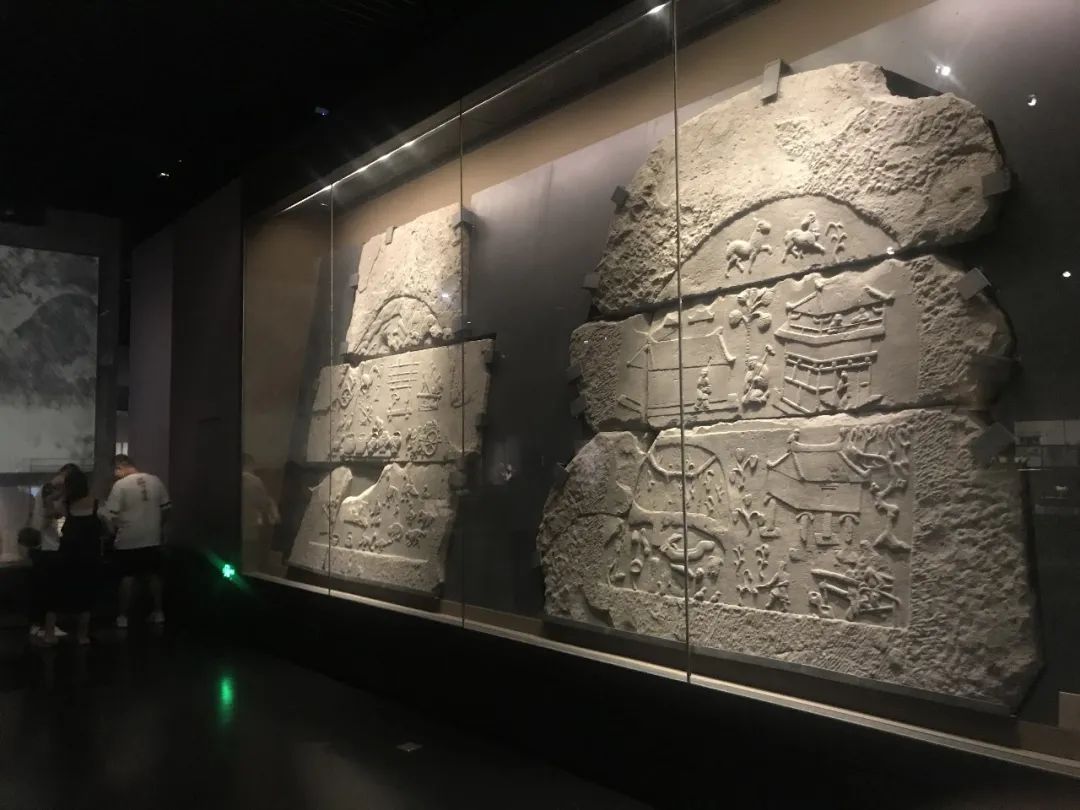
Stone reliefs of the Eastern Han Dynasty displayed in the exhibition hall of Chengdu Museum
Here, we can see the prosperity and stability of Chengdu Plain, which is full of fertile fields and flourishing industries.
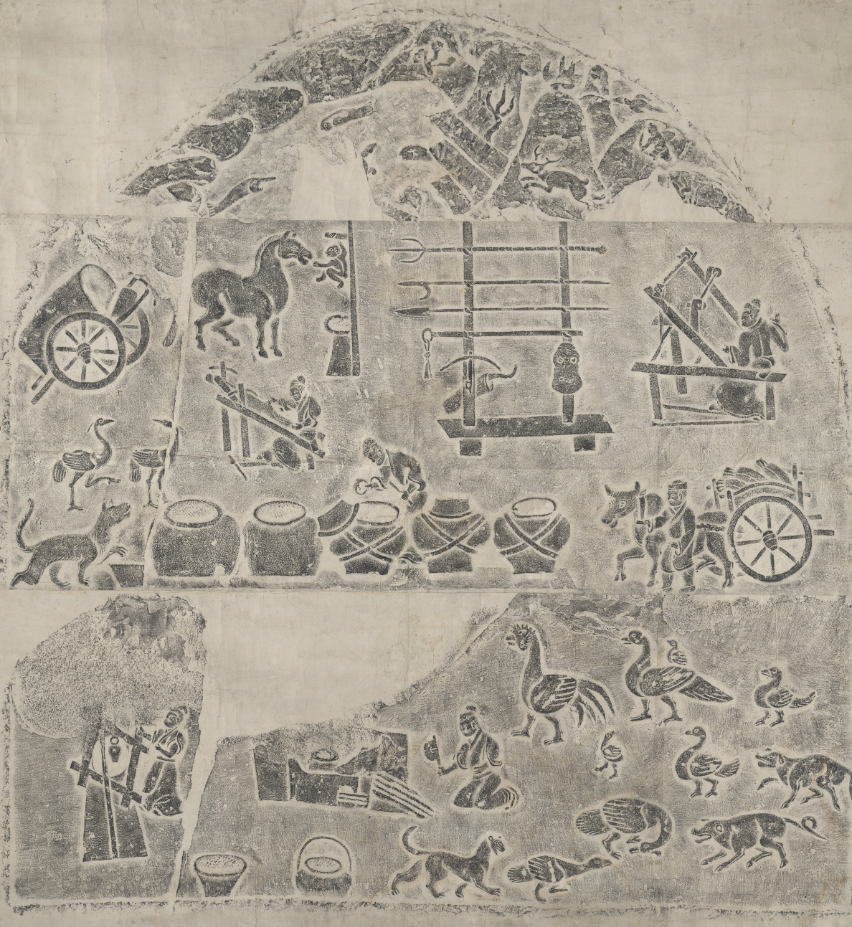
Manor Life Portrait Stone Eastern Han Chengdu Museum
Stone relief is divided into three layers. The upper layer is hunting deer in the mountains, and one person is bending a bow to shoot deer; There are many weapons in the middle layer, and a woman operates the loom on each side. There are horses, monkeys, columns, food troughs and double-shaft carts above the loom. The lower layer is a complete brewing process, and you can see the processes of water pumping, grain transportation, cooking and jar fermentation. Poultry and livestock such as pigs, dogs, chickens and geese are scattered around.
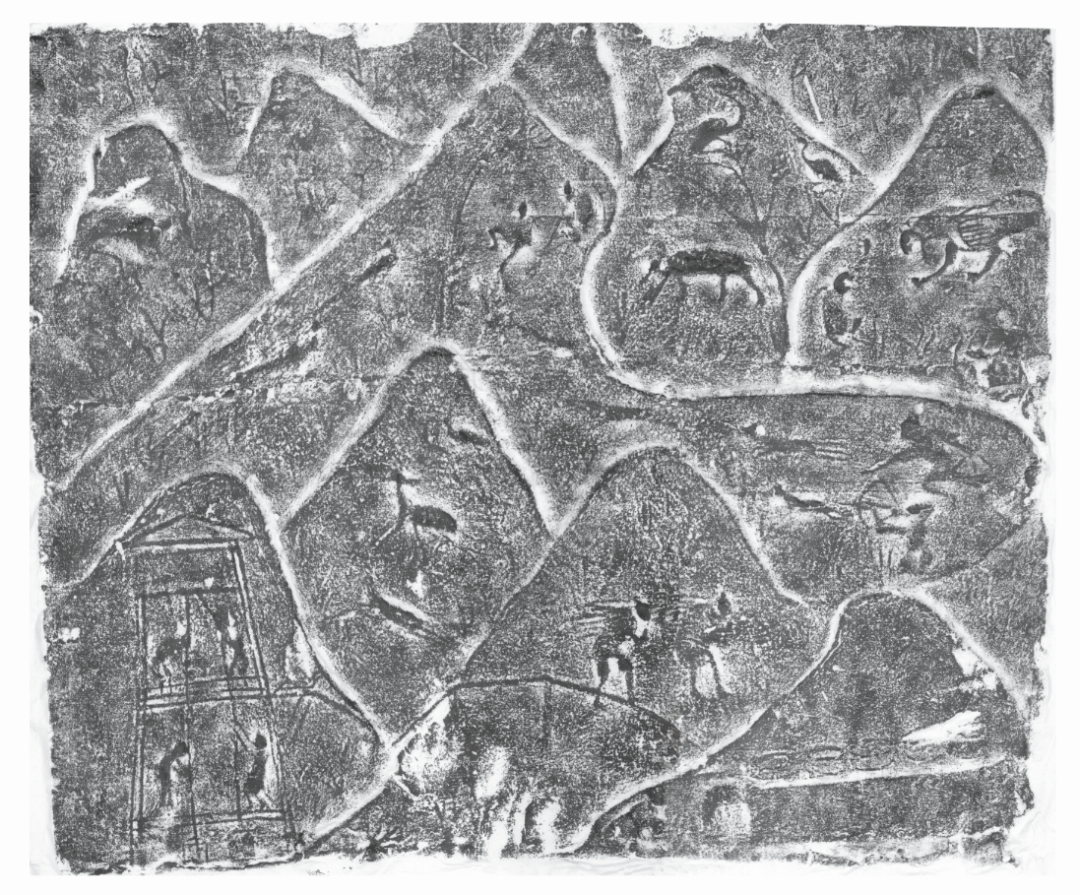
Yanjing portrait brick Eastern Han Chengdu Museum
On the stone reliefs, the mountains stand tall and the vegetation is lush, during which birds and mammals rest, and the two of them bow and shoot. There is an elevated salt well in the lower left corner, which is divided into two floors, and two people on each floor are using pulleys and buckets to draw brine; There is a long stove in the lower right corner, and there are five kettles on the stove. One person is cooking salt. There is a barrel between the derrick and the stove, and the bittern passes through the barrel to the cauldron on the stove; At the foot of the mountain, there are two salt transporters carrying salt bags. The image of stone relief reproduces the natural ecology of Sichuan and the busy scene of well salt production in the Eastern Han Dynasty, which proves that Chengdu is an important salt producing area in Southwest China.
Here, we can see the three-dimensional agriculture with parallel farming and pond planting.
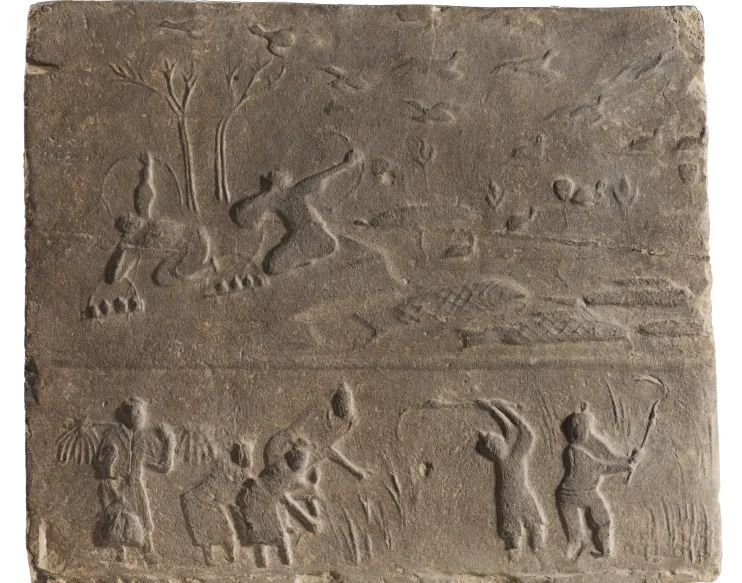
Yi She Harvest Portrait Stone Eastern Han Chengdu Museum
Stone relief is divided into upper and lower layers. There are ducks and big fish in the upper lotus pond. The lotus is in bud and the lotus leaves are rippling on the water. In the sky, the geese are flying, and in the shade of the tree, two people are bending their bows and shooting at the geese in the air; In the lower paddy field, many people are harvesting the ears of grain hard, leaving a harvested land behind them. The man with the portable food box finished his meal and was about to walk home.
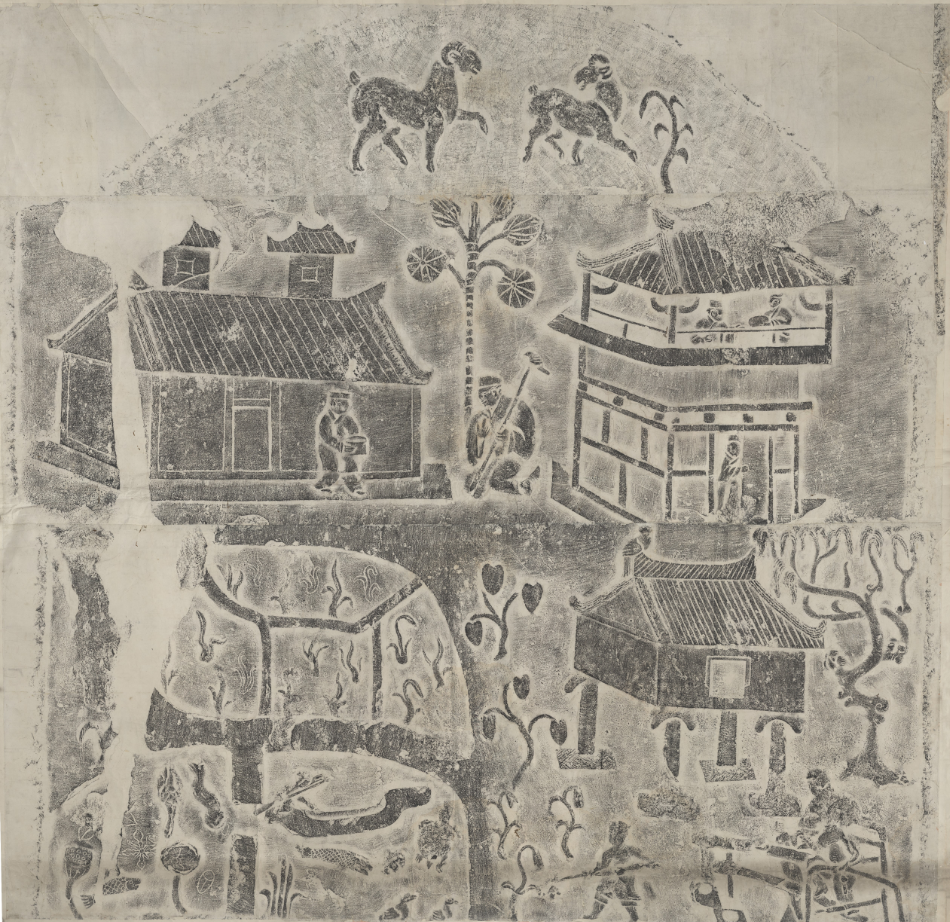
The manor produces stone reliefs in the Eastern Han Dynasty Chengdu Museum.
The top of the stone relief is a pair of sheep pacing for food; There is a house in the middle, and a man walks out of the door with a food box and goes to the old man sitting under the tree with a dove stick in his hand. There are two people sitting around in the tall building on the right, and they seem to be talking loudly. Below the picture, there are paddy fields and ponds, with seedlings, fish and various aquatic crops. There are farmers working hard in the lower right corner, and the bumper grain is piled up in the granary.
Here, we can see the pattern of "city" in the "two rivers and seven cities" with proper planning.
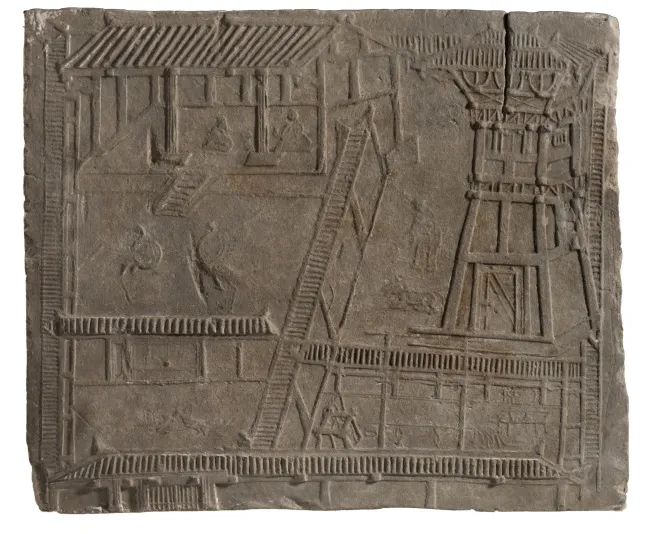
Courtyard Portrait Stone Eastern Han Dynasty Chengdu Museum
The stone relief is a top view of the quadrangle courtyard, surrounded by a promenade, which divides the courtyard into two parts. There is a cock fighting in the front yard; There are two cranes standing in the inner court; In class, the host and guest sit opposite each other; Someone swept the tall building on the right, followed by a puppy. The hall can be clearly seen as a single cliff hanging mountain building with a width of three rooms, and the high-rise building is a watchtower, which has military defense function. The house on this brick is the epitome of the rich residence of officials and gentry in Han Dynasty.
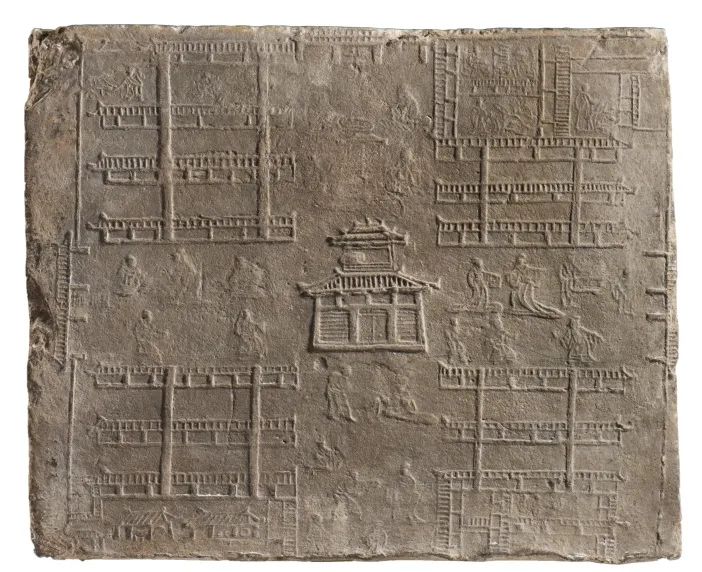
City portrait brick Eastern Han Chengdu Museum
The portrait brick is overlooking, and there are three rows of five-ridged houses on the top, bottom, left and right sides of the cross-shaped market, which should be rows of houses with people sitting or standing opposite each other. There is a double-eaved two-story building in the middle of the whole picture. All kinds of people walk, push carts and trade on the street. There are walls around, one on the left and one on the right, which are the city wall and the city gate. This is a true portrayal of the "city" set by Li Bing, the prefect of Shu County. Li Bing moved the "city" originally located in Chengdu to the "two rivers" outside the city, and built the largest "city" in southwest China at that time. A unified and standardized market was set up, which was managed by a special person and opened and closed every day according to the drums. "Erjiang Erqi City" reflects the positional relationship between Chengdu cities, commodity markets and rivers at that time, and this urban pattern lasted for about 600 years in Chengdu.
Here, we can see the romantic feelings of song and dance feasts.
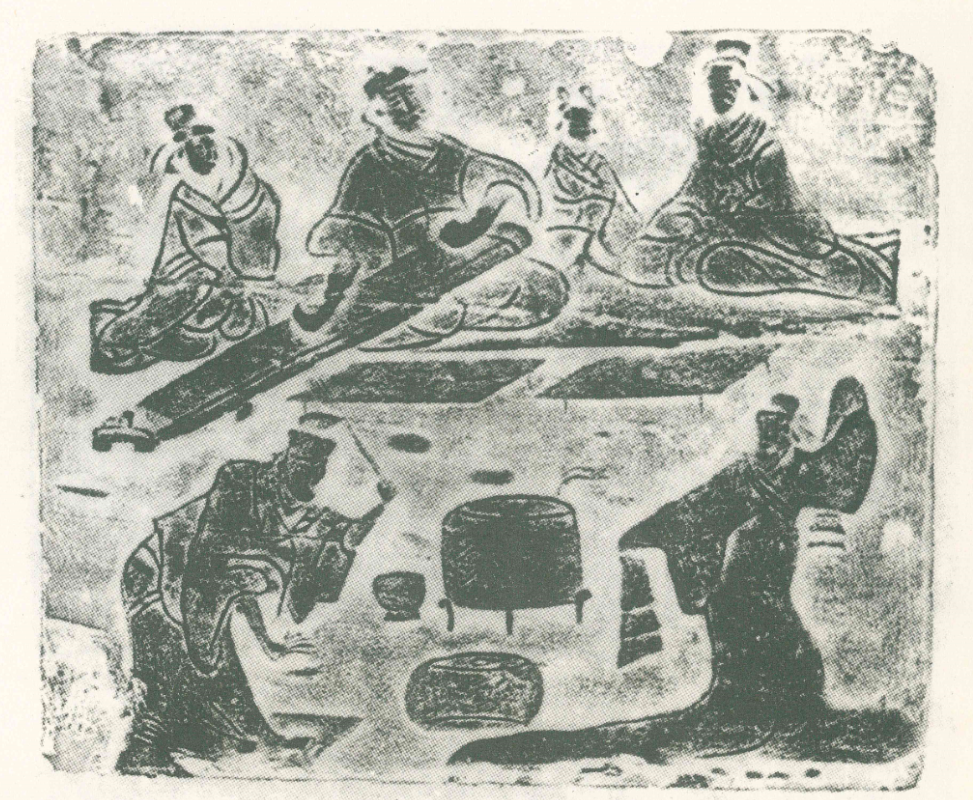
Song and Dance Banquet Portrait Stone Eastern Han Dynasty Chengdu Museum
There are six people in the stone relief, sitting or standing around bottles, cups, cases and other banquet utensils. The top four people face each other on the floor, and the man on the right wears a high crown and a long suit to watch the dancers. On the left, there are three people in long gowns with wide sleeves, the man in the middle is drumming his hands, or "Lezheng", and the rest are singers or dancers. The composition of the whole picture is reasonable and lifelike, with dancers dancing, musicians playing drums and harps, and singers singing loudly and happily.
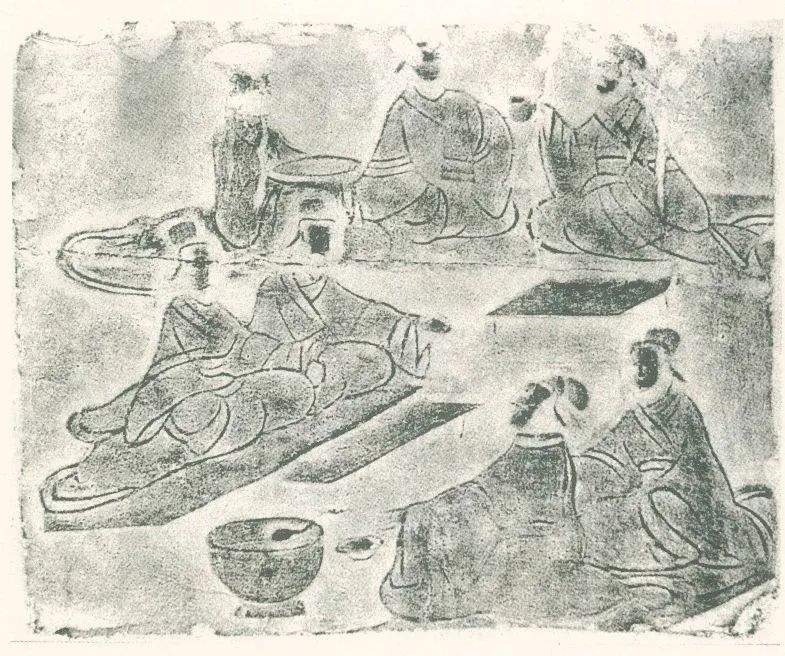
Banquet talk about stone reliefs in the Eastern Han Dynasty Chengdu Museum
The composition of the banquet scene was clear and reasonable, and a total of seven people sat around several cases. Seven people all wore crowns and hats, dressed in wide clothes. Some people raised their glasses with plates and offered food to the middle person, while others sat opposite each other, holding ear cups and drinking, and the feeling of being hearty jumped up.
Here, we can see a variety of dramas and colorful time series scenery.
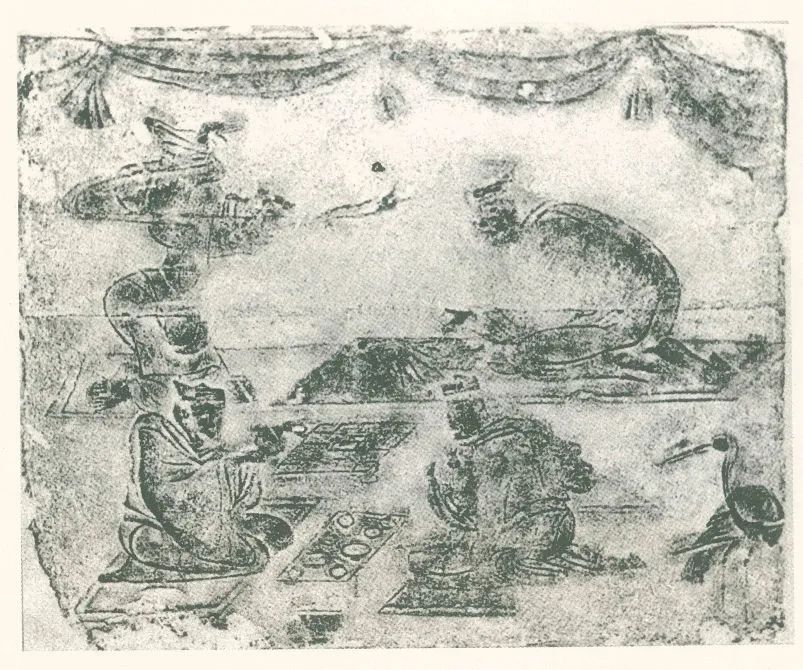
Liubo portrait brick Eastern Han Chengdu Museum
There are four people on the stone reliefs, which are divided into two groups, a group of games and a group of feasts. Players are throwing chopsticks, nervous, feasters are drinking, dishes and ear cups are placed on the table, and the posture is leisurely. There is also a crane standing on the lower right.
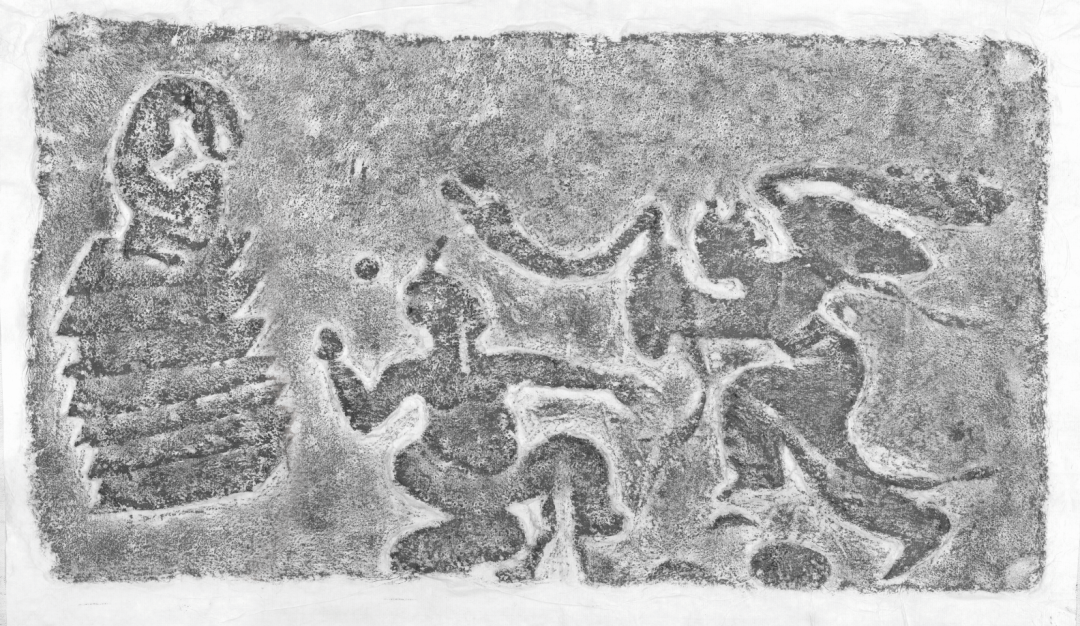
Acrobatic Disc Dance Portrait Brick Eastern Han Dynasty Chengdu Museum
There are three people on the portrait brick, who are acrobatics, pill jumping and disc dancing respectively. On the left, the woman with a double comb is performing "anti-bow". She stands upside down on several stacked cases, with her legs completely turned back to her waist, showing superb skills. The dancer on the right steps to the drum and plate and jumps on it. "Pan-drum dance" was popular in the Han Dynasty, and Zhang Heng’s "Xijing Fu" in the Eastern Han Dynasty once described "Zhu Zhen’s dancing on a plate and stirring his long sleeves", which reproduces the peerless charm of dancers dancing lightly on a plate and lamp.
Here, we can see the beautiful yearning for Kunlun wonderland and my desire to ascend to immortality.
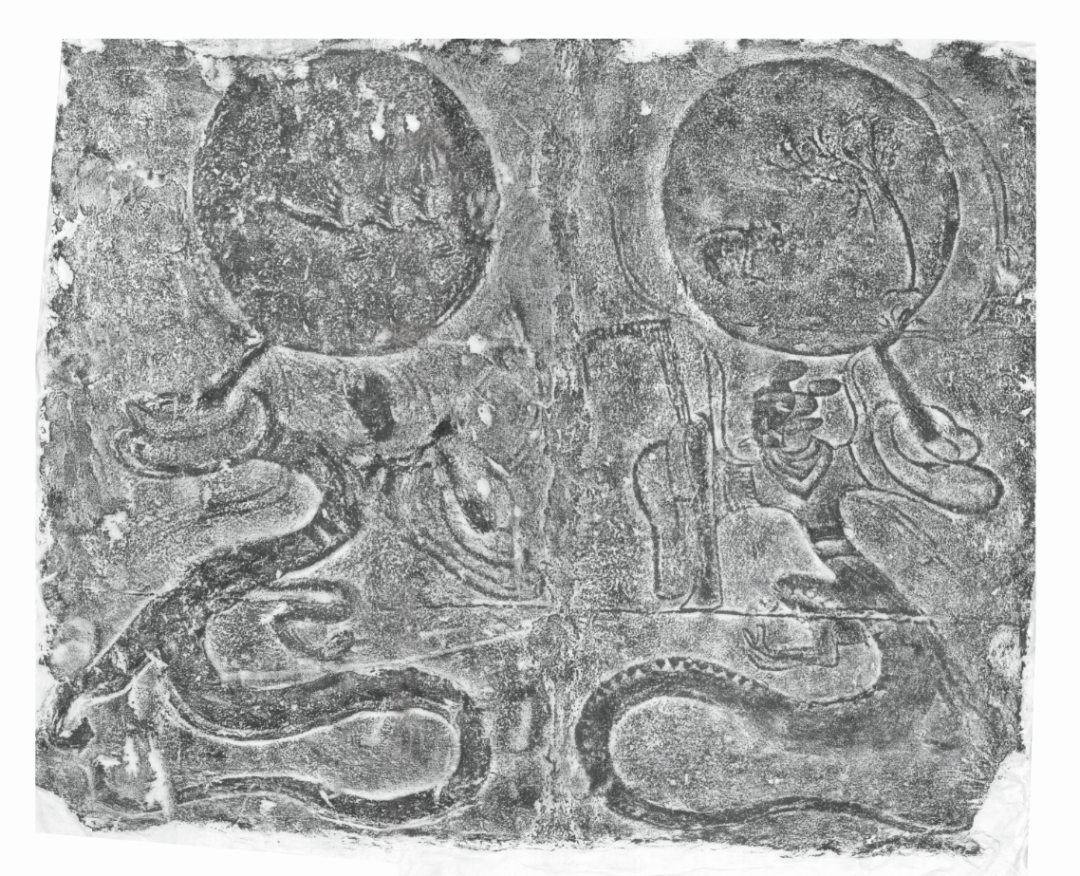
Fuxi Nuwa portrait brick Eastern Han Chengdu Museum
The portrait brick is Fuxi on the left and Nuwa on the right, both of which are take off your coat Bo Belt, and people are the first snake gods. Fuxi wears a crown on his head, holds rules in his left hand, and holds the sun in his right hand, and there is the sun in the day; Nu Wa has a double comb, holding the moment in her left hand and holding the moon in her right hand. There is a cinnamon toad in the middle of the month. The worship of the legendary medieval emperors and ancestor gods embodies the universal desire of people in the Han Dynasty to live forever and become immortals.
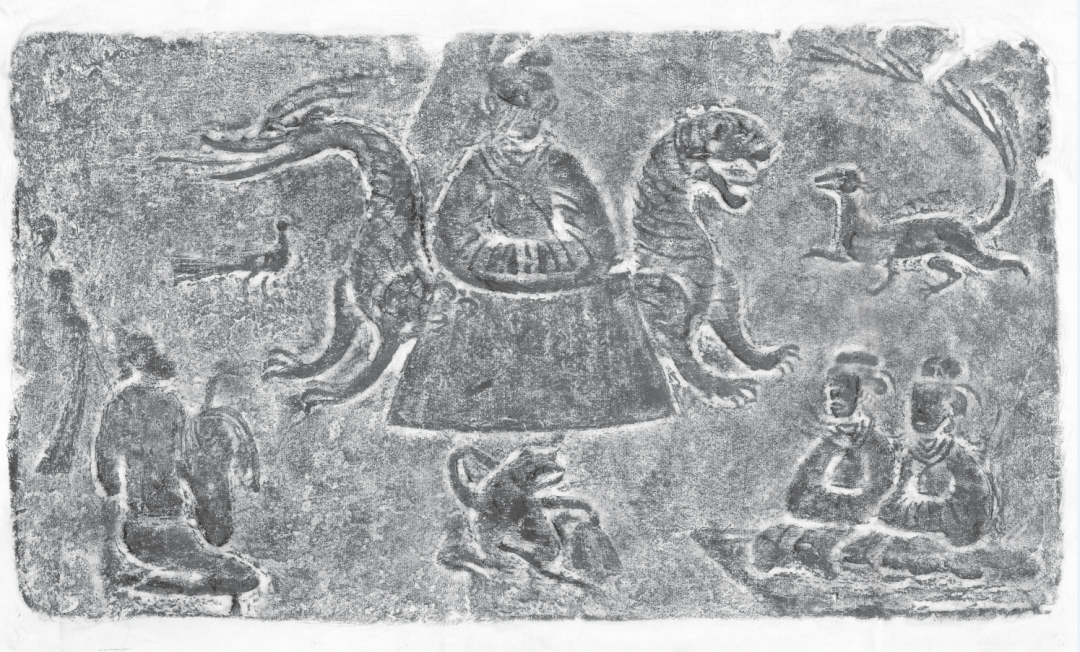
Xiwangmu portrait brick Eastern Han Chengdu Museum
On the brick, the Queen Mother of the West sits on the dragon and tiger seat, with three feet on the right and a nine-tailed fox on the left. There is a toad standing in the middle of the front, a Taoist on the right bows down, and two people on the left kneel down. People in the Han Dynasty believed that the Queen Mother of the West was in charge of the elixir of life and was one of the most respected gods in fairyland. Painting the statue of the Queen Mother of the West in the tomb is to let the dead reach the immortal world.
Highly concise brushwork, simple and clear lines are full of vitality and simple wildness. Stone relief is not only a true record of the customs and customs of the Han Dynasty, but also a distinctive art work.
(This article was originally published in the "Wonderful Museum" < Chengbo Special Issue > jointly published by Chengdu Museum and Xinlei Publishing House, and published by The Paper with authorization)