We may not be as good as chimpanzees in parenting.
I have to say that anthropologists are really good at choosing stories to write, especially an anthropologist who has studied literature.
Venesti Martin, the author of "I am a mother, I need a platinum bag", has been determined to study biology and cultural anthropology since she was a child, and deeply study women’s lives. In order to finish her doctorate in literature and cultural studies at Yale University, she moved to new york in her twenties. After living in the cultural downtown for several years, at the age of 35, she married a banker’s husband. After "9.11", the two decided to move to the Upper East Side in order to live closer to their husband’s family.
Although the Venestis have townhouses in the lower city, they have become "dirty class" in the Upper East Side. When she first arrived here, she was inevitably despised and ignored. If it was tolerable, her son had no playmates in the nursery because of his parents’ low status, which made her determined to integrate into the social groups on the Upper East Side and never be coldly treated again. However, even with the help of my husband and my husband’s family, it is not easy to integrate into the small circle of mothers on the Upper East Side. She found that it is up to her to decode the culture of a lady mother in all directions and finally be accepted.
The Upper East Side is a place where "everyone is super rich and has a strong sense of class", which is extremely dramatic in the world of women. She found this decoding culture and the process of integration very interesting. She used the professional background of anthropology and primates to interpret the logic and behavior of the Mommy tribe in Manhattan, and finally wrote this best-selling book "I am a mother, I need a platinum bag" (the original title is literally translated as "Primates on Park Avenue").
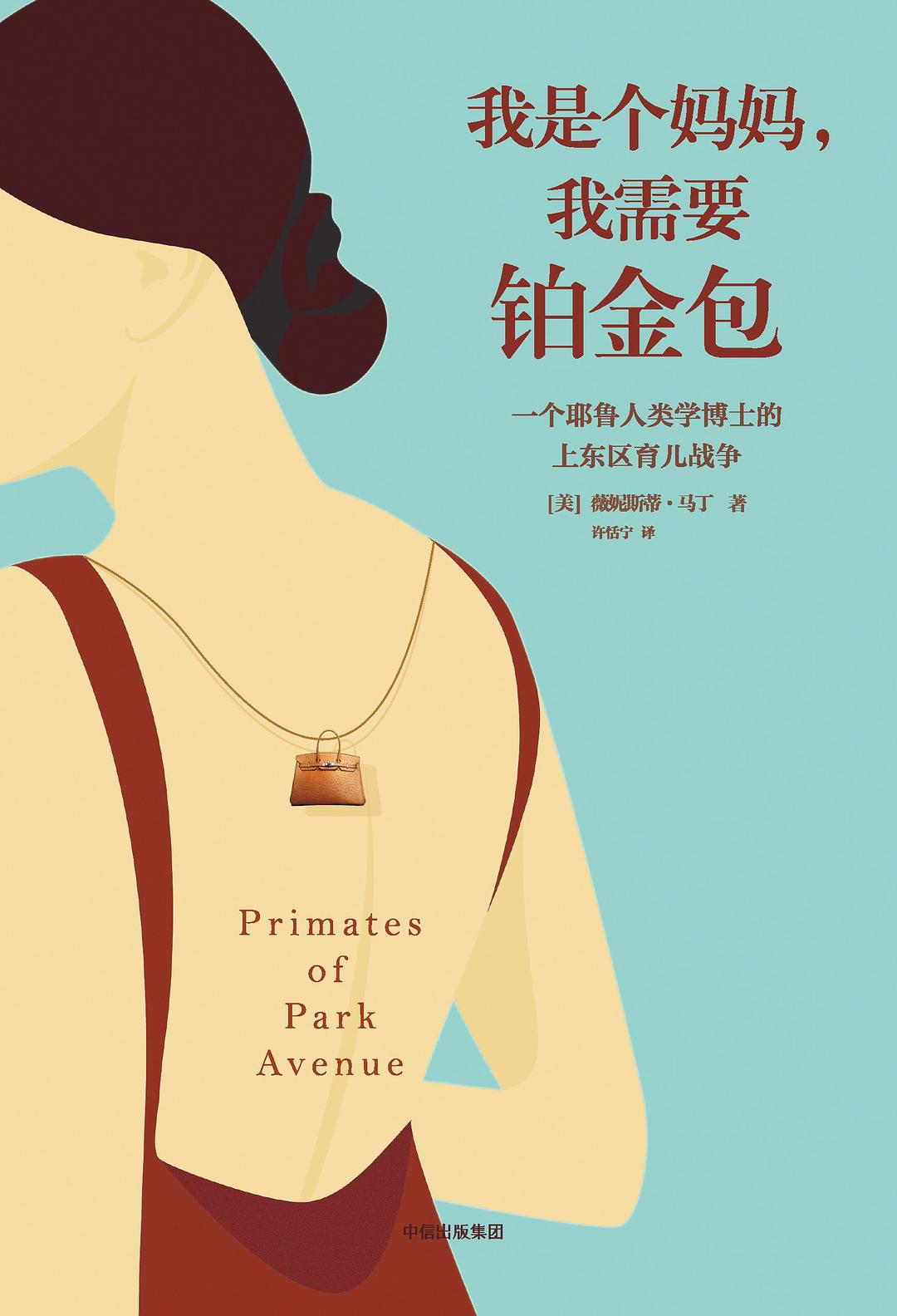
I’m a mother, I need a platinum bag.
Observe the ladies of Manhattan like chimpanzees.
"… in the city of Manhattan, money, connections and power are everything. What you pack and drive is telling others your worth. In this city where class pressure is everywhere, a good bag is like a warm blanket that can soothe the soul."
Anthropologists are often good at "downward" research. For example, in the past, people from suzerain countries went to colonial countries to study, and in recent years, for example, they have made popular research on "vulnerable groups" such as factory women workers, children from welfare homes and transnational maids. Venesti studies "upward". When Venesti first moved into the Upper East Side of new york, she was really a "Upper East Side Lower Class" because of her midwestern background and family property.
It is certainly difficult for the lower class to integrate into the upper class, and it is also more sensitive to the sense of class. She explores the mommy beside her from the perspective of primatology and anthropology, and compares the behaviors of animals in nature with those of women in the Upper East Side, such as primates, female birds who plan their children, and female rats who interact with men as appropriate, which not only makes people stunned, but also adds a little black humor to her difficulties.
For example, Venesti compares Hermes platinum bag to some kind of totem among Upper East Side women, which is similar to the kerosene bucket used by chimpanzee Mike to show his status as described by zoologist jane goodall. Mike the chimpanzee waved a kerosene bucket and became a tribal leader. Upper East Side women use bags to attack their opponents. Venesti herself once met a lady with a platinum bag on 79th Street in Manhattan, who seemed to regard her as air. Finally, she was forced to give way in embarrassment.
Women on the Upper East Side desperately need goods to define their relationship. Every item tells others which class you belong to and how much wealth, connections and strength you have. Hermes platinum bag has become a life-saving straw for Venesti to overcome class pressure. This kind of luxury goods with amazing price and high recognition is sold in limited quantities every year, and it is often hard to find a pack, which is a symbol of wealth and contacts. Mike declared his power by waving a kerosene bucket. The platinum bag that her husband bought from Japan has also become a weapon for her to gain a foothold among the mothers on the Upper East Side.
The class system on the Upper East Side of new york is so ubiquitous. The status of people on the Upper East Side is to look at certain rare things, that is, things that are impossible to get. In new york, a city that values success and power, platinum bag is a symbol, representing the status of people. Especially for women, platinum bags mean the highest status.
This sense of class also permeates the process of parenting. Because the class may change at any time, mothers must strictly check who is available, and at the same time let them beg to join the group everywhere. Many Upper East Side mothers will arrange playmates for their children, but only play with the descendants of the rich and powerful at home, in order to achieve further stability or transition of the class. For those children whose parents are "low-ranking", they have to find ways to avoid them skillfully. On the Upper East Side, what kind of playmates you help your children find, you are in what social class. "If you are in a low position, your innocent and lovely children will also be in a low position." Venesti and her husband were once not accepted because they could not see any use value for the time being.
In order to buy their favorite house on the Upper East Side, the Venestis have to submit extremely detailed information, even including the schools attended by their parents and the GPA of their respective universities. Venesti said with emotion: This application process is the most humiliating initiation ceremony she has ever met. And she suddenly realized that Manhattan established a class system by this way of "humiliating" new people. Only in this way can everyone "stay where they belong". After all, the residents of each building are a group of strangers who are not related by blood, so they have to exchange information to make everyone feel that they have something in the hands of others and have to obey the rules.
On the Upper East Side, the social stratum is always stabilized by social hidden rules. This conclusion was reached after she attended the dinner of Rebecca, a super lady. Even on the Upper East Side, rich women are divided into ladies, rich ladies and super-rich ladies, and it is easy to tell them apart-super-rich ladies are the most elaborate, beautiful and have the most children. At that dinner party, all the other female guests except Rebecca, the hostess, had to hide from praise, and this circuitous way, when others praised you, they had to belittle themselves, which was actually maintaining class stability. Rebecca, the hostess, is the only one who can accept praise. After such a social ceremony, everyone is more clear about their position. If you don’t follow these unspoken social rules, you will be excluded. In the Upper East Side, where social circle culture prevails, being unable to integrate into the group or being expelled is actually worse than going to hell, because these rich people are most afraid of losing their influence and reputation.
Venesti worked hard to integrate into this well-defined society. First, she tried to show that she bought a house through an interview with the owners’ committee, and then with the help of her sister-in-law, her son entered the best private kindergarten. Her son’s exclusion was reversed after she was accosted by the heir of a financial empire by chance. After that, Venesti was accepted by other snobbish mothers. Through those body language and kind smiles, she knew that she was recognized, and others were no longer worried about being dragged down by her.
Finally, Venesti felt that this feeling of integration is much better than being excluded!
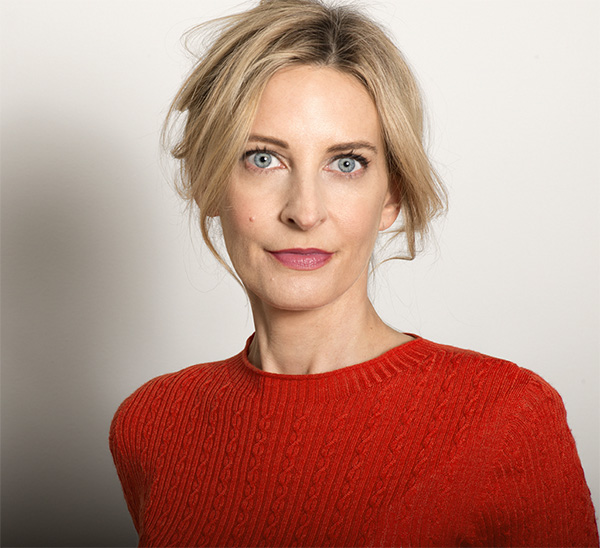
Venesti Martin
A woman’s battle of honor
"I found that people’s biggest anxiety is that they have to gasp and live on others. I eat and drink with my Upper East Side moms every day. I observe them and listen to their stories. I found that many people’s lives, as well as their happiness and the value of their existence, depend on people and things that they can’t control at all. "
If we all know that richer people are not necessarily happier, after reading this book, you may feel that richer people are definitely less happy.
It was hard for me to believe this statement at first, but Venesti convinced me. Most people think that women on the Upper East Side are arrogant women, because they do have a great advantage in living resources. They don’t have to worry about getting sick and having no medical insurance, let alone having no money to raise children. They also have a lot of money to relieve urban diseases. Their wealth is thousands of times that of ordinary people. They have a private jet at home, so they can go to the Caribbean or Aspen for a holiday if they have nothing to do, and stay away from the maddening crowds in the city to make themselves calm.
But the problem is that the more resources a mother has, the greater the pressure she faces in raising children.
Intensive parenting is a unique phenomenon sprouting from the rich groups in modern western countries. This proper term was put forward by sociologist Sharon Hayes. Intensive parenting refers to a gender model that forces mothers to spend a lot of time, energy and money on raising children. In particular, the society expects that rich mothers should always take care of their children’s emotions, always focus on their social and psychological state, and promote their children’s intellectual development with successive activities.
The great pressure of these mothers lies in: because they have more resources, their children will be perfect by default, otherwise, it will be the mother’s fault. On the Upper East Side, if you can’t train your children in all directions and let them develop freely, then your mother is dereliction of duty. Mothers on the Upper East Side are different from mothers in other places in other times. They should be completely child-centered, either baking cakes for their children or teaching them to count scores. This model parenting model makes mothers feel anxious and exhausted all the time, 24 hours a day and 7 days a week.
In other words, having money and choice has become the curse of these wealthy mothers. Too many choices will bring pressure, but people will have negative effects when faced with more than three or four choices, such as feeling sorry, expecting too much or feeling disappointed. The data shows that the probability of women suffering from anxiety in developed countries is about twice that of men.
The second reason why ladies and mothers are generally anxious is that they rely too much on their husbands. There are more women than men in the upper east side society. Men are precious and resources are in men’s hands, while women are mostly supported by their husbands. Men on the Upper East Side do whatever they want. They verbally say that they and their wives are equal partners, but the money is mainly controlled by them. Whether a man can treat his wife equally depends entirely on his mood and can break the marriage constraint at any time. Men in new york are always looking at the people behind you at parties to see if the next woman is better, more beautiful and more prominent.
Men in Manhattan make women obedient by controlling their wives’ access to resources. They can decide whether to give expensive gifts or not, whether to let their wives enjoy luxurious holidays, and whether to let them have pocket money to buy clothes when the seasons change. Do you want them to have money to donate to charity? Charity is a rare opportunity for women to get in touch with the outside world.
The power held by men and women is vastly different. Because they rely on men everywhere, the sense of strength of ladies is very weak, and they may not be as good as ordinary people who make money by themselves. This extreme inequality of power is vividly displayed in the absurd setting of "wife’s year-end bonus". The "wife’s year-end bonus" is an open secret in the wife’s social circle, and it will be written in the prenuptial agreement. Sometimes the husband gives it, and sometimes he finds reasons not to give it at will. All these are the methods used by many powerful men to make people obedient. They rely on this set to maintain their greatest advantages in society and marriage.
Women not only encounter unequal power, but also are restricted by institutional society and culture. They are also locked into a gender-segregated world. For example, the charity activities they attend are always isolated from men, which makes them unable to participate, and they can only socialize with their children’s classmates and mothers, so it is difficult to get out of the "mom circle".
These mothers live a luxurious life worthy of showing off to outsiders, but in fact, their participation in "noble volunteer" activities for their children is free labor. Husbands earn millions of dollars outside, and they also want to show off the luxury life of "no need to go to work". But at the same time, they must be good volunteers so that their children can enter good schools. They should give their hard-earned skills in university research institutes and advanced professional work to their children’s schools for free, such as organizing various activities, editing school journals, managing libraries, holding cake bazaars and so on. Women participate in the "mommy economy" in order to let themselves have something to do and feel useful, but what they can do is insignificant and not recognized in the whole family.
As an anthropologist, Venesti didn’t agree with such a world at first, but she finally had to surrender to such a world. While she wants to integrate her children so as not to be excluded, she also hopes to maintain her detached independence and open the distance needed for academic analysis. But the experience of being excluded has changed her mind, and she must let others accept her. Venesti finally did as the Romans do, became a local, lost her original objective position, and even began to identify with the research object. Her dress began to converge with the women in the upper city, and her thinking mode began to assimilate. In this regard, "go astray." Under the coercion of fear, she changed from an original bystander to an advocate of the system. Like other mothers in the Upper East Side, she worries about whether she is not doing well enough or not, for fear of affecting her children’s future.
For a long time, we believe that anthropologists can only be proud if they keep an objective distance from the place where they study. It is always inappropriate to do as the Romans do, which threatens the most fundamental identity of researchers. Having written her doctoral thesis on Malinowski, she certainly knows that being calm and keeping her distance are what professional anthropologists should do. To some extent, she is also worried that her works will be severely criticized as "the dilemma of asking for it" if she emphasizes the sense of uncontrollable like Malinowski.
She had to excuse herself: she was not an anthropologist in academic definition, and she didn’t major in anthropology. For her, anthropology and primatology were just a way of looking at things and applying them to her experience of adapting to different cultures.
This kind of struggle and contradiction may just explain how difficult it is to maintain the sense of distance required by anthropological research methods, especially when it comes to "bottom-up" research, it is impossible to integrate without getting into anxiety, to gain a foothold and to maintain rationality.
sisterhood
If the first few chapters of the book are all about the class struggle and parenting war of Manhattan ladies, which makes these ladies look disgusting, the last two chapters of the book have a big reversal.
The turning point was that Venesti was pregnant with a third child at the age of 43, but aborted after six months of pregnancy. At that time, those women who once ran into her on the sidewalk waving platinum bags and made her feel that she and her son were inferior, put down their arrogant figures and showed their fragile side, sharing their previous abortion experiences or bereavement with her. To her surprise, many superficial mothers who had felt unfriendly and lived in their own world began to help her, accompany her and tolerate her pain and anger in an incredible degree.
Mothers, who once only cared about competing for beauty and fighting with each other, produced a new community and a new connection outside the family in a female and private exchange and speech of painful experiences. Manhattan ladies began to cooperate with each other like small-town mothers, providing emotional support for each other and helping to take care of their children.
Through the writing of the abortion incident, the sarcastic tone of the Upper East Side mother in the first half of this book has weakened a lot, and it has become an approval for women to help each other. Venesti attributed her rapprochement with other women to human emotional instinct: it is the common instinct of primates to let their offspring grow up well. Her abortion at an advanced age inadvertently aroused the sympathy of her peers and aroused "the deep compassion, care and empathy of the group of common nurturers in evolutionary history". Although the social and ecological environment has changed, the popular way is that women raise children independently, but some cultural genes that women raise, care and care for their children together still exist.
Venesti began to feel ashamed and confused. She found herself denying many mothers too quickly. She was hurt and even afraid of them before, but now she is full of gratitude to them.
Here, the idea of this book is no longer to explore the upper-class life, to show the erosion of capitalism on people or the platitudes of objectifying women, but to try to reveal a new version of human evolution-the instinct of human cooperation is greater than competition.
Evolution is not necessarily bloody. In addition to being violent towards each other and ignoring other people’s lives, human beings actually have a side of solidarity, cooperation and compassion. Chimpanzees will kill their enemies without blinking, but they also live in close-knit groups and are highly concerned about other chimpanzees. As anthropologist James Lilin said, human beings are emotionally cooperative, and we must rely on cognitive mechanism to stop this impulse. In other words, caring for others is our first impulse, but our reason prevents us from doing that.
The research method and perspective of this book is a clever combination of cultural anthropology and biology, so it doesn’t completely criticize the acquired causes like extreme social constructivism, nor does it defend the "selfish gene" like Darwin, and she finds a balance.
The possibility of this new connection, which is anti-individualistic and belongs to women, is particularly tenacious and precious in the Upper East Side, which is highly conservative and strictly follows economic rationality: as it has been happening for hundreds of thousands of years, in addition to prejudging and controlling personal life, the connection and support between women has always been their important reliance. Taking care of children in a nuclear family is actually a new thing. The situation of raising children independently is just a small node in history. It is special for a woman to raise children alone, which is not the state she should have.
At the end of the story, the years were quiet. Venesti didn’t completely adopt intensive parenting to educate her children, but let them grow up by themselves. "Being a mother doesn’t have to be a chore, but it can be relaxed and happy." She and her husband now travel to Europe for a year without children. Although they have moved out of the Upper East Side, they still go back to see friends and enjoy socializing from time to time.
At this point, the idea of this book finally broke away from the satire of ladies and tabloids, but settled on the reflection of intensive parenting in the West. Intensive parenting developed in the modern west is contrary to the results of human evolution, and the mainstream cognition that caring for and accompanying children is mainly the responsibility of mothers needs to be reflected. On the contrary, the behavior of chimpanzees raising their young together is the best and most tender way for women.